Reformed Churchmen

We are Confessional Calvinists and a Prayer Book Church-people. In 2012, we remembered the 350th anniversary of the 1662 Book of Common Prayer; also, we remembered the 450th anniversary of John Jewel's sober, scholarly, and Reformed "An Apology of the Church of England." In 2013, we remembered the publication of the "Heidelberg Catechism" and the influence of Reformed theologians in England, including Heinrich Bullinger's Decades. For 2014: Tyndale's NT translation. For 2015, John Roger, Rowland Taylor and Bishop John Hooper's martyrdom, burned at the stakes. Books of the month. December 2014: Alan Jacob's "Book of Common Prayer" at: http://www.amazon.com/Book-Common-Prayer-Biography-Religious/dp/0691154813/ref=sr_1_1?ie=UTF8&qid=1417814005&sr=8-1&keywords=jacobs+book+of+common+prayer. January 2015: A.F. Pollard's "Thomas Cranmer and the English Reformation: 1489-1556" at: http://www.amazon.com/Thomas-Cranmer-English-Reformation-1489-1556/dp/1592448658/ref=sr_1_1?ie=UTF8&qid=1420055574&sr=8-1&keywords=A.F.+Pollard+Cranmer. February 2015: Jaspar Ridley's "Thomas Cranmer" at: http://www.amazon.com/Thomas-Cranmer-Jasper-Ridley/dp/0198212879/ref=sr_1_1?ie=UTF8&qid=1422892154&sr=8-1&keywords=jasper+ridley+cranmer&pebp=1422892151110&peasin=198212879

Showing posts with label Scottish Reformation. Show all posts

Monday, November 24, 2014

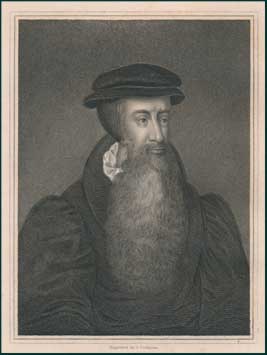
24 November 1572 A.D. John Knox: God’s Firebrand Finally Extinguished


24 November 1572 A.D.  John Knox: God’s Firebrand Finally Extinguished

Myers, David T.  “November 24: Death of John Knox (1572).”  This Day in Presbyterian History.  24 Nov 2014.  http://www.thisday.pcahistory.org/2014/11/november-24-death-of-john-knox-1572/.  Accessed 24 Nov 2014.

November 24: Death of John Knox (1572)


On November 24, 1572, Scottish clergyman and reformer John Knox died in Edinburgh.

God’s Firebrand Finally Extinguished


The nickname for John Knox, as used in our title above, was bestowed on him by no less a fellow Reformer than John Calvin. It correctly characterized his life and ministry from the time he strapped on a literal sword to defend the life and ministry of George Wishart to the times of the Scottish Reformation to the very day he went home to receive his eternal rewards. That time came on November 24, 1572 in Edinburgh, Scotland.

Oppressed with the infirmities of old age, Knox recognized that in God’s providence his time had come to depart this old earth. Sensing that, he prevailed upon the elders of that church to call as the new pastor the Rev. James Lawson as his successor. Lawson was at that time the professor of philosophy in the college of Aberdeen. Not satisfied with a “mere” letter from the Session, Knox followed up their letter with one of his own, urging Lawson to receive the call and come quickly, stressing that if he delayed too long in answering, he might find Knox dead! When Dr. Lawson arrived, he promptly preached two sermons to the congregation. On November 9, the call was placed in his hands. As the successor to John Knox answered in the affirmative, Knox then preached his last sermon to the congregation, exhorting them to stand fast in the faith, and with that, his farewell was given to the congregation.

On the 17th of November, the Session of St. Giles was called to his bedside. The parting words of the Reformer are too important to be absent here, so here they are:

“The time is approaching, for which I have long thirsted, wherein I shall be relieved and be free from all cares, and be with my Savior forever; and now, God is my witness, whom I have served with my spirit in the gospel of His Son, that I have taught  nothing but the true and solid doctrines of the gospel, and that end which I purposed in all my doctrine, was to instruct the ignorant, to confirm the weak, to comfort the consciences of those that were humbled under the sense of their sins, and to denounce the threatening of God’s Word against such as were rebellious. I am not ignorant, that, in my heart, I never hated the persons of those against whom I thundered God’s judgments; I did only hate their sins, and labored, according to my power, to gain them to Christ; that I did forbear none of whatsoever condition, I did it out of fear to my God, who placed me in this function of the ministry, and I know will bring me to an account.” After some words to the new pastor, he commended the whole Session to the grace of God.

From that day until the day of his death, there was read daily to him by his wife a chapter from the Epistle to the Ephesians, the 53rd chapter of Isaiah, 1 Corinthians chapter 15, and John 17, from where, he said to his wife, he had first cast his anchor.  Sermons from John Calvin in French were read to him by his assistant, John Bannatyne.

A difficult life of ministry brought to a close, John Knox departed this world in peace and honor.

Words to Live By:
How a person dies is noteworthy to the overall testimony of his life. Once, when a religious lady of his acquaintance entered his sick room, she began to commend him for the work of the Protestant Reformation. He protested her words, saying that he “wholly relied on the free mercy of God, manifesting to mankind through his dear Son, Jesus Christ, whom alone [he] embrace[d] for wisdom, and righteousness, and sanctification, and redemption.” That should be every reader’s hope and assurance. Is it yours, reader?

Thursday, April 24, 2014

John Knox & Scottish Covenanters (28 Mins)

Since the Reformation in 1560, Scotland's national church had been Presbyterian. John Knox and his associates had completed the work of changing Scotland from Roman Catholicism to Protestantism. The Scots felt that their pure religion of Biblical worship and doctrine along with their liberty which had cost so much was worth fighting for. The struggle for religious and civil liberties during the 1600's was not with Romanism, but with the Episcopalians of England. The British monarchy, which held both religious and civil authority tried to force its prayer book and church government of archbishops, bishops, deans and church laws upon the people of Scotland. When King Charles I and his successors endeavored to force the Scots to conform, is when the conflict became severe and even bloody. For over fifty years the Scots fought a long and bitter fight until 1688 when they succeeded in reestablishing Presbyterianism in Scotland.


John Knox and the Birth of the Scottish Reformation

This mini-documentary, filmed on location in Scotland, examines the early years of the Scottish reformer, John Knox. The film features the castles and churches that played a role in the history of the turbulent years of the sixteenth century. On the eve of the 500th anniversary of the birth of John Knox, Knox Robinson Publishing has produced this documentary to accompany the release of the novel 'The First Blast of the Trumpet', a thrilling fictionalised account of John Knox's early life. Available in all good bookstores, Amazon and the Knox Robinson Publishing website.


Saturday, March 1, 2014

1 Mar 1546: John Knox Describes George Wishart's Martyrdom (History of the Reformation in Scotland)


  • George Wishart's initials, the Scores
  • George Wishart's initials, the Scores
  • The initials of the Protestant martyr at the site of his execution in front of St. Andrews Castle in 1546.

    "When the fyre was maid reddy, and the gallowse, at the Weste part of the Castell, neir to the Priorie, my Lord Cardinall, dreading that Maister George should have bene takin away by his friendis, tharefoir he commanded to bend all the ordinance of the Castell richt against the place of executioun, and commanded all his gunnaris to be readdy, and stand besyde thare gunnes, unto such tyme as he war burned. All this being done, thei bound Maister George's handis behind his back, and led him furth with thare soldeouris, from the Castell, to the place of thare cruell and wicked executioun. (...)

    After this, he was led to the fyre, with a rope about his neck, and a chaine of irne about his myddill. When that he came to the fyre, he sat doun upon upoun his knees, and rose agane; and thrise he said these wordis, "O thou Saviour of the warld, have mercy upon me: Father of heavin, I commend my spreit into thy holy handis." (...) And then by and by, he was putt upoun the gibbet, and hanged, and there brynt to poulder [i.e. ashes]. When that the people beheld the great tormenting of that innocent, thei mycht not withhold frome piteous morning and complaining of the innocent lambes slawchter.

    After the death of this blissed martyre of God, begane the people, in plaine speaking, to dampne and detest the crueltie that was used. Yea, men of great byrth, estimatioun, and honour, at open tables [Communion] avowed, That the blood of the said Maister George should be revenged, or ellis thei should cost lyef for lyef."

    (from John Knox's 'Historie of the Reformatioun of Scotland')