Reformed Churchmen

We are Confessional Calvinists and a Prayer Book Church-people. In 2012, we remembered the 350th anniversary of the 1662 Book of Common Prayer; also, we remembered the 450th anniversary of John Jewel's sober, scholarly, and Reformed "An Apology of the Church of England." In 2013, we remembered the publication of the "Heidelberg Catechism" and the influence of Reformed theologians in England, including Heinrich Bullinger's Decades. For 2014: Tyndale's NT translation. For 2015, John Roger, Rowland Taylor and Bishop John Hooper's martyrdom, burned at the stakes. Books of the month. December 2014: Alan Jacob's "Book of Common Prayer" at: http://www.amazon.com/Book-Common-Prayer-Biography-Religious/dp/0691154813/ref=sr_1_1?ie=UTF8&qid=1417814005&sr=8-1&keywords=jacobs+book+of+common+prayer. January 2015: A.F. Pollard's "Thomas Cranmer and the English Reformation: 1489-1556" at: http://www.amazon.com/Thomas-Cranmer-English-Reformation-1489-1556/dp/1592448658/ref=sr_1_1?ie=UTF8&qid=1420055574&sr=8-1&keywords=A.F.+Pollard+Cranmer. February 2015: Jaspar Ridley's "Thomas Cranmer" at: http://www.amazon.com/Thomas-Cranmer-Jasper-Ridley/dp/0198212879/ref=sr_1_1?ie=UTF8&qid=1422892154&sr=8-1&keywords=jasper+ridley+cranmer&pebp=1422892151110&peasin=198212879

Showing posts with label Orthodox Presbyterian Church. Show all posts

Thursday, April 24, 2014

24 Apr 1973 AD: "Split Ps" or "Split-Presbyterians," OPC & RPCES


24 April 1973 A.D.  The “Split Ps” or Split-Presbyterians, OPC & RPCES

The PCA historians tell the story of the “Split Ps” at: http://www.thisday.pcahistory.org/2014/04/april-24/

April 24: A Proposed Plan That Failed


24 April, 2014

What Might Have Happened?
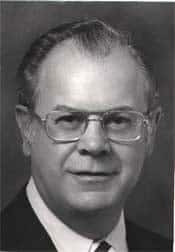
macnair01Francis Schaeffer is reported to have been the one who coined the phrase “split P’s,” in reference to the many divisions among Presbyterians. But for all the talk of division among Presbyterians, the latter half of the twentieth century was actually quite full of mergers and attempted mergers. One of these attempted mergers formally began in 1972, first with committee planning, and then with talks in 1973 between the Presbytery of the Midwest of the Orthodox Presbyterian Church and the Midwestern Presbytery of the Reformed Presbyterian Church, Evangelical Synod, as they sat down to discuss the proposed union at a meeting in St. Louis on April 24, 1973. Then in June of that same year, the matter came under initial consideration at the national level for each of the two denominations.

Both the OPC and RPCES assemblies approved sending the Plan down to their Presbyteries for further discussion and voting. With characteristic dry humor, Dr. Clair Davis, then a member of the OPC, quipped, “We almost know more about you RP’s than we do about ourselves. We have looked you over in more detail than we ever viewed ourselves with.” One major sticking point proved to be RPCES views on millennial issues, particularly as that had been set down in the RPCES edition of the Westminster Larger Catechism. In the end, the proposed union failed to secure approval when voted on in 1975.

The Preamble to the proposed Plan of Union is an interesting document to review now, nearly forty years later. What might have happened if that proposed merger had been approved? Would a new, larger denomination have entertained the idea of yet another merger a decade later with the PCA? And how do the documents drawn up in preparation for that proposed union compare with the later arrangements made for the Joining & Receiving of denominations into the PCA in 1982? The Rev. Donald J. MacNair, pictured above right, was a key part of both the efforts to merge the OPC and RPCES in 1975 and later in the efforts to receive the OPC and RPCES into the PCA in 1982. In the end, the RPCES was received into the PCA, and the OPC continued on as a separate denomination.

PREAMBLE OF THE PLAN OF UNION (1973)

The Reformed Presbyterian Church, Evangelical Synod and the Orthodox Presbyterian Church come together committed to the supremacy and authority of the Scriptures, the inerrant Word of God, and confessing one Lord, one faith, one baptism. These churches come together as the ________________ [the name of a united church has not been determined] Church in one scriptural faith and order, in full fellowship in the service of Christ under the divine authority of the whole of Scripture for all of faith and life. We come to this union acknowledging both God’s grace and our sins in days past, and trusting in the renewal of the Holy Spirit for days to come.

In this union we seek first the honor of our Savior’s name; we wish to be found pleasing in the sight of the Lord who prayed for the deepest unity of His people. In particular we would praise God for His mighty grace in bringing us together after a sad experience of division in the history of our churches. Soon after the Presbyterian Church of America was established in 1936 to continue a faithful witness to the Christ of the Scriptures, a grievous division brought reproach upon this testimony. We recognize the genuine and deep concerns that influenced this division; on the one hand, a fear that indifference or hostility to characteristic features of the piety and hope of American Presbyterianism would doom the church to sectarian isolation; on the other hand, a fear that the reformation of the church would be crippled by adherence to requirements for life or faith that went beyond the teaching of Scripture.

We do not claim to have achieved unanimity of opinion on all the issues that led to that division, but in effecting this union we do confess that the unity of Christ’s church should not have been broken as it was in 1937. Both those who left and those who suffered them to leave did so without pursuing with zeal all the scriptural means for reconciliation. Each sinned in a measure, and even the least sin against the love of Christ brings reproach on His name.

In seeking the joy of restored fellowship, we would confess afresh our need of the heartsearching and healing work of God’s Spirit to convict us of all sin and lead us into the obedience of Christ. We express, by this union, our obligation and determination to maintain, by God’s grace, the unity of the church in the mutual faith, love, and confidence which we profess.
—–end—–

Words to Live By:

“Behold, how good and how pleasant it is
for brethren to dwell together in unity!
It is like the precious ointment upon the head,
that ran down upon the beard,
even Aaron’s beard:that went down to the skirts of his garments;
As the dew of Hermon, and as the dew that descended upon the mountains of Zion:
for there the Lord commanded the blessing,
even life for evermore.” —(Psalm 133:1-3, KJV
http://www.logos.com/images/Corporate/LibronixLink_dark.png)

For Further Study:
To view relevant documents from the Max Belz Manuscript Collection at the PCA Historical Center, Box 118, folder 80, see the links provided here:


Also, news coverage of the initial discussions of the Plan of Union in 1973, as carried in the June 4, 1973 issue of the RPCES magazine, Mandate, volume 107, number 3 (4 June 1973).

Thursday, May 10, 2012

Identity Crisis in Presbyterian Church in America (PCA)?

The Rev. Mr. Wesley White is suggesting an identity crisis with the Presbyterian Church in America (PCA)?  Thoroughly or Broadly Reformed?  We would suggest the PCA is “broadly” Reformed and even quasi-Confessional.  They refused to affiliate with the Orthodox Presbyterian Church (OPC) initially and during later discussions.  Why not? 

Exhibit A:  Professor John "Latitudinarian" Frame, RTS, Orlando.  Exhibit B:  RTS’s new “Institute of Baptist Studies” in Orlando, FL. Exhibit C:  Rev. Dr. Ligon Duncan, associate with and full-throated backer of Baptacostals.  This is for starters.  Good question by Rev. White.

The PCA is not a Confessional Church in the historic sense of that term.  Let it be acknowledged.

 http://www.weswhite.net/2012/05/thoroughly-reformed-or-broadly-reformed/ Johannes Weslianus

The PCA’s Original Vision: Thoroughly Reformed or Broadly Reformed?

Dr. Paul Kooistra and MTW’s new PCA Original Vision Network is claiming to bring us back to the PCA’s original vision. One statement that has come under scrutiny is Larry Hoop’s claim that the original vision of the PCA was to be a denomination committed to a broadly Reformed theological position, steering clear of both a formless evangelicalism with sketchy theological commitments and a narrow sectarianism that could consume our energies building a theological fortress . . .
Is this an accurate summation of the PCA’s original vision?
For those who want to research the Original Vision of the PCA, I would highly recommend a new resource made available by the PCA Historical Center. There were four organizations that were instrumental in forming the PCA. The organization for conservative pastors was called Presbyterian Churchmen United. You can read their newsletters here.
Not surprisingly, such a group was asked many questions. In order to answer them, they wrote “A Declaration of Commitment.” You can read it on page 4 of this newsletter. Note the 4th statement in particular:
That for the implementation of the above principles, in obedience to our ordination vows, we must strive to preserve a confessional Church, thoroughly Reformed and Presbyterian. Thus our support of or opposition to any proposed union will be determined by these considerations. (emphasis added)
Thus, to be more historically accurate, we could probably say that the denomination was supposed to be “thoroughly Reformed” not “broadly Reformed.” “Broadly reformed” may be an original revision rather than the original vision.
Below is the original “Declaration of Commitment” with the names of those who signed it including MTW Coordinator Paul Kooistra.
A Declaration of Commitment
To the membership of the Presbyterian Church, U.S., in the light of the questions and concerns being expressed in the Church as to the nature of our faith and order, I(we), the undersigned, do solemnly declare my(our) conviction:
-That the faith of our Lord Jesus Christ turns men from darkness to light and from the power of Satan to God. By coming to faith in Him alone is there genuine reconciliation between man and God and man and man.
-That the Holy Scriptures are the infallible Word of God, and that these Scriptures commit the Church to a mission whose primary end is the salvation and nurture of souls.
-That Christian faith must bear fruit if it is to remain virile. These fruits vary from believer to believer. But common to them all are evidences of love, concern, and neighborliness, towards all races of men without partiality and without prejudice, especially to the poor, the oppressed, and the disadvantaged. The man of faith views all men as neighbors and himself as debtor, for Christ’s sake.
-That for the implementation of the above principles, in obedience to our ordination vows, we must strive to preserve a confessional Church, thoroughly Reformed and Presbyterian. Thus our support of or opposition to any proposed union will be determined by these considerations.
-That being fully committed by our ordination vows to the system of doctrine set forth in the Westminster Confession of Faith and Catechisms, we must oppose all efforts to change in substance or otherwise debase our historic doctrinal commitment.
-That we are, in the same context, by vow committed to historic Presbyterian polity with its representative system and its parity among teaching and ruling elders. Thus, we are forced to oppose the effort to take our Church into the massive organization envisioned by COCU.
-That, should the basic theology or polity of the Church be altered or diluted, we shall be prepared to take such actions as may be necessary to fulfill the obligations imposed by our ordination vows to maintain our Presbyterian faith.
Signature ___________________________________
HERE WE STAND
By January of 1973 over 600 men had signed the declaration at which point it was still circulating. Some of those signers are listed below:
O. Chauncey Acrey
James W. Allen
O. M. Anderson
Walter D. Arnold
Henry M. Bailey
James B. Billman
Taylor O. Bird
J. A. Booth
George C. Bowman
Ralph A. Brown
Paul K. Buckles
Al S. Burdette
Robert Ernest Burnett
Charles G. Burton
Robert H. Camenisch
E. H. Carleton
Robert A. Clark
John R. Clarke
Willis Cornelius
Cecil V. Dalton
Peter DeRuiter
R. M. Dickson
A. T. Dyal
Charles W. Echols, Sr.
C. G. Forthman
L. K. Foster
Paul Bucher Fowler
Taft A. Franklin
Charles R. Galbraith
James Marion Gilbert
Curtis C. Goodson
Vance A. Gordon
Donald M. Green
J. C. Grier
B. David Gullett
Thomas L. Harnesberger
James Douglas Heck
Gerald A. Heersma
James C. Hicks, Jr.
H. Keith Hill
Fred W. Hoffman
Doyle Hulse
George H. Hurst
James Herbert Hurst
Harry K. Jeanneret
A. Emerson Johnson II
Albert Sidney Johnson
William R. Johnson
Laurie Voltz Jones, Jr.
Robert O. Kantner
A. H. Key
Paul D. Kooistra
Robert Koren
Thomas M. Lemly
Thomas Dwight Linton
Samuel Lipsey
Samuel T. Logan, Jr.
Richard L. Love
John A. Luddy
Robert M. Lytton
Jacob S. MacKorell, Jr.
James O. Maner
John J. Martin
D. A. Meeks
J. M. Moore
James L. Moss
Cameron D. L. Mosser
W. F. McElroy, Sr.
James L. McGirt
Charles E. McGowan
Charles H. McLean
James W. McNutt
W. L. Newman
Louis G. Novak
Lannie Parnell
Walser Penland
Lyle W. Peterson
Wythe M. Peyton, Jr.
William S. Porter
Ira H. Rawles
E. W. Reid
D. Edward Renegar
William E. Riddle, Jr.
Ernest T. Severs
W. Hiram Sharpe
Weldon W. Shows
Stephen J. Sloop
Frank E. Smith
W. Ted Smith, Sr.
William S. Smith
Frank Edward Soules
Ernest L. Stoffel
Bert H. Styles
L. Sherwood Taylor
T. Reichardt Taylor
Calvin C. Thielman
Frederic D. Thompson, Jr.
Vincent O. Titterud
Harry Samuel Topham
Robert Lee Turner
John G. Viser
DeForest Wade
James R. Wagner
Howell Cobb Ware
T. Barton West
T. J. Wharton
A. W. Whitaker, Jr.
Roy F. Whitley
Bruce H. Wideman
Linwood G. Wilkes
Glenn M. Willard
Bill Williams
Carl W. Wilson
Maynard C. Woltz
Donald E. Wood
J. R. Woods
Charles W. Worth
Frank R. Young
Troy L. Young
Charles R. Bailey
William H. Bell, Jr.
John Richard de Witt
Charles B. Evans, III
Richard R. Harris
John D. Holmes
Robert A. Johnson
Edward J. Knox
John Wade Long, Jr.
Wallace W. Marshall
John S. McNicoll
John W. Stodghill
James E. Watson
William K. Wymond
D. A. Dunkerley
Basil P. Albert
Robert G. Balnicky
Bruce Beardsley
H. L. Broadwater, Jr.
Paul J. Coblentz
Billy G. Combs
John W. Dozier
G. A. Fleece
Iain Inglis
William W. Maynor
A. C. Summers

Friday, July 15, 2011

Christianity Today, Church Growth, SGM, Mahaney, Piper

 
The Most Risky Profession
Why you need to pray desperately for your pastor.


It's refreshing news to hear of pastors taking a leave of absence not over sexual or financial misconduct, but over pride. Such was the case with John Piper last year, and this week with C. J. Mahaney. Mahaney has been president of the church planting network Sovereign Grace Ministries, which according to its website now includes "about 95 churches," mostly on the East Coast. He is the founder of the megachurch Covenant Life Church, which he handed over to Joshua Harris after pastoring there for 27 years. He is also one of the leaders of the Together for the Gospel Conferences, and one of the most popular speakers in the neo-Reformed circuit.

The story behind his leave of absence is still unraveling. But he has publicly acknowledged that he has succumbed to "various expressions of pride, unentreatability, deceit, sinful judgment, and hypocrisy."

It's an interesting list of sins—ones that pastors all over America commit week in and week out. This is not to excuse Mahaney or to take such sins lightly. It is to suggest that the state of the modern American pastorate has been shaped so that these sins—especially pride and hypocrisy—are impossible to escape. For this reason, our pastors need not our condemnation, but our prayers. They are in a profession that is about as morally risky as they come.

Bigger and Better
The modern American church is very much a product of its culture—we're an optimistic, world-reforming, busy, and ambitious lot, we Americans. In business, that means creating a better widget, and lots of them, and thus growing larger and larger corporations. In religion, that means helping more souls, and along the way, building bigger and better churches. Alexis de Tocqueville marveled in the 1830s how American Christians seemed so blasé about doctrine compared to their enthusiasm for good works. Religious busyness will be with us always, it seems.

Translate that into church life, and we find that American churches exalt and isolate their leaders almost by design. Our ambitious churches lust after size—American churches don't feel good about themselves unless they are growing. We justify church growth with spiritual language—concern for the lost and so forth. But much of the time, it's American institutional self-esteem that is on the line. This is an audacious and unprovable statement, I grant, but given human nature (the way motives become terribly mixed in that desperately wicked human heart) and personal experience, I will stick to it.

With this addiction to growth comes a host of behavioral tics, such as a fascination with numbers. The larger the church, the more those who attend become stats, "attenders" to be counted and measured against previous weeks. Pastoral leaders are judged mostly on their ability to enlarge their ministries. It's not long before we have to rely on "systems" to track and follow newcomers. It is the rare church now that can depend on members naturally noticing newcomers, or on their reaching out to them with simple hospitality. That has become the job of a committee, which is overseen by a staff member. With increasing size comes an increasing temptation to confuse evangelism with marketing, the remarkably efficient and effective if impersonal science of getting people in the doors.

With the longing for size comes a commitment to efficiency. No longer is it a good use of the head pastor's time to visit the sick or give spiritual counsel to individuals. Better for him to make use of his "gift mix," which usually has little to do with the word pastor—or shepherd, the biblical word for this position. Instead, he has been hired for his ability to manage the workings of large and complex institutions. The bigger the church, the less he works with common members and mostly with staff and the church board. To successfully manage a large church, one must be on top of all the details of that institution. This doesn't necessarily mean directly micromanaging things, but it certainly means to do so indirectly. The large church pastor may not personally tell the nursery volunteers to repaint the 2–3 year-old room, but when he notices a spot of peeling paint as he passes by, the pastor will tell someone who will tell someone, and it will get done in short order.

This is not because the senior pastor is a control freak—or if he is, the church wants him to be. Churches on their way up the growth curve like to know that someone is in charge, that someone is attending to the details, that someone is getting things done. That's why they've hired this dynamic, forward looking, administratively savvy leader. They enjoy being a part of a humming, efficient organization. It reminds them of the other humming, efficient organizations our culture admires, from Google to Apple to Disneyland. It makes them proud to be a part of such a church. That the pastor has to take a heavy hand now and then—sometimes directly, sometimes indirectly—is a small price to pay.

(I use the masculine pronoun to talk about pastors precisely because the vast majority are males, and men are particularly vulnerable to these realities. I also speak autobiographically here, having been a pastor for ten years.)

What makes the pastor's job even more spiritually vulnerable is the expectation that he also be the cathartic head of the church—someone with whom members can identify and live through vicariously. Someone who articulates their fears and hopes, someone to whom they can relate—at a distance. This is key, because the pastor has time to relate to very, very few members. Thus it is all the more important that he be able to communicate in public settings the personable, humble, vulnerable, and likable human being he is.

Thus, preaching in the modern church has devolved into the pastor telling stories from his own life. The sermon is still grounded in some biblical text, and there is an attempt to articulate what that text means today. But more and more, pastors begin their sermons and illustrate their points repeatedly from their own lives. Next time you listen to your pastor, count the number of illustrations that come from his life, and you'll see what I mean. The idea is to show how this biblical truth meets daily life, and that the pastor has a daily life. All well and good. But when personal illustrations become as ubiquitous as they have, and when they are crafted with pathos and humor as they so often are, they naturally become the emotional cornerstone of the sermon. The pastor's life, and not the biblical teaching, is what becomes memorable week after week.

Again, this is not because the pastor is egotistical. It's because, again, we demand this of our preachers. Preachers who don't reveal their personal lives are considered, well, impersonal and aloof. Share a couple of cute stories about your family, or a time in college when you acted less than Christian, and people will come up to you weeks and months later to thank you for your "wonderful, vulnerable sermons." Preachers are not dummies, and they want approval like everyone else. You soon learn that if you want those affirmative comments—and if you want people to listen to you!—you need to include a few personal and, if possible, humorous stories in your sermon.

The inadvertent effect of all this is that most pastors have become heads of personality cults. Churches become identified more with the pastor—this is Such-and-Such's church—than with anything larger. When that pastor leaves, or is forced to leave, it's devastating. It feels a like a divorce, or a death in the family, so symbiotic is today's relationship between pastor and people.
No wonder pastors complain about how lonely and isolated they feel. The success and health of a very demanding institution have been put squarely on their shoulders. They love the adrenaline rush of success—who doesn't? But they also live in dread that they may fail. Wise pastors recognize that unique temptations will assault them, and some set up accountability structures to guard their moral and spiritual lives. They try to have people around them who can speak truth to their power. But in reality, since this is an accountability structure that they have set up and whose membership they determine, in the end it can only have limited effectiveness.
And so we have a system in which pride and hypocrisy are inevitable. The situation for the pastor is impossible. He retains his biblical vision, but the system he finds himself in makes him waver between humility and arrogance, hope and cynicism, patience and anger, love and hate. The pastor has to increasingly downplay these tensions or any serious shortcomings, moral or administrative, to play the part that is expected of him. He must learn to doubt his moral instincts, so he starts believing that efficiently running a large, bureaucratic institution is "ministry" or "service" rather than what it often is: mostly managing and controlling people. He and his congregation justify his heavy-handed leadership and his lack of time for individuals—the very antithesis of his title, pastor or shepherd. His sermons are increasingly peppered with himself as much as the gospel, and even his self-deprecating humor turns against him. Now people praise him for his humility, which only goes to his head, as it does for any human being.
The morally serious pastor will be aware of much of this—even if he can't admit it to anyone—and he will strive to keep himself in check. But he will find that his left hand always—always—knows what his right hand is doing. He has become incapable of carrying out his ministry in simple freedom and trust in God's grace. He began running the race of ministry with holy ambition, but he now finds himself on a treadmill of "various expressions of pride."
Every profession has its secret sins and habitual vices—believe me, we have plenty in journalism. We all need prayer in our callings. And no more so than pastors, whose spiritual leadership makes them most vulnerable to the sins that Jesus most severely condemned: hypocrisy and pride.
Is there hope? Of course. Pastors aren't the only people who find themselves trapped in a social milieu where it is impossible not to succumb to sin. It is for habitual and trapped sinners—like pastors, like us—that Jesus died. The hope is not that we can find a perfect church environment in which we can eradicate pastoral pride. The hope is that Jesus loves and uses repentant sinners despite our pride.

This does not mean Jesus doesn't want us to change the way we do church. I sometimes wonder if he's allowing us to reap the fruit of our churchly ambitions—with many pastors burning out or becoming cynical, or resigning in one form of "disgrace" or another—so we will discover anew why the word pastor or shepherd is the name he gives to the church's leaders. That very name suggests that perhaps the church should not be about growth and efficiency, but care and concern, not so much an organization but a community, not something that mimics our high-tech culture but something that incarnates a high-touch fellowship. By God's grace, there is a remnant of such churches alive and well today, with leaders who really are pastors.
In the meantime, do not condemn your pastor when he succumbs to pride and hypocrisy. He's stuck in a religious system from which few escape unscathed. Pray for him. And remind him that grace covers a multitude of sins, and that neither life nor death, nor angels nor principalities, nor the contemporary North American church can separate him from the love of God in Christ Jesus, the Great Shepherd of the church.
Mark Galli is senior managing editor of Christianity Today and author of God Wins: Heaven, Hell, and the Why the Good News Is Better than Love Wins (Tyndale).


Saturday, July 9, 2011

Orthodox Presbyterian Church: 1945-1990

http://reformedforum.org/ctc184/

The Orthodox Presbyterian Church from 1945 to 1990

July 8th, 2011 · Christ the Center
video (large): download
video (medium): download
video (small): download
 
The Orthodox Presbyterian Church was formed in 1936 out of the modernist-fundamentalist controversy at a time when figures such as J. Gresham Machen were struggling with liberal influences at Princeton Seminary and the mainline Presbyterian Church. Much has been written on those early years, but a significant gap in the history persisted until recently. For the OPC’s 75th anniversary, the Committee for the Historian has commissioned two books. The first is a collection of essays edited by John R. Muether and Danny E. Olinger titled Confident of Better Things. The second is Between the Times: The Orthodox Presbyterian Church in Transition 1945-1990 written by Darryl. G. Hart. Hart’s book wonderfully chronicles the OPC during the transition beyond the first generation as the young Reformed denomination sought to find its identity in a changing evangelical world. Today Dr. Hart visits Christ the Center to speak about this important period in American Presbyterianism.