Reformed Churchmen

We are Confessional Calvinists and a Prayer Book Church-people. In 2012, we remembered the 350th anniversary of the 1662 Book of Common Prayer; also, we remembered the 450th anniversary of John Jewel's sober, scholarly, and Reformed "An Apology of the Church of England." In 2013, we remembered the publication of the "Heidelberg Catechism" and the influence of Reformed theologians in England, including Heinrich Bullinger's Decades. For 2014: Tyndale's NT translation. For 2015, John Roger, Rowland Taylor and Bishop John Hooper's martyrdom, burned at the stakes. Books of the month. December 2014: Alan Jacob's "Book of Common Prayer" at: http://www.amazon.com/Book-Common-Prayer-Biography-Religious/dp/0691154813/ref=sr_1_1?ie=UTF8&qid=1417814005&sr=8-1&keywords=jacobs+book+of+common+prayer. January 2015: A.F. Pollard's "Thomas Cranmer and the English Reformation: 1489-1556" at: http://www.amazon.com/Thomas-Cranmer-English-Reformation-1489-1556/dp/1592448658/ref=sr_1_1?ie=UTF8&qid=1420055574&sr=8-1&keywords=A.F.+Pollard+Cranmer. February 2015: Jaspar Ridley's "Thomas Cranmer" at: http://www.amazon.com/Thomas-Cranmer-Jasper-Ridley/dp/0198212879/ref=sr_1_1?ie=UTF8&qid=1422892154&sr=8-1&keywords=jasper+ridley+cranmer&pebp=1422892151110&peasin=198212879

Showing posts with label God. Show all posts

Sunday, March 30, 2014

30 March: Prof. J. Gresham Machen's "My Idea of God"


30 March: “My Idea of God” by J. Gresham Machen

The PCA historians tell the story at: http://www.thisday.pcahistory.org/2014/03/march-30-my-idea-of-god-by-j-gresham-machen/    
30 March, 2014

Not a sermon for this Lord’s Day, but rather a testimony, this is one of Dr. Machen’s lesser known works. This brief testimony, titled “My Idea of God,” appeared in a book of the same name, a gathering of statements largely philosophical, which only served to make Machen’s testimony stand out all the more.

Editor’s preface:—
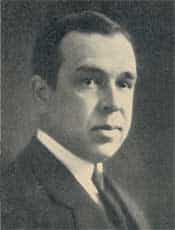
machen02

JOHN GRESHAM MACHEN was born in Baltimore in 1881. After graduating from Johns Hopkins and Princeton Universities and the Princeton Theological Seminary, he studied in Marburg and Gottingen Universities, and was ordained to the Presbyterian ministry in 1914. Since 1914 he has been associate professor of New Testament literature in Princeton Seminary, doing work betimes with the French Army and the A.E.F., in France and Belgium, during the World War.

Besides textbooks of Greek and many articles in reviews, Dr. Machen has written two books of unusual quality for general readers, Christianity and Liberalism (in which he holds that liberal Christianity is not Christianity at all, but a confection of modern theories exactly opposed to the Christian faith, with which there can be neither compromise nor unity) and What Is Faith? which inspired an extraordinary symposium in The British Weekly.

In the recent discussion which has agitated the Churches – now happily subsiding – Dr. Machen was the outstanding exponent of the conservative attitude, adding to a vital mind a lucid logic and a cogent style which left no shadow upon his meaning. His essay has value equally for its directness and its sincerity.


MY IDEA OF GOD


by J. GRESHAM MACHEN, D.D. PRINCETON THEOLOGICAL SEMINARY

IF my idea of God were really mine, if it were one which I had evolved out of my own inner consciousness, I should attribute very little importance to it myself, and should certainly expect even less importance to be attributed to it by others. If God is merely a fact of human experience, if theology is merely a branch of psychology, then I for my part shall cease to be interested in the subject at all. The only God about whom I can feel concerned is one who has objective existence, an existence independent of man.

But if there be such a really and independently existent Being, it seems extremely unlikely that there can be any knowledge of Him unless He chooses to reveal Himself: a divine Being that could be discovered apart from revelation would be either a mere name for an aspect of man’s nature – the feeling of reverence or loyalty or the like – or else, if possessing objective existence, a mere passive thing that would submit to human investigation like the substances that are analyzed in the laboratory. And in either case it would seem absurd to apply to such a Being the name of “God.”

A really existent God, then, if He be more than merely passive, if He be a living God, can be known only through

His revelation of Himself. And it is extremely unlikely that such revelation should have come to me alone. I reject, therefore, the whole subjectivizing tendency in religion that is so popular at the present time – the whole notion that faith is merely an “adventure” of the individual man. On the contrary, I am on the search for some revelation of God that has come to other men as well as to me, and that has come into human life, not through a mere analysis of human states of consciousness but distinctly from the outside. Such revelation I find in the Christian religion.

The idea of God, therefore, which I shall here endeavor to summarize is simply the Christian idea. I have indeed been enabled to make it my own; I love it with all my heart; but I should not love it if I thought that it had been discovered merely in the depths of my own soul. On the contrary, the very thing that I love about it is that it comes to me with an external authority which I hold to be the authority of God Himself.

At this point, however, there will no doubt be an objection. We have spoken about the knowledge of God; but in reality the knowledge of God, it is often said, is unnecessary to our contact with Him, or at least it occupies merely a secondary place, as the symbolic and necessarily changing expression of an experience which in itself is ineffable. Such depre-. ciation of knowledge in the sphere of religion has been widely prevalent in the modern world, and at no time has it been more prevalent than now. It underlies the mysticism of Schleiermacher and his many successors; it underlies the Ritschlian rejection of “metaphysics”; it underlies the popular exaltation of “abiding experiences” at the expense of the mental categories in which they are supposed to be expressed; and in general it is at the roots of the entire separation between religion and theology, experience and doctrine, faith and knowledge, which is so marked a characteristic of the religious teaching of the present day.

In opposition to this entire tendency, I for my part must still insist upon the primacy of the intellect. It may seem strange that the intellect should have to be defended by one who has so slight an experimental acquaintance with it as I; but reason in our days has been deposed from her queenly throne by pragmatism the usurper, and, wandering in exile as she does, cannot be too critical of any humble persons who rally to her defense. And, as a matter of fact, the passionate anti-intellectualism of the present age is having its natural fruit in a lamentable intellectual as well as moral decline. Such decadence can be checked – I, for my part, believe – only by a reemphasis upon truth as distinguished from practice, and in particular only by a return from all anti-intellectual mysticism or positivism to the knowledge of God.

Certainly, unless our contact with God is based upon knowledge of Him it ceases to possess any moral quality at all. Pure feeling is non-moral; what makes my affection for a human friend, for example, such an ennobling thing is the knowledge which I possess of the character of my friend. So it is also with our relation to God: religion is moral and personal only if it is based upon truth.

If then, in order that there may be a moral and personal relation to God, there must be knowledge of Him, how may that knowledge be attained? I have no new ways to suggest: the only ways of knowing God which I can detect are found in nature, in conscience, and in the Bible.

God is revealed, I hold, in the first place through the things that He has made. “The heavens declare the glory of God, and the firmament showeth His handiwork.” This revelation of God through nature is commonly called – or used to be commonly called – “natural religion.” And natural religion is by no means altogether dead. Modern men of science, if they be thoughtful, admit that there is a mystery in the presence of which the wisdom of the wisest men is dumb; the true man of science stands at length before a curtain that is never lifted, a mystery that rebukes all pride. But this revelation through nature is far richer than many men of science suppose; in reality it presents to us not merely a blank mystery, but the mighty God. The revelation comes to different men in different ways. For example, when I viewed the spectacle of the total eclipse of the sun at New Haven on the twenty-fourth of January I925, I was confirmed in my theism. Such phenomena make us conscious of the wonderful mechanism of the universe, as we ought to be conscious of it every day; at such moments anything like materialism seems to be but a very pitiful and very unreasonable thing. I am no astronomer, but of one thing I was certain: when the strange, slow-moving shadow was gone, and the world was bathed again in the wholesome light of day, I knew that the sun, despite its vastness, was made for us personal beings and not we for the sun, and that it was made for us personal beings by the living God.

In the second place, God is revealed by His voice within us. I am perfectly well aware that that voice is not always heard. Conscience has fallen on evil days: it is drowned by a jargon of psychological terms; it is supposed to be rendered unnecessary by an all-embracing network of legislative enactments.

The categories of guilt and retribution are in many quarters thought to be out of date, and scientific sociology is substituted for the distinction between right and wrong. But I for my part am not favorably impressed with the change; self-interest seems to me to be but a feeble substitute for the moral law, and its feebleness, despite bureaucratic regulation of the details of human life and despite scientific study both of individual human behavior and of the phenomena of human society, seems to be becoming evident in an alarming moral decline. The raging sea of passion cannot, I think, be kept back permanently by the flimsy mud embankments of utilitarianism; but recourse may again have to be had to the solid masonry of the law of God.

In the third place, God is revealed in the Bible. He is revealed in the Bible in a way which is entirely distinct from those ways that have just been mentioned. The Bible tells us things about God of which no slightest hint is found either in nature or in conscience. Of those things we shall speak in a moment.

But first it should be observed that, in addition to that fresh information, the Bible also confirms the revelation which has already been given. The confirmation is certainly necessary; for the revelation of God both in nature and in conscience has been sadly obscured. In comparing the fortieth chapter of Isaiah or the first verse of Genesis or the teaching of Jesus with the feeble and hesitant theism which is the highest that philosophy has to offer, and in comparing the unaided voice of conscience with the fifty-first Psalm or the searching law presented in the Sermon on the Mount, one feels that in the Bible a veil has been removed from the eyes of men. The facts were already there, and also the gift of human reason for the apprehension of them; but the light of reason somehow was obscured until in the Bible men were enabled to see what they ought to have seen before.

Thus, in these three ways there is attained, I hold, a genuine and objective knowledge of God. Certainly that knowledge does not remove the feeling of wonder which is dear to the mystic’s heart. Indeed, it ought to accentuate that feeling a thousandfold. There is nothing in the knowledge of God which should stifle, but everything which should awaken, the “numinous” quality in religion of which Otto speaks. God has gently pulled aside the curtain which veils His Being from the gaze of men, but the look thus granted beyond only reveals anew the vastness of the unknown. If a man’s knowledge of God removes his sense of wonder in the presence of the Eternal, then he has not yet known as he ought to know.

Yet partial knowledge is not necessarily false, and there are certain things which are known about God.

At the very centre of those things stands that which is most often denied to-day; the very centre and core of Christian belief is found in the awful transcendence of God, the awful separateness between God and the world. That is denied by modern men in the interests of what is called, by a perversion of a great truth, the “immanence” of God. We will have nothing to do – men say – with the far-off God of historic theology; instead we will worship a God who exists only in and with the world, a God whose life is found only in that life which pulsates through the life of every one of us. Pantheism, in other words, is substituted for theism, on the ground that it brings God nearer to man.

But has it really the desired effect? I, for my part, think not. Far from bringing God nearer to man, the pantheism of our day really pushes Him very far off; it brings Him physically near, but at the same time makes Him spiritually remote; it conceives of Him as a sort of blind vital force, but ceases to regard Him as a Person whom a man can love. Destroy the free personality of God and the possibility of fellowship with Him is gone; we cannot love a God of whom we are parts.

Thus, I for my part cling with all my heart to what are called the metaphysical attributes of God – His infinity and omnipotence and creatorhood. The finite God of Mr. H.G. Wells seems to me to be but a curious product of a modern mythology; He is to my mind not God, but a god; and in the presence of all such imaginings I am obliged to turn, very humbly but very resolutely, toward the dread, stupendous mystery of the Infinite, and say with Augustine: “Thou hast made us for Thyself, and our heart is restless until it finds its rest in Thee.”

This devotion to the so-called metaphysical attributes of God is unpopular at the present day. There are many who tell us that we ought to cease to be interested in the question how the world was made, or what will be our fate when we pass through the dark portals of death. Instead, we are told, we ought to worship a God who is not powerful but merely good. Such is the “ethical theism” of Dr. McGiffert and many others; Jesus, it seems, was quite wrong in the stress that He undoubtedly laid upon the doctrine of heaven and hell and the sovereignty of God. We moderns, it seems, can find a higher, disinterested worship – far higher than that of Jesus – in reverence for goodness divested of the vulgar trappings of power.

It sounds noble at first. But consider it for a moment, and its glory turns to ashes and leaves us in despair. What is meant by a goodness that has not physical power? Is not “goodness” in itself the merest abstraction? Is it not altogether without meaning except as belonging to a person? And does not the very notion of a person involve the power to act? Goodness divorced from power is therefore no goodness at all. The truth is that overmuch abstraction has here destroyed even that which is intended to be conserved. Make God good and not powerful, and both God and goodness have been destroyed.

In the presence of all such abstractions, the heart of man turns with new longing to the Living and Holy God, to the God who is revealed in nature, in the dread voice of conscience, and in the Bible. But as one turns to such a God, there is no comfort but only despair; the whole human race is separated from God by an awful abyss. Strange indeed, to us Christians, seems the complacency of the world; the very root of our religion is found in the consciousness of sin.

But at that point, on the basis of such presuppositions, there comes the really distinctive revelation that the Bible contains. It is not a revelation of things that already were true, but the explanation of an act. The Christian religion is based not merely upon permanent truths of religion, but upon things that happened in Palestine nineteen hundred years ago; it is based not merely upon knowledge of what God is, but also on a record of what God did. Into our sinful world – the Christian holds – there came in God’s good time a Divine Redeemer.

His coming, marked by a stupendous miracle, was a voluntary act of condescension and love. During the days of His flesh, He proclaimed by His word and example the law of God. He proclaimed it in a new and terrible way that of itself could only deepen our despair. But with His proclamation of’ the law there went His proclamation of the gospel; with His pronouncement of the Divine judgment upon sin there went His offer of Himself as Saviour. When that offer was received in faith, there was not only cure of bodily ills, but also forgiveness in the presence of God.

At first faith was implicit; men trusted themselves to Jesus without fully knowing how it was that He could save. But even while He was on earth He pointed forward with ever increasing clearness to the redeeming work which He had come into the world to do. And at last, on the cross, that work was done. The Divine Saviour and Lord, for the love wherewith He loved us, bore all the guilt of our sins, made white and clean the dark page of our account, and reconciled us to God. There is the centre of our religion. But how pitiful are my words! I may perhaps make men understand what we think, yet I can never quite make them sympathize with what we feel. The holy and righteous God, the dreadful guilt and uncleanness of sin, the wonder of God’s grace in the gift of our Saviour Jesus Christ, the entrance through Christ into the very house of God, the new birth by the power of God’s Spirit, the communion with the risen and ascended Lord through His Holy Spirit present in the Christian’s heart – these are the convictions upon which rest our very lives.

If these convictions are false, they must be given up. But so long as we think them true we must act in accord with them, and it is morally wrong to ask us to do otherwise. At this point appears the profoundly unethical character of most of the proposals for Church union that are being made at the present day. The right way to combat us who call ourselves evangelical Christians is to combat honestly and openly our central convictions as to God and sin and redemption, not to ask us to hold those convictions and then act contrary to them. So long as we think as we do, we cannot, if we love our fellow men, allow them, so far as our testimony is concerned, to remain satisfied with the coldness of what we regard as a baseless and fatal optimism. We must endeavor, by the preaching of the law of God and of the gospel of His love, to bring them into the warmth and joy of the household of faith.

[This work by Dr. J. Gresham Machen was first issued as a chapter in the book, My Idea of God, published by Little, Brown and Company, Boston, 1927, and appeared on pages 39 – 50 of that volume.] To view or download a PDF of this work, click here.

Thursday, April 11, 2013

(28-Min. Youtube): Abortion Education: "Silent Scream" by Ex-Abortionist Dr. Nathanson


http://www.youtube.com/watch?v=gON-8PP6zgQ

ABORTION - THE SILENT SCREAM COMPLETE VERSION (with permission from APF). Republished with Permission from Roy Tidwell of American Portrait Films as long as the following credits are shown:

VHS/DVDs Available
American Portrait Films
Call 1-800-736-4567
www.amport.com

The Silent Scream Complete Version - Abortion as Infanticide

Dr. Bernard Nathanson's classic video that shocked the world. He explains the procedure of a suction abortion, followed by an actual first trimester abortion as seen through ultrasound. The viewer can see the child's pathetic attempts to escape the suction curette as her heart rate doubles, and a "silent scream" as her body is torn apart. A great tool to help people see why abortion is murder. The most important video on abortion ever made. This video changed opinion on abortion to many people.

Introduction by Dr. Bernard Nathanson, host. Describes the technology of ultrasound and how, for the first time ever, we can actually see inside the womb. Dr. Nathanson further describes the ultrasound technique and shows examples of babies in the womb. Three-dimensional depiction of the developing fetus, from 4 weeks through 28 weeks. Display and usage of the abortionists' tools, plus video of an abortionist performing a suction abortion. Dr. Nathanson discusses the abortionist who agreed to allow this abortion to be filmed with ultrasound. The abortionist was quite skilled, having performed more than 10,000 abortions. We discover that the resulting ultrasound of his abortion so appalled him that he never again performed another abortion. The clip begins with an ultrasound of the fetus (girl) who is about to be aborted. The girl is moving in the womb; displays a heartbeat of 140 per minute; and is at times sucking her thumb. As the abortionist's suction tip begins to invade the womb, the child rears and moves violently in an attempt to avoid the instrument. Her mouth is visibly open in a "silent scream." The child's heart rate speeds up dramatically (to 200 beats per minute) as she senses aggression. She moves violently away in a pathetic attempt to escape the instrument. The abortionist's suction tip begins to rip the baby's limbs from its body, ultimately leaving only her head in the uterus (too large to be pulled from the uterus in one piece). The abortionist attempts to crush her head with his forceps, allowing it to be removed. In an effort to "dehumanize" the procedure, the abortionist and anesthesiologist refer to the baby's head as "number 1." The abortionist crushes "number 1" with the forceps and removes it from the uterus. Abortion statistics are revealed, as well as who benefits from the enormously lucrative industry that has developed. Clinics are now franchised, and there is ample evidence that many are controlled by organized crime. Women are victims, too. They haven't been told about the true nature of the unborn child or the facts about abortion procedures. Their wombs have been perforated, infected, destroyed, and sterilized. All as a result of an operation about which they they have had no true knowledge. Films like this must be made part of "informed consent." NARAL (National Abortion Rights Action League) and Planned Parenthood are accused of a conspiracy of silence, of keeping women in the dark about the reality of abortion. Finally, Dr. Nathanson discusses his credentials. He is a former abortionist, having been the director of the largest clinic in the Western world.

Monday, November 8, 2010

Little Known Facts About Tyndale's Theology: The Fatherhood of God-The Blood of Christ


We bring the introduction and conclusion to you. For the whole article, see:

www.churchsociety.org/churchman/documents/Cman_122_3_Werrell.pdf

Little Known Facts About William Tyndale’s Theology: The Fatherhood of God—The
Blood of Christ by William Ferrell

"Introduction

When God created everything He saw that it was very good, and only when man chose to believe the Devil rather than God was the purity of creation marred. In order to restore creation to its pristine state the Persons of the Trinity made a Covenant between themselves that entailed man’s sin and disobedience to be permanently erased. God the Father covenanted to make those he had chosen to be his children. God the Son covenanted to shed His blood so that God’s justice could be satisfied. God the Holy Spirit covenanted to sprinkle the blood of Christ on the elect to cleanse them from all sin and enable them to be children of God. Tyndale’s covenant theology differed from that of all the other Reformers because it was between the Persons of the Trinity and not between God and man.

Paul Laughlin wrote of Tyndale’s ordo salutis: ‘The ordo was of Tyndale’s own devising and contained certain terminology, concepts, and emphases that were unusual for Reformation theology and indeed define a slant on soteriology peculiar to him.’1 Therefore, wrote Tyndale—

The new testament was ever, even from the beginning of the world. For there were always promises of Christ to come, by faith in which promises the elect were then justified inwardly before God, as outwardly before the world by keeping of the law and ceremonies.2


This fact that the Covenant of Salvation, for Tyndale, is between the Persons of the Trinity, and not between God and man, has to be kept in front of us as we read Tyndale’s writings. Equally important is Tyndale’s belief that God’s plan was for the restoration of creation, and our salvation was to renew the part which had caused the damage and to enable creation to return to its pristine state."


Now, for Dr. Ferrell's conclusion:


"Conclusion


We have seen the importance of the Fatherhood of God and the blood of Christ in Tyndale’s theology, an importance that we do not find stressed in other theological positions. Yet both of them have an importance in the teaching of the Bible. The Fatherhood of God is found in the Old Testament on only a few occasions, i.e., Psalm 89:26: but it a clearly portrayed in the New Testament. William Tyndale realised that the New Testament does not introduce a new
relationship between God and man which marks a break between the two halves of the Bible. As we read the Epistle to the Hebrews, we see that the blood of Christ is foreshadowed in the sacrifices of the Old Testament (Heb. 10:1). For the blood of the animals sacrificed before Christ was only effective because it represented the blood of Christ—who died and shed his blood on the cross in time, but the names of the faithful were written ‘in the book of life
of the lamb, which was killed from the beginning of the world’. (Rev. 13:8; see also 1 Pet. 1:19, 20).


Tyndale’s God was the Triune God of Creation, the God of Adam, Noah, Abraham, Moses, and all who believed and trusted him for their salvation from the beginning of time and would continue to the end of time. God chose his elect in Christ before the foundation of the world; and from the Fall until Christ’s return in glory, God’s people could only have redemption through Christ’s blood.86"


Revd. Dr. RALPH S. WERRELL is a retired clergyman and an Honorary Research Fellow at the University of Birmingham.


We include all the endnotes:


"ENDNOTES
1. Laughlin, “The Brightness of Moses’ Face”, p. 68 (unpub. PhD diss., Emory
University, 1975).
2. Tyndale, Prologue, Exodus, PS1, p. 417 (References from the Parker Society are
referred as PS(vol).
3. Althaus, P., The Theology of Martin Luther, p. 182. Fortress Press, 1966.
4. Luther, Works, vol. 24. p. 59 (Luther’s Works, American Edition).
5. Luther, Book of Concord, p. 354: “God has given me and still preserves my body
and soul....In addition, God daily and abundantly provides” our material and
physical needs, “God protects me... and reserves me....And all this is done out of
pure, fatherly, and divine goodness and mercy.” The Small Catechism Kolb, R. &
Wengert, T. J. (eds.) (Fortress Press, 2000).
6. Luther, Book of Concord, p. 433.
7. Zwingli, Zwingli and Bullinger, p. 349 (Westminster Press, 1953).
8. Stephens, Peter, The Theology of Huldrych Zwingli, p. 80 (Clarendon Press, 1986).
9. Bullinger, Decades, The 4th Decade, Sermon 5. PS4, p. 214, 219.
10. Latimer, Sermons by Hugh Latimer, PS1, p. 340.
11. Tyndale, Answer, PS3, p. 89.
12. Tyndale, Exposition 1 John, PS2, p. 166.
13. Tyndale, Tracy, PS3, p. 282.
14. Tyndale, Obedience, PS1, p. 167.
15. Tyndale, Exposition 1 John, PS2, p. 182.
16. Tyndale, Mammon, PS1, p. 123.
17. Tyndale, Exposition Matthew, PS2, p. 90.
18. Ephesians 2:1.
19. Luke 12:32.
20. Tyndale, Pathway, PS1, p. 18.
21. Tyndale, Obedience, PS1, p. 204.
22. Tyndale, Jonas, PS1, p. 464.
23. Tyndale, Obedience, PS1, p. 204.
24. Tyndale, Pathway, PS1, p. 24.
25. Tyndale, Mammon, PS1, p. 99.
26. Tyndale, Mammon, PS1, p. 96.
27. Tyndale, Exposition Matthew 5-7, PS2, p. 82.
28. Tyndale, Exposition Matthew 5-7, PS2, p. 71.
29. Tyndale, Exposition Matthew 5-7, PS2, p. 47.
30. Tyndale, 1525 Prologe, p. 4.
31. Tyndale, Answer, PS3, p. 111f.
32. Tyndale, Mammon, PS1, p. 77.
33. Tyndale, Exposition 1 John, PS2, p. 199f.
34. Tyndale, Prologue Exodus, PS1, p. 417.
35. Tyndale, Prologue, Romans, PS1, p. 493.
36. Tyndale, Exposition Matthew 5-7, PS2, p. 26.
37. Tyndale, Exposition 1 John, PS2, p. 186.
38. Tyndale, Answer, PS3, p. 34f.
39. Tyndale, Exposition Matthew, PS2, p. 8.
40. Tyndale, Exposition Matthew, PS2, p. 74, 75.
41. Tyndale, Sacrament PS1, p. 353f.
42. Eph. 1:7; Heb. 9:14; 1 Pet. 1:19; 1 John 1:7; Rev. 5:9; etc.
43. Ephesians 2.
44. Tyndale, Exposition 1 John, PS2, p. 199.
45. Tyndale, Pathway, PS1, p. 18.
46. Tyndale, Pathway, PS1, p. 24.
47. Tyndale, Obedience, PS1, p. 278.
48. Tyndale, Pathway, PS1, p. 15.
49. Tyndale, Exposition 1 John, PS2, p. 149.
50. Tyndale, Exposition 1 John, PS2. p. 157.
Little Known Facts About William Tyndale’s Theology: Part 2 267
51. Tyndale, Answer, PS3, p. 191.
52. Tyndale, Pathway, PS1, p. 8.
53. Tyndale, Pathway, PS1, p. 11.
54. McGrath, Alister, Iustitia Dei, vol 2, p. 99. (Cambridge University Press, 1986).
55. Tyndale, Answer, PS3, p. 196.
56. Tyndale, Mammon, PS1, p.48.
57. Tyndale, Exposition Matthew, PS2, p. 76.
58. Tyndale, Answer, PS3, p. 32.
59. Tyndale, Answer, PS3, p. 32.
60. Tyndale, Prologue Romans, PS1, p. 492.
61. Tyndale, Jonas, PS1, p. 462.
62. Tyndale, “Letter to Frith”, in Foxe, A&M, vol. v pt1, p. 133. (Seeleys, 1857).
63. Tyndale, Practice of Prelates, PS2, p. 242.
64. Tyndale, Answer, PS3, p. 108.
65. Tyndale, 1525 New Testament Prologue (Cologne fragment), p. 14 (Arber facsimile,
1871).
66. Tyndale, Mammon, PS1, p. 96.
67. Tyndale, Mammon, PS1, p. 97.
68. Tyndale, Exposition 1 John, PS2, p. 198.
69. Tyndale, Pathway, PS1, p. 18.
70. Tyndale, Obedience, PS1, p. 298f.
71. Tyndale, Obedience, PS1, p. 299.
72. Tyndale, Answer, PS3, p. 107.
73. Tyndale, Answer, PS3, p. 108 marginal note.
74. Tyndale, Answer, PS3, p. 108f.
75. Tyndale, Obedience, PS1, p. 100.
76. Tyndale, Answer, PS3, p. 56.
77. Tyndale, Tracy, PS3, p. 278.
78. Tyndale, Sacrament, PS1, p. 353f.
79. Tyndale, Sacrament, PS1, p. 354.
80. Tyndale, Sacrament PS1, p. 350.
81. Tyndale, Sacrament, PS1, p. 356f.
82. Tyndale, Sacrament, PS1, p. 365.
83. Tyndale, Prologue Titus, PS1, p. 520.
84. Tyndale, Mammon, PS1, p. 83
85. Tyndale, Sacrament, PS1, p. 374
86. See, for example, Ephesians 1. "

Wednesday, August 18, 2010

"Perichoresis:" Theological Word of the Day

Perichoresis Theological Word of the Day

[pehr’-ih-koe-ree‘-sis]

(Greek peri, “around” + Greek choreio, “dance”)

Refers to the mutual indwelling and relationship of the members of the Trinity. This concept is emphasized more by Eastern Christianity, but is affirmed by all orthodox branches of Trinitarian Christianity. St John of Damascus defines it such: “The subsistences [i.e., the three Persons] dwell and are established firmly in one another. For they are inseparable and cannot part from one another, but keep to their separate courses within one another, without coalescing or mingling, but cleaving to each other. For the Son is in the Father and the Spirit: and the Spirit in the Father and the Son: and the Father in the Son and the Spirit, but there is no coalescence or commingling or confusion. And there is one and the same motion: for there is one impulse and one motion of the three subsistences, which is not to be observed in any created nature” (The Orthodox Faith, 1.14).

Monday, March 15, 2010

1 Samuel 3 and TBN, Pentecostals, Arminians, Emergents, Church Growthers, Rick Warren, Liberals

http://www.facebook.com/topic.php?topic=15995&post=94594&uid=308173344359#post94594

1. I Samuel 3 and TBN, Pentecostals, Arminians, Emergents, Church Growthers, Rick Warren, Liberals and some miscellaneous observations with Jamieson, Fausset, and Brown’s “A Commentary” (Grand Rapids, MI: Wm. B. Eerdmans, 1978), 1-9.

2. This is not a commentary on 1 Samuel 3, but a miscellany of after-thoughts in application to the battle lines.

3. The familiar story of the call of one of Israel’s champions, Samuel, a young lad under Eli’s supervision in the temple. The sacred historian notes that the word of the LORD was rare in those days, to wit, was not widely regarded, feared, embraced, believed or heeded. While Eli was the senior leader of the temple, the corruption entered into his family life and governed his sons without Eli’s discipline. During the early morning hours or the pre-dawn before the lights were trimmed for the day, Samuel heard the call of the LORD, a vision, meaning an internal call, sense, and bidding. This call was sovereign, unilateral, efficaceous, invisible, and mighty. Samuel did not ask for this. He thought it was Eli and petitioned Eli. The context suggests that Eli had a diminished sense of the divine calling and bidding. He’d lost the edge perhaps. Eli did perceive, however, that Samuel was being called and instructs the impressionable lad to go back to bed and await the LORD’s further guidance.

4. The LORD instructs Samuel on some basics re: Eli’s future and divine providence. “Behold I will do a thing which both the ears of every one that heareth it shall tingle.” Judgment was to come to Eli, his sons, and their relation to Israel and the divine worship. A purge, judgment and discipline was coming. “I will judge his house” for “the iniquity which he knoweth” and “because he restrained them not.” Samuel is afraid to tell Eli of the vision or internal communication. Under Eli’s compulsion, Samuel tells him the certain future. Judgment and the threatening prospect are met with humble submission and a certain meekness by Eli. Eli appears to have been a godly sort, but he refused to be consistent and he allowed the corruption of worship. He “papered it over” as we might say. "Paper it over?" God will not suffer His honour to be insulted forever and divine providence, as always, in everything, prevails with infinite precision.

5. We get an executive summary of the maturing Samuel without details. Namely, that “the LORD was with him” and that others began to perceive this Presence about him. Need we say more? "The LORD was with him." The LORD’s young prophet was being prepared, the man who would anoint Saul and David in later years. Notice carefully, too, 1 Sam.1-2, to wit, that this elect servant was being prepared. God was making a man of God. The outgrowth and execution of the divine judgments are not mentioned in terms of dates. It may have taken 20 to 30 years for those judgments to unfold? We’re not told. What the sacred historian will tell us later...God did all His good pleasure and His Word was fulfilled.

6. Samuel was applying the Word of God and the Spirit was giving him insight. Eli should have taken God’s holiness and worship more seriously, e.g. Leviticus 10, but he had been dulled. He should have recalled the Law in Leviticus 27 and have been in daily repentance and operating with faith. He was not “honoring God.” Disrespect.

7. God was, again, “pruning” and “shaking off” the drift-wood as he does throughout history. This is a constant dynamic. Repeated over and over and over. The list is long in the Bible.

8. The sacred historian “names names.” That list is long in the Bible too. Talk about being divisive, naming names.

9. Worship corruption in our time? Disrespect for God’s Word like Eli? Tossing the Law and Gospel? TBN, Pentecostals, Arminians, Emergents, Church Growthers, Rick Warren, Liberals?

10. Want this scribe to “give a prophetic Word?” One can simply rely on God’s Word for that. God is not going to be mocked by levity, irreverence, disregard, diminishment, frivolity and other abuses of His name, title, attributes, works, Word and covenantal signs and seals. That ain’t gonna happen. No dates are offered, but the principles obtain. You can count on it.

11. May we read, mark, learn, inwardly digest, fear, believe, obey and apply in our times.

12. http://www.youtube.com/watch?v=GGzuUfQD-G4