Reformed Churchmen

We are Confessional Calvinists and a Prayer Book Church-people. In 2012, we remembered the 350th anniversary of the 1662 Book of Common Prayer; also, we remembered the 450th anniversary of John Jewel's sober, scholarly, and Reformed "An Apology of the Church of England." In 2013, we remembered the publication of the "Heidelberg Catechism" and the influence of Reformed theologians in England, including Heinrich Bullinger's Decades. For 2014: Tyndale's NT translation. For 2015, John Roger, Rowland Taylor and Bishop John Hooper's martyrdom, burned at the stakes. Books of the month. December 2014: Alan Jacob's "Book of Common Prayer" at: http://www.amazon.com/Book-Common-Prayer-Biography-Religious/dp/0691154813/ref=sr_1_1?ie=UTF8&qid=1417814005&sr=8-1&keywords=jacobs+book+of+common+prayer. January 2015: A.F. Pollard's "Thomas Cranmer and the English Reformation: 1489-1556" at: http://www.amazon.com/Thomas-Cranmer-English-Reformation-1489-1556/dp/1592448658/ref=sr_1_1?ie=UTF8&qid=1420055574&sr=8-1&keywords=A.F.+Pollard+Cranmer. February 2015: Jaspar Ridley's "Thomas Cranmer" at: http://www.amazon.com/Thomas-Cranmer-Jasper-Ridley/dp/0198212879/ref=sr_1_1?ie=UTF8&qid=1422892154&sr=8-1&keywords=jasper+ridley+cranmer&pebp=1422892151110&peasin=198212879

Showing posts with label Documentary Hypothesis. Show all posts

Sunday, November 23, 2014

23 November 1926 A.D. Professors Oswald Allis & J.G. Vos: Biblical Study, Method & Error


23 November 1926 A.D.  Professors Oswald Allis & J.G. Vos:  Biblical Study, Method & Error

Archivist. “November 23: Of Method, and Of Error.”  This Day in Presbyterian History.  23 Nov 2014.  http://www.thisday.pcahistory.org/2014/11/november-23-of-method-and-of-error/.  Accessed 23 Nov 2014.

November 23: Of Method, and Of Error


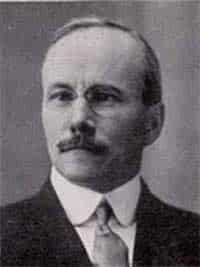
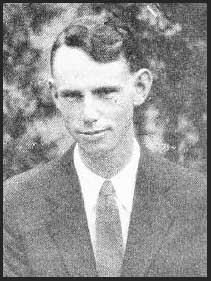
Having written earlier this week of The League of Evangelical Students, we present today two articles which appeared in the second issue of the League’s magazine, The Evangelical Student. The first article is by the Rev. Dr. O.T. Allis, who was then in 1926 a professor at the Princeton Theological Seminary.  Following that, a brief article by Johannes G. Vos, the son of Dr. Gerhardus Vos. This second article is titled “The Spirit of Error.” We trust you will find both articles profitable.


THE SCRIPTURAL METHOD OF BIBLE STUDY
by PROFESSOR O. T. ALLIS, PH.D.

There are certain things essential to the truly scriptural study of the Bible which need to be emphasized today in view of the insistent claims which are so often made by the advocates of the so-called “modern” or “critical” method of Bible study.

The first of these is the unity and harmony of the Bible. This charac­teristic has impressed believing scholars in all ages as a signal proof of its divine origin. The fact that so many different writers, so widely separated in time, wrote a collection of many books which are in the truest sense one book, the Bible, is a strong evidence of its unique inspiration. Yet one of the outstanding characteristics of the “modern” method is the way in which it exhibits, and the importance which it attaches to, the alleged dis­harmonies of the Bible. We cannot read beyond the first chapter of Genesis without being confronted with this cardinal doctrine of the critics; for the “second” account of creation (Gen. ii) contradicts, we are told, the “first.” And this is but a sample. We have, they tell us, two ac­counts of the Creation and the Flood; three accounts of the Plagues and of the Crossing of the Red Sea; four of the Crossing of the Jordan. Further­more, these accounts disagree and contradict one another. The theoretical Jehovist differs from the hypothetical Elohist; and the alleged Priestly writer contradicts them both. Judges discredits the account of the Con­quest given in Joshua; Chronicles is proved unreliable by Samuel-Kings. The “great” prophets are represented as the opponents of the priests and as the more or less uncompromising foes of the ritual sacrifice. Micah and Zechariah are divided between at least two authors, Isaiah is given to three; and many of these documents are declared to be composite and to have been edited, or revised, by a later compiler or “redactor.” All this partitioning and analyzing is made necessary, it is argued, by differences in language, style, ideas and manner of presentation, differences which not seldom amount to contradictions. The result is that for the “modern” student the Bible, especially the O.T., is characterized not by harmony and unity, but by discord and contradiction. How disastrous this is should be apparent to everyone, for nothing is more certain to discredit a book and destroy its influence with thinking people than to find that it does not contain a consistent and harmonious presentation of the matters which it aims to set forth HERE are certain things essential to the truly scriptural study of the Bible which need to be emphasized today in view of the insistent claims which are so often made by the advocates of the so-called “modern” or “critical” method of Bible study.

Consequently the reverent Bible student will be very slow to accept these alleged contradictions. He will scrutinize them with the utmost care. If he does so, he will find that many of them are purely imaginary. There is nothing inconsistent about the statement in Num. xvi. that (i) a Levite and (2) three Reubenites were leaders in a rebellion against Moses, nothing to indicate that we have here two conflicting accounts of the same event The mention of two parties simply shows that the revolt was wide­spread and serious enough to require drastic measures. There is nothing contradictory about the statement that (1) the Lord told Moses to lift up his rod and (2) to stretch forth his hand and that then (3) the Lord caused a strong east wind to blow, in order that the Red Sea might be divid­ed before Israel (Ex. xiv. 16, 21). Such statements are different only in the sense that they record distinct features of the story, all of which are needed to complete the record. They become contradictory only when each state­ment is treated as complete in itself and placed in opposition to others which are designated to supplement it. Most events, especially if they be great ones, are complex; there are many factors which enter into them. Were the modern method of source analysis applied to almost any his­torical narrative which dealt at all adequately with an intricate situation it could easily be reduced to a mass of contradictions.

There are other alleged contradictions which are due either to a failure to recognize, or to ignorance of, all necessary facts. Thus, Hosea in pronouncing vengeance on the House of Jehu (i. 4), is not denouncing Jehu for obeying the command of Elijah as conveyed by Elisha. The ex­planation is given in 2 Kgs. x. 30 f. where the wilfulness of Jehu is exposed. And it is made still clearer by the prophetic denunciation of Baasha who provoked the Lord “in being like the house of Jeroboam; and because he slew him.” By following in the sins of the House of Omri, Jehu’s House merited the same punishment. Yet Hosea is cited as an instance of a later prophet denouncing what an earlier prophet had expressly commanded!

The second essential of which we would speak, is that the Bible student should understand and accept the viewpoint of the Bible. Many of the diffi­culties which the “modern” student finds with the Bible are the direct result of failure to do this, or, to put it more strongly, of the determination to judge and interpret the Bible by standards which are contrary to its whole teaching.

The oft-repeated reference in the first chapter of Genesis to God and to His sovereign acts is tremendously impressive: He spake and it was done. The Bible is a record of God’s wonderful works for the children of men. No one can understand it who does not accept its great major premise— God—or who seeks to set limits to His power. The O.T. purports to be primarily the record of God’s special dealings with a peculiar people to the end that through that people all the nations might be blessed. The uniqueness of the religion of Israel, of the Covenant with Abraham, of the Law given through Moses, is affirmed again and again: “God hath not dealt so with any nation.” To study the religion of Israel in the light of comparative religion as though it were similar in kind to the ethnic faiths, is to reject its most insistent claim—“All the gods of the nations are idols (worthless things), but the Lord made the heavens.”

The religion of Israel is represented as the religion of revelation. God has revealed Himself in word and in deed. He has made known what man could not discover; He has wrought wonders beyond the power of man. Miracle and prophecy are, according to the Bible, signal proofs that God has manifested Himself. The supernatural is of its very essence. A student who rejects the supernaturalism of the Bible, treats its miracles as legend, and post-dates its prophecies or reduces them to shrewd conjecture, is taking offence at what the Bible declares to be, and what the Church in all ages has regarded as, a unique and convincing proof that God has indeed revealed Himself.

Finally the Bible is the story of redemption, of salvation from sin. John the Baptist sums up the Gospel and also shows it to be the fulfilment of O.T. religion with the words, “Behold the Lamb of God, which taketh away the sin of the world.” The Old Testament plainly teaches that the priestly sacrifices of the Law were divinely ordained; and the New Testa­ment as plainly interprets them as prophetic of and fulfilled in the Cross of Calvary. To treat the priestly ritual as a survival of paganism and to affirm that it was repudiated by the “great” prophets of Israel leads logically to the rejection of the Cross which is the central fact of Chris­tianity, God’s sovereign remedy for sin.

In one of our great historic creeds the statement is made: “The infal­lible rule of interpretation of Scripture is the Scripture itself.” We need to remember this. “God is His own interpreter.” If the Bible is the Word of God, it must be our final authority; it cannot be correctly interpreted by any standards but its own. If its human authors were inspired of God, God’s Spirit will enable us to understand it aright, if we seek His guidance. To the wise of this world the Bible is a book of riddles, sealed with seven seals. It tells of a divine revelation, miraculously conveyed; they would have it speak of man’s eager quest of truth and of his wonderful discoveries. It tells of God’s great salvation for lost sinners; they would have it describe the development of man’s religious nature and its limitless possibilities. In short the “modern” student is trying to restate in terms of a more or less frankly naturalistic evolution what the Bible states in terms of superna­tural redemption. No wonder the “modern” student finds contradictions in the Bible and has to tear it chapter from chapter, verse from verse, and line from line, since he would so completely change its message. But those who study it reverently as the Word of God and seek the guidance of His Spirit will be more and more impressed with the harmony and the heavenliness of its glorious message of redeeming love in Jesus Christ our Lord.


THE SPIRIT OF ERROR
J.G. VOS

Error is always with us. It assumes many forms and makes various appeals. The systems of falsehood are almost without number. There are errors as old as the ages, and there are errors of recent origin. Errors appear, disappear, and reappear, while the truth of God abides continually. So sporadic, indeed, have been the errors, and so constant is the truth, that some have concluded that all error, because it is error, is about to die; and that all truth, because it is truth, is sure to survive.

This conclusion is certainly fallacious. It is true that error often dies, and that the truth usually survives; but the error does not die because it is error, nor the truth survive because it is truth. If error dies, it is because the Holy Spirit has used means to cut it off. If the truth survives, it is because the Holy Spirit has used means to ensure its survival is always with us. It assumes many forms and makes various appeals. The systems of falsehood are almost without number. There are errors as old as the ages, and there are errors of recent origin. Errors appear, disappear, and reappear, while the truth of God abides continually. So sporadic, indeed, have been the errors, and so constant is the truth, that some have concluded that all error, because it is error, is about to die; and that all truth, because it is truth, is sure to survive.

Error will not die of itself, because the natural heart of man clings to it and loves it better than the truth. Idolatry, the worship of that which is not God, is almost as old as the race, and a large part of humanity still ad­heres to it, for the worship of the things that are seen appeals to the na­tural man. Christian Science, with its denial of the reality of sin, flatters the sinful heart of man. The idea of salvation by works, by character, by ideals, etc., appeals to the pride of man and conveniently removes the stumbling block of the cross of Jesus Christ. While the heart of man is what it is, these errors will never die of themselves.

Error will not die of itself, because Satan is actively engaged in its propagation. He is the father of lies, and there is no truth in him. When he speaks a lie, he speaks of his own. Error traces its origin back to him, for he is a liar, and the father of it (John viii. 44). Errors and heresies are not indifferent things which come from nowhere; they are devised and propagated by the arch-enemy of the human race.

If error is to be overcome, it must be by active opposition on the part of those who acknowledge the truth. Christians must witness for the whole of revealed truth and oppose all contrary error. If we merely state the truth and neglect to point out and oppose the contrary error, we are not faithful witnesses. It is only as the truth is distinguished from error that its real character can be shown. The notion that we can forget about the error and merely preach the truth, that we can ignore “modernism” and meantime engage in “constructive” Christian work, is tragically mistaken. No doubt God could accomplish his purposes without using men as his instruments; no doubt he could bring about the victory of the truth without using our testimony, but He has called us to be his witnesses, and it is our duty to testify.

The visible Christian Church is divinely appointed to bear a corporate witness to revealed truth, and therefore also to discountenance error. Chris­tian students by their membership in the body of God’s witnessing people support the truth and oppose error. In our day, however, great sections of the Christian Church have abandoned their testimony to the truth and their opposition to error, and other great sections seem about to do so. Doc­trinal indifference is the first step; open toleration of error is the conse­quence. On this account Christian students should consider earnestly and carefully the question of their relation to a particular branch of the Chris­tian Church, for membership in a witnessing church is itself a witnessing act, and membership in a church which tolerates error involves, to some extent at least, a tacit approbation of such toleration.

The League of Evangelical Students is essentially a witnessing body. We declare that we “bear united witness to the faith of students in the whole Bible as the inspired Word of God,” (Constitution, Article II, Sec­tion i). Those only are eligible for membership in the League who have “faith in the Bible as the infallible Word of God” and who accept “the fundamental truths of the Christian religion,” (Constitution, Article III, Section i). Let us not be ashamed of the testimony of our Lord. Let us not fear the charge of intolerance. God has commanded his people to wit­ness for the truth, but he has never commanded them to tolerate error. If we who have banded ourselves together into a League to witness for the truth and against error, are on that account called narrow-minded, bigoted, intolerant, or even unchristian, let us call to mind the words of the Lord Jesus which are recorded in Matthew v. x I: “Blessed are ye when men shall reproach you, and persecute you, and say all manner of evil against you falsely, for my sake.”

Saturday, October 5, 2013

Mr. (Dr. Prof.) John Tulloch's "The Old Testament Story:" Those Who Read It

Tulloch, John H. and McEntire, Mark. The Old Testament Story (8th Ed.). Upper Saddle River: Pearson-Prentice Hall, 2009. 

We have the 8th editions, but there is a 9th edition available at: http://www.amazon.com/The-Old-Testament-Story-Edition/dp/0205097839/ref=sr_1_fkmr0_1?ie=UTF8&qid=1376794370&sr=8-1-fkmr0&keywords=tulloch+the+old+testament+story

Chapters 1. The Book and Those Who Study It

Mr. Tulloch bills his work as an “introduction to an academic study of the Old Testament” (2). Fair enough. Workable for a high school class and, perhaps, a first-year course in college. But, not recommended more widely.

But, gratuitously, he informs us…page 1 and then again on page 2…the Torah as “canon” was completed in 500 B.C. and the Hebrew canon close in 100 A.D. Whala! There ya' have it. Case settled, right? There are other objections that will be raised as we proceed. There is much good material here, but…

He offers a fair-enough summary of the Old Testament over two pages: Creaton, Flood, Patriarchs, Judges, Monarchy, Divided Monarchy, Exile, and the Post-Exilic Period. No problems.

He inserts a one-liner denying “verbal plenary inspiration” calling it the “dictation theory,” a specious one-liner that, God willing, will be rebutted elsewhere, notably, in connection with reviews of the highly recommended volume by the Mr. (Rev. Dr. Prof.) Robert Reymond, that is, his stellar Systematic Theology.


Mr. Tullloch airbrushes God out. It's a presumption or operational assumption by faith alone--his faith alone, er, an assumption of the establishment in some places.

Mr. Tulloch uses the metaphor of “tributaries” gathering force and unification as the canon emerges, but then gratuitously informs us that:

• The Torah (Genesis-Deuteronomy) was accepted as canonical in 400 B.C. Oh really?

• The Prophets were accepted as canonical in 200 B.C. Really, now?

• The Kethuvim (Writings) received canonical authority in 100 B.C.

• We would add, evidence please? This dawg ain't gonna fly well.

Mr. Tulloch advises that the "Dead Sea Scrolls" offer the entire OT canon or portions of those books, minus two books. Also, there 1000 non-canonical manuscripts. More as this story develops too.

We get a “brief” on textual criticism:

• The Leningrad Codex is dated at 1000 B.C. What Mr. Tulloch failed to note was that about 3-4% of the text varies from those of the Dead Sea Scrolls from a millennium earlier. To wit, the inference that grand caution was used in textual transmission and that the canon was closed before the Council of Jamnia, c. 90 A.D. A council that “recognized” the authoritative OT canon.

He helpfully (and we wish to note the positive elements in the book) offers a review of the background of the Masoretes. That is, the family and, particularly one rabbi, Aaron Ben Moses Ben Asher, who labored on the Hebrew texts by day and by night. There were no printing presses. He labored with pen in hand, ink well, at a desk, without lights in the house, and produced careful textual “pointing” to the text.

Truly, but amazingly, Mr. Tulloch tells us about “major shifts” in Old Testament studies.

• The standard introduction to Documentary Hypothesis initiated by H. W. Witter (d. 1711) and Jean Astruc (d. 1753) with observations about alternating uses of the divine names, Jehovah and Elohim, certain repetitions, and a few differing names (Mt. Sinai and Mr. Horeb)

• The standard introduction to sources names J (dated 950 B.C.), E (750 B.C.), D (550 B.C.) and P (450 B.C.)

• To our humor and amusement, Mr. Tulloch notes two weaknesses with this: (1) no evidence and (2) the assumption of evolution. This little note is another “one-liner.” What does that mean? No evidence? Evolution, an assumption? This one-liner, "no evidence" and "evolution," was very telling and humored us here.

• Another shift occurs with the schools of formgeschichte, or, “form criticism,” an effort to further analyze smaller units: the Sitz em Leben, or life context, of stories, poems and laws.

• Another “shift” to redaktionsgeschichte,” or redaction criticism, an effort to evaluate the “theology of editors” who reshaped the text. Mr. Tulloch doesn’t use the German terms, but for the record, we include them. Further, he does not identify the philosophically assumed effort at de-historicization or the anti-theological assumptions that were widely operative. This school or effort was just coming into its own during this scribe’s studies

But then, we get essentially, something of a “concession speech” by Mr. Tulloch with another “marked shift” in Old Testament studies. That is, scholars are focusing on the “finished product” as documents that are “entirely credible” and as “works of force and authority” (15). More can be said, to wit, that the Documentary Hypothesis, Form Criticism, and Redaction Criticism is in a state of some disarray. More as that storyline develops.

Mr. Tulloch gives a quick overview of archaeology: the purpose, practice, skills, tools and value (17-21).

He has a lovely and helpful “block” of important archaeological discoveries:

• Rosetta Stone—the three-language, or tri-lingual, inscription whose de-coding enabled the reading of Egyptian texts. What Mr. Tulloch fails to note is that these civilizations were literate, an embarrassing note highly underplayed in the liberal world of yesteryear. You mean Moses might have been literate? With scribes too? Oh no! You mean he “actually” may have written the Pentateuch? More as that develops.

Gilgamesh Epic—another account of the Flood

• Beni Hasan Mural—located 150 miles north of Cairo, depicting traders and commerce. I would add that this scribe had opportunity to view this wonderful mural. The colors were original and preserved by the dry sands and very preserving and protecting climate

• Gezer High Place—10 tall obelisks or stones—witnesses to a covenant ceremony

Misters (Revs. Drs. Profs.) Roland Harrison and Gleason Archer's Introduction to the Old Testament still are much more to be preferred and recommended for novitiates.

Thursday, December 9, 2010

Thoughts on the Documentary Hypothesis

The Eclipse of the “Documentary Hypothesis,” Sometimes Called the “Graf-Wellhausen’s Theory”
by Donald Philip Veitch (no copyright claimed whatsoever)

When discussing the Documentary Hypothesis, sometimes called the “Graf-Wellhausen Theory,” one refers to a composition-theory of the first five books of the Bible. This composition-theory deals with the first five books of the Bible: Genesis, Exodus, Leviticus, Numbers, and Deuteronomy. The scope of these books cover Israel’s story: Creation, Flood, Patriarchal narratives, Exodus, Wilderness Wanderings, and closes with Moses’ death (Dt. 34). The argument of the centuries, Jewish as well as Christian, has held that Moses was the key author of all five books, including possibly a school of scribes under his direction. In conflict with this view, however, a 19th-20th century view emerged in Germany called the “Documentary Hypothesis” or Graf-Wellhausen’s Theory.” This 100-year old theory held dominance in many scholarly circles but, at the present, it shows signs of extinction. Professor Tulloch, a tentative documentarian himself, gives the gentle, telling, but undeveloped eulogy: “A marked shift in emphasis has occurred in Old Testament studies in recent years. There has been a movement away from examining the pieces that make up the literature to examining the finished product” (Tulloch 15). Why the passing? Three reasons are suggested for the extinction: a history of chaos and confusion, a history of unanswered and dubious assumptions, and a significant credulity in the face of sustained and credible opposition.

Before looking at these three factors of extinction or scholarly retreat, what is this theory called the “Documentary Hypothesis” or “Graf-Wellhausian” theory? The thumbnail answer is that at least four writer/editors wrote Israel’s history centuries after Moses (1446-1406 B.C.E.) and, for some scholars, one century after Israel’s Babylonian exile (609 B.C.E.-520 B.C.E.) of date 450 B.C.E. In short, the first five books of the Bible are redacted (created) histories over a 1000 year period. The theory claims to have discovered four writers or sources called J, E, D, and P. Rather than the “Documentary Hypothesis,” it is sometimes calls the JEDP-Theory. Here is why.

• The “J” writer or source is dated 950 B.C.E. This writer allegedly wrote during Solomon’s reign (970-930 BCE), five hundred years after Moses. This source distinctively uses the OT name of Jehovah, יְהוָה, sometimes spelled YWHW or Jahwist. Hence, the term “J.”

• “E”, shorthand for an “Elohist” writer or document, was a redactor/redaction of “J” hailing from 750 B.C.E., seven hundred years after Moses. The distinctive name, Elohim or אֱלֹהִים, characterizes this source.

• “D” is a “Deuteronomist” redactor/document, a source from 550 B.C.E., nine hundred years after Moses. This writer/document is informed by the “rediscovery” of the Book of Deuteronomy during King Josiah’s reign in 621 B.C.E. and reflects legal concerns.

• “P” is shorthand for a “Priestly” document/redactor, dated 500-450 B.C.E. This was “a history written by the priests around 450 B.C.E, adding legal materials related to worship and genealogical lists” (Tulloch 14). This is 1000 years after Moses.

With circularity and gratuity, this compositional theory claims that the final product was “creatively pieced together” shortly after the Babylonian Exile (Sproul, 1). Other assertions are made about these four sources: different distribution of the divine names, repetitive stories (Abraham’s wife and Isaac’s wife), repetitive laws (e.g. Passover, Ex.12.1-20, 21-23; Dt. 16.1-8), different geographical names (e.g. Mt. Horeb and Mount Sinai) and differing theologies. The “JEDP Theory,” or the Documentary Theory,” was “an assured result of scholarly research,” a dominant claim by Documentarians. But one documentarian, Dr. Tulloch, granted —in a serious concession—that the theory suffered “from an exaggerated sense of certainty about the historical framework based upon little evidence” (Tulloch, 14). While this is a refreshing concession by Dr. Tulloch, an elaboration on this theory would have shown much more, namely, a history of chaos and confusion, a history of dubious assumptions, and a significant credulity amongst their own advocates.

History of Chaos and Confusion. The first issue is that the Graf-Welhausen’s theory
suffers from a history of chaos, confusion, contradiction, and reversal amongst its advocates. In the literature, the scholars disagree amongst themselves as to the criteria and dates of J, E, D, and P—for starters. This has made the theory difficult to comprehend and defend. To fully argue this point, one would need to review the key players, their publications and their own disagreements and disavowals: Astruc, DeWette, Hupfeld, Eichorn, Kuenan, Eissfelt, and others. That alone, a history, would merit a doctoral level dissertation. “One scholar’s `J’ is
another’s `E.’” These disagreements are not occasional in the literature, but are distributive and dominant . Dr. Gleason Archer, a modern OT scholar in the old Princetonian school, sarcastically summarized the issue: “Observe the contradictions and reversals of this documentary theory” (Archer 90). Chaos and confusion has prevailed.

To illustrate this chaos, a photo may help. A fuller picture would have J1, J2, J3, J4, J5 and more J’s, indexed to any given scholar, with the photo to the left having many more
connecting lines in the diagram. One scholar has his list of biblical texts that reflect the “J” source. We can call that a J1 scholar. Another scholar disagrees and offers his unique list of biblical texts that are truly a J-source. We can call that second scholar a J2 scholar with his unique list contradicting the J1 scholar. Multiply the scholars who have differing and conflicting lists of biblical texts that are alleged J-sources. We again note Dr. Archer’s dictum: “Observe the contradictions and reversals of this documentary theory” (Archer 90). Illustratively, the argument can be extended to the E-sources indexed to variant views of scholars with conflicting lists of biblical texts. By way of argument, let this be the E1, E2, E3, E4, E5 and more E’s, indexed to any given scholar, with more lines for the above diagram. There are also some scholars who feel that J and E have the same author, e.g. Dr. Hupfeld (Archer, 90). But then again, there are scholars who think there is no J, E, or D, just a P. There are earlier E’s and later E’s according to varied scholars. (Archer, 90). The argument is applied to variant and conflicting views about texts for D. There are D1, D2, D3, D4, D5 and more D-lists, indexed to varying scholars. There are P1, P2, P3, P4, P5 and more P’s. Some P’s precede the J’s. (Archer, 90). Unsatisfied with JEDP, other scholars advocate for a “K” or Kenite” source, “L,”, “S,” “R” and more. Hence, the photo used above can be filled in and new lines drawn—the result is chaos, confusion and reversals. One might say that “one needs a scorecard to keep them straight.” While we have offered a quick photo, it is fair to say that this paragraph
summarizes the history of confusion and chaos. Such a multi-mutant theory is not for the “faint- hearted” as one scholar gently and quite charitably reminds us:

"No longer can a biblical scholar begin a sentence with the word J and presume that another scholar will listen to the rest—or that the other scholar will mean more or less the same thing even if she is willing to use that term. The verities enshrined in older introductions have disappeared, and in their place scholars are confronted by competing theories which are discouragingly numerous, exceedingly complex, and often couched in an expository style that is (to quote John van Seter's description of one seminal work) `not for the faint-hearted.'" (Sommer 1)

Indeed, Graf-Wellhausen’s theory is not for the “faint-hearted” with its permutations that are “discouragingly numerous.” This theory is a theory that has died due to a history of reversals and contradictions. It has also died because of dubious assumptions and its excessive credulity by its adherents.

Dubious Assumptions. In addition to the conflicted theory of chaos, the second argument proposed for the extinction of this theory is its history of problematic and dubious assumptions. We can only trace of few of these problems with a few suggested rebuttals.

For example, one dubious assumption concerns the criteria of names, e.g. Jehovah and Elohim, as a reference-point to date two sources, J and E. But this begs the question and argues in a vicious, but not virtuous, circle. The argument runs this way: (1) This set of biblical texts use Jehovah’s name. (2) Only a “Jehovist” redactor writes this way in 950 B.C.E. (3) Therefore, these texts are written by a “J” or “Jehovist” redactor in 950 B.C.E. The assumption in premise one is that Moses could not and did not use the name “Jehovah.” But who granted that assumption, other than Dr. Graf and Dr. Wellhausen? And why was this assumption granted, other than with circulatory and selective evidence? Further, by what criteria is 950 B.C.E. adopted except by a scholarly assumption and assertion without evidence. By what stretch of the imagination is Moses unable to use two names of God? One is never told insofar as this scribe can see. There are many more than two names throughout the Old Testament, e.g. Jehovah- Nissi, Jehovah-Tskekenuh, El-Shaddai, El-Elyon, El-Olam, Adonai, as well as others. Furthermore, one third of the 150 Psalms, eleventh century B.C.E. documents, use both names, Jehovah and Elohim. Where does 950 and 750 B.C.E. arise? By parallel, Dr. D. James Kennedy , examined President George Washington’s dairies—which had many religious references—and found about eighty different permutations of divine names in the diaries, e.g. God Almighty, God the Father, Most Merciful God, Eternal God, Fountain of all goodness, Holy One, Most blessed and most merciful God, etc. By parallel, were there eighty authors of George Washington’s diaries? Without substantial answers, one gets the preliminary whiff of regal and imperial assumptions, a theory in search of non-supporting facts.

A second dubious assumption is offered concerning “P,” the Priestly Source of 450 B.C.E. The assumption is that Israel in Moses’ time could not have known about priestly and tabernacle issues, e.g. Ex.25-40 and Leviticus. On this assumption, it was not possible for Moses to write about priests, sacrifices and a religious center. The assumption, like the one above, suffers from severe question-begging and circularity. The argument runs likes this. (1) Moses did not know of priestly, sacrificial, or religious rituals. (2) Redactors in 450 B.C.E. did know about these matters. (3) Therefore, what Moses couldn’t do, this “P” redactor did. Premise one is assumed without warrant. The conclusion simply repeats the premise. Were there no priestly and religious rituals in the surrounding ancient near eastern religions during Moses’ day of the 15th century B.C.E.? Cultures having priests and religious rituals, e.g. the Hittite culture of the 15th-14th century? By parallel, even if one granted a 7th-8th century provenance to Homer’s Illiad and Odyssey, why must a “Priestly” redactor be assumed for a 450 B.C.E. date? Greek religion teems with references to “sacrifices to the gods” centuries before 450 B.C.E. Can that not occur with the Israelites? One could compile a long list of priestly and religious texts from the 13th-9th century B.C.E. rebutting this assumption of 450 B.C.E. Professor William Henry Green of Princeton Seminary did exactly that--offering at least 300 such references written in the 13th-9th centuries and referring to Moses’ writings…long before 450 B.C.E. (Green 34ff.) In fact, Green buried this dubious assumption in 1895 and 1896 C.E.

A third gratuitous assumption—heard less and less these days—was that Moses and associates were not literate. While we do not have authoritative sources immediately at hand, this scribe has heard it in years past. Also, Professor William F. Albright, America’s premier “Father and Dean of Archaeology” at John Hopkins University, the doctoral mentor of my Professor of Hebrew, Dr. Milton Fisher, insisted that the Graf-Wellhausians were dominated by their assumptions, rigidity and intransigent defiance to abundant archaeological data. According to Dr. Fisher, Professor Albright constantly complained about Graf-Wellhausians “sweeping the evidence under the rug” in the interests of a theory and philosophy. Just on the assumption of divine names alone as a criterion, Professor Albright said this was “completely absurd” (Albright 29). When related to Moses’ literacy, surrounding nations had literate scribes. Why must one assume that Moses was not literate? For example, the ancient Sumerians (3000 B.C.E.) and Akkadians had scribes who wrote wisdom proverbs as a means of teaching both wisdom, but also as a method to learning a second language (Tulloch 330). The 15th-14th century Hittites, Babylonians and Egyptians had “polyglot” dictionaries in “parallel” columns for reasons of international diplomacy and translation of treatises. Under-privileged Semitic miners at the turquoise mines in the Sinai Peninsula “were scrawling their alphabetic inscriptions as early as 1500 B.C., if not earlier” (Archer 96). The Egyptian scribes, c. 1000 B.C.E., were trained in Pharaoh’s court (as was Moses) and used the “Instruction of Amen-em-opet,” a manual to teach youth morals (Tulloch 330). Many surrounding cultures had literate scribes, so why would one gratuitously assume illiteracy, ignoring “the cumulative evidence that the Hebrews were a highly literate people from the times of Moses onwards”? (Archer 96) These are a few examples of objections to another dubious assumption.

A fourth assumption will be dispatched quickly, namely, that allegedly differing styles characterize the four alleged sources. This is more circular reasoning and question begging. Here is how the argument runs. (1) Genesis contains narrative and not legal materials. (2) Leviticus contains legal and religious materials but little narrative. (3) Ergo, given these differences, there are two sources. The scholar gets what he wants—confirmation of his assumption by repeating it with a conclusion. We offer one rebuttal, although more have been crafted. John Milton, the 17th century English poet and polemicist, wrote a cheerful poem entitled, L’Allegro. He wrote the Paradise Lost, a serious epic poem whose subject and style differed from L’Allegro. He also wrote the Aeropagita, a work full of prose essays. All three had different subjects and styles. By parallel reasoning, were there three different Miltons? M1, M2, and M3? On Graf-Wellhausian assumptions, there would need to be several Miltons. This fourth assumption, dubious as it is, is dispatched quickly without further ado.

Excessive Credulity. Graf-Wellhausen has suffered from excessive credulity—to the
point that its own adherents are dismissing or re-working it. Several quotes will be listed from
critics who find the theory “extravagant,” a theory for the “credulous, and a theory full of
circular reasons and question begging. Unlike the 100-year past with the frequent, if not
triumphalist, assurances that JEDP was “an assured result of scholarship,” one writer speaks of the modern relinquishment of the earlier claims to scientific methodology:

"The mid-1980s and the early 1990s witnessed a resurgence of biblical scholars challenging, revising, and even rejecting the Documentary Hypothesis. First and foremost, scholars relinquished claims to a scientific methodology." (Stern 182)

The same writer, Dr. Stern, quotes another scholar, Dr. Tigay, regarding the “notorious subjectivity” of Graf-Wellhausen, what we term “excessive credulity” without warrant or evidence. He says,

"In Empirical Models for Biblical Criticism, Jeffery Tigay insists that "The degree of subjectivity which such hypothetical [source critical] procedures permit is notorious." In fact, he characterizes these procedures as `reading between the lines.'" (Stern 182)

We repeat Dr. Tulloch’s gentle, but unexplained, concession-speech about Graf-Wellhausen— credulity. This scribe views credulity as the unspoken subtext Dr. Tulloch’s comment. We might employ the metaphor of historic beach erosion over time for the disappearance of Graf-Wellhausen, although Dr. Tulloch is kinder when he says:

“A marked shift in emphasis has occurred in Old Testament studies in recent years. There has been a movement away from examining the pieces that make up the literature to examining the finished product” (Tulloch 15).

Another OT scholar offers this unflattering description of Graf-Wellhausen:

"This review of the activity in the field of Old Testament criticism during the last quarter-century has revealed a chaos of conflicting trends, ending in contradictory results, which create an impression of ineffectiveness in this type of research. The conclusion seems unavoidable that the higher criticism has long since passed the age of constructive achievement.” (Hahn, 41)
Dr. Gleason Archer offers this excoriating summary of Graf-Wellhausen (AKA “Credulity Theory of 100 Years”) when he says:

“Almost every supporting pillar has been shaken and shattered by a generation of scholars who were brought up on the Graf-Wellhausen system and yet have found it inadequate to explain the data of the Pentateuch…They have undermined the defenses and torn down the bastion which buttressed the documentary hypothesis, but they have gravitated quite definitely into an even more implausible position than that occupied by their predecessors…the Hebrews never got around to inscripturating the records of their faith until 500 B.C. or later. It requires a tremendous willingness to believe the unlikely for an investigator to come up with a conclusion like that" (Archer 104).

In short, Graf-Wellhausen has disappeared because the credulity of its earlier chieftains and advocates has been explored and exposed.

A Few Objections. First, given the dominance of this theory over the last 100 years, upon what grounds is it dismissed? Answer: the onus probandi rests with the defenders of Graf-Wellhausen and this theory has suffered a chaotic history with dubious assumptions and with credible scholars debunking the credulity. It’s own advocates have abandoned the theory, or at least, have reworked it with further problems. Second objection: Medical Doctors need an M.D. and a state license. Airline pilots require training. Lawyers are required to pass a bar exam. By what stroke do you think you— without a doctorate in OT—think you can deconstruct Graf-Wellhausen. Answer: we concur with the objection, although serious doctors in the OT have taken up the attacks, including adherents of Graf-Wellhausen. Conceding this objection, the studies must continue. Third objection, how to you account for the widespread dominance of Graf-Wellhausen? Answer: This a a commendable, if not difficult, objection. Although we lack graduate and doctoral credentials in sociology, e.g. "elite theory," and social psychology, we post that perhaps 100 elites in Germany and England--pre-internet days--were able to dominate influential instititutions. While the objection has force, we still are left with a gaggle of OT scholars abandoning the theory over the last generation. Pray tell, why? Having noted these three suggested objections, the onus of proof still rests with the Documentarians—and from what we have seen, they have been abandoning the hypothesis for the last thirty years. A reasonable person asks “Why?” Three reasons have been posited.

Confused like Rowan in Canterbury?
Rowan is consistently confused with Hegelian tensions between his accomodating ears, so we look for no help from him. The shocked eyes and fly-away eyebrows best represents CANTAUR's confused responses to Graf-Wellhausen (and many other issues). We view Rowan as our mascot of perennial confusion.
Although not an Old Testament scholar myself, the frequent hints, one-liners (without explanation), isolated paragraphs here and there, and other concessions raised the question. What has become of the Documentary or Graf-Wellhausen Hypothesis? Why has it all but disappeared? The impetus to this argument was to collect some of the reasons for the death, disappearance and/or retreat of this theory. Upon review, the situation is worse than previously imagined, although few celebrate the history of chaos and confusion, the history of dubious assumptions, and the evident credulity. In fact, documentarians appear to have presided at the funeral and have uttered, “Requiescat in pace,” or, “Rest in peace.” The Graf-Wellhausen Theory is full of historic, special pleading with chaos as the common theme. It possesses numerous assumptions that are begged and circular in nature. The theory operates with questionable deductions from those assumptions. An excessive credulity has existed as 19th-20th century scholars, living more than 3400 years after Moses, have assumed that they can reliably reconstruct the 15th century B.C.E.—they assume they can do that better than even the redactors themselves who, on Documentary terms, lived 500 to 1000 years after Moses. Dr. William Green of old Princeton summarized it: “…extravagant theorizing…revolutionary conclusions…a dubious scientific respectability.” (Green v.)
Doctors Graf and Wellhausen, your Documentarian children have buried you both saying: “Requiescant in pace.” The theory still demands more reasons to explain its demise—this represents but a mere beginning.

Works Cited

Archer, Gleason L. A Survey of Old Testament. Chicago: Moody Press, 1977. Print.

Albright, William. Yahweh and the Gods of Canaan. Garden City, NJ: Doubleday, 1968. Print.

Green, William Henry. The Higher Criticism of the Pentateuch. New York: Charles Scribners and Sons, 1895. Print.

Hahn, H.F. The Old Testament in Modern Research. Norwick, UK: S.C.M. Press, 1956. Print.

Sommer, Benjamin, review of Benjamin Sommer, review of Ernest Nicholson’s “The Pentateuch in the Twentieth Century: The Legacy of Julius Wellhausen,” Review of Biblical
Literature
, 30 September 2000. Web. 2 Dec. 2010.

Stern, David. "RECENT TRENDS IN BIBLICAL SOURCE CRITICISM. (Cover story)."
Jewish Bible Quarterly 36.3 (2008): 182-186. Academic Search Premier. EBSCO. Web.
9 Dec. 2010.

Sproul, R.C., ed. The New Geneva Study Bible. London: Thomas Nelson Publishers, 1995. Print.

Tulloch, John H, and Mark McEntire. The Old Testament Story. Upper Saddle, NJ: Pearson-
Prentiss Hall, 2009. Print.