Reformed Churchmen

We are Confessional Calvinists and a Prayer Book Church-people. In 2012, we remembered the 350th anniversary of the 1662 Book of Common Prayer; also, we remembered the 450th anniversary of John Jewel's sober, scholarly, and Reformed "An Apology of the Church of England." In 2013, we remembered the publication of the "Heidelberg Catechism" and the influence of Reformed theologians in England, including Heinrich Bullinger's Decades. For 2014: Tyndale's NT translation. For 2015, John Roger, Rowland Taylor and Bishop John Hooper's martyrdom, burned at the stakes. Books of the month. December 2014: Alan Jacob's "Book of Common Prayer" at: http://www.amazon.com/Book-Common-Prayer-Biography-Religious/dp/0691154813/ref=sr_1_1?ie=UTF8&qid=1417814005&sr=8-1&keywords=jacobs+book+of+common+prayer. January 2015: A.F. Pollard's "Thomas Cranmer and the English Reformation: 1489-1556" at: http://www.amazon.com/Thomas-Cranmer-English-Reformation-1489-1556/dp/1592448658/ref=sr_1_1?ie=UTF8&qid=1420055574&sr=8-1&keywords=A.F.+Pollard+Cranmer. February 2015: Jaspar Ridley's "Thomas Cranmer" at: http://www.amazon.com/Thomas-Cranmer-Jasper-Ridley/dp/0198212879/ref=sr_1_1?ie=UTF8&qid=1422892154&sr=8-1&keywords=jasper+ridley+cranmer&pebp=1422892151110&peasin=198212879

Showing posts with label Westminster Seminary. Show all posts

Saturday, January 31, 2015

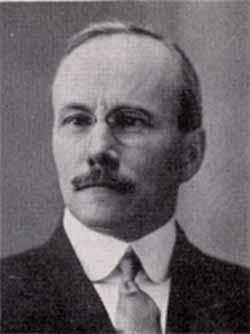
31 January 1886 A.D. Rev. Prof. R.B. Kuiper Born—President of Calvin Seminary & Professor of Homiletics, Westminster Seminary


31 January 1886 A.D.  Rev. Prof. R.B. Kuiper Born—President of Calvin Seminary & Professor of Homiletics, Westminster Seminary

Archivist. “January 31: R.B. Kuiper.”  This Day in Presbyterian History. N.d. http://www.thisday.pcahistory.org/2015/01/january-31-4/.  Accessed 31 Jan 2015.

January 31: R.B. Kuiper


Distinctive Calvinism


The wording of the postal telegram in 1933 was simple enough to Rienk Bouke Kuiper, who was president of Calvin College in Grand Rapids, Michigan.   Printed in all capital letters, it said, “UPON THE UNANIMOUS RECOMMENDATION OF THE FACULTY AND THE TRUSTEES OF WESTMINSTER SEMINARY IN SESSION MAY NINTH BY A UNANIMOUS VOTE HAVE ELECTED YOU TO THE CHAIR OF PRACTICAL THEOLOGY.  THE SECRETARY OF THE BOARD WILL SEND YOU FULL INFORMATION.  WE HOPE AND PRAY THAT YOU MAY BE LED TO ACCEPT THIS POST.  (signed) C. E. MACARTNEY, SAMUEL CRAIG, T. EDWARD ROSS, (for the board).

R. B. Kuiper was not unknown to the faculty and trustees of this new Presbyterian seminary in Philadelphia.  He had served the first year of its existence as professor of Systematic Theology, but then had left it to become the president of Calvin College.  Now he was being asked to return two years later to become the professor of practical theology.  The prospective teacher had all the spiritual gifts necessary for such a post.

Born January 31, 1886 in the Netherlands to a ministerial father, the family had emigrated to the United States so the father could take a congregation in Michigan of the Christian Reformed Church.

Later, R. B. Kuiper was educated at the University of Chicago, Indiana University, and with a diploma from Calvin Theological Seminary, he finished up his training at Princeton Seminary in 1912.

After this latter instruction from some of the finest minds of the Presbyterian world, such as B.B. Warfield, R.B. Kuiper began his ministry in the pastorate, serving several congregations in Michigan. He would have all that was necessary to be a pastor of practical theology from that experience.

Below, the Westminster faculty as composed upon Kuiper’s arrival, 1933-34.


R.B. Kuiper answered the telegram’s invitation in the affirmative  and went to Westminster Seminary in Philadelphia, where he taught for 20 years.  One of his students remarked that he had the gift of making the profound simple as he proclaimed the whole counsel of God.

Among that broad span of the whole counsel of God, and one which seminary professors and students often fail, is the area of Reformed  evangelism.   Listen to his words in his book “To be or Not to Be Reformed.”  He wrote “May God forbid that we should become complacent about our progress in evangelism!  Our zeal for evangelism is not nearly as warm as it ought to be.  Our evangelistic labors are not nearly as abundant as they should be.  Our prayers for the translation of souls from darkness into God’s marvelous light must become far more fervent.” (p. 77)   What R. B. Kuiper wrote fifty years ago is no  less true in our day.   Ask yourselves the question?  Am I a zealous evangelist?


Words to Live By:  “And when the Gentiles heard this, they began rejoicing and glorifying the word of the LORD, and as many as were appointed to eternal life believed.” The apostle Paul, Acts 13:48 (ESV)   “Divine election, and it alone, guarantees results for evangelism.”  R.B. Kuiper

Pictured above: Some of the courses taught by R.B. Kuiper in his first year at Westminster.

Sunday, January 11, 2015

11 January 1978 A.D A.D. Dr. John Skilton, Westminster Seminary, Philadelphia Preaches the Funeral Sermon for Rena Van Til, Wife of Dr. Cornelius Van Til, Westminster Seminary


11 January 1978 A.D A.D.  Dr. John Skilton, Westminster Seminary, Philadelphia Preaches the Funeral Sermon for Rena Van Til, Wife of Dr. Cornelius Van Til, Westminster Seminary


Batzig, Nicholas T. “Dr. John H. Skilton’s Funeral Sermon for Rena Van Til—Wife of Cornelius Van Til.”  Feeding on Christ. 27 Apr 2014.  http://feedingonchrist.com/john-skiltons-funeral-sermon-rena-van-til/. Accessed Apr 24, 2014.


Dr. John H. Skilton’s Funeral Sermon For Rena VanTil–Wife of Cornelius VanTil


Nicholas T. Batzig · April 27th, 2014 · No Responses


Rena Van Til


Many of the readers of this blog will know something of my gratitude to God for having grown up around Dr. John H. Skilton and Dr. Cornelius VanTil. Drs. Skilton and VanTil were best friends, who, after the death of Dr. VanTil’s wife, Rena, labored together in evangelistic and mercy ministry work in the Vietnamese section of Philadelphia–among other places. I was going through some old tapes today and came across a copy of Dr. Skilton’s sermon that he preached at Rena’s funeral on January 11, 1978. You can listen to it here.

Sunday, September 9, 2012

A Tribute to an Old Princetonian: Dr. Oswald T. Allis

http://www.thisday.pcahistory.org/2012/09/september-9-oswald-t-allis-wayne-to-write/

September 9: Oswald T. Allis

This Day in Presbyterian History:

Born this day on September 9, 1880,


Oswald Thompson Allis was born in Wallingford, Delaware county, Pennsylvania to Oscar Huntington Allis, M.D. and his wife Julia Waterbury Thompson Allis, on this day, September 9, in 1880. He was raised in the family home at 1604 Spruce Street, in Philadelphia. Decades later, this same location was to serve as the cradle for the newly formed Westminster Theological Seminary.


His education included an A.B. degree from the University of Pennsylvania in 1901; the Bachelor of Divinity degree from Princeton Theological Seminary in 1905; the A.M. degree from Princeton University in 1907; and finally the Ph.D. degree from the University of Berlin in 1913, with a dissertation focused on the study of selected Babylonian cuneiform texts.

Dr. Allis first served as Instructor in Semitic Philology at the Princeton Theological Seminary from 1910-1922 and then as Assistant Professor of Semitic Philology at the same institution, from 1922-1929.

Reorganization of the Princeton Seminary placed modernists in control of the school and so prompted the resignations of Drs. Allis, J. Gresham Machen, Robert Dick Wilson and Cornelius Van Til. Over the summer of 1929, plans were laid for the organization of Westminster Theological Seminary. Classes began in that autumn and Dr. Allis served as Professor of Old Testament History and Exegesis at Westminster from 1929-1930 and then as Professor of Old Testament from 1930-1936. When Dr. Machen and others were forced in 1936 to leave the Presbyterian Church in the U.S.A. denomination over their involvement with the Independent Board for Presbyterian Foreign Missions, Dr. Allis chose to remain in the denomination, but retired from his teaching post. Independently wealthy, he was able to devote the remainder of his life to research and writing.

Dr. Allis was the editor of The Princeton Theological Review from 1918-1929 and, beginning in 1929, maintained a position as Editorial Correspondent for The Evangelical Quarterly up until the time of his death, with many of his articles appearing in that publication.


A 1931 promotional brochure for Westminster Theological Seminary prepared by the Student Committee on Publications had these comments regarding Dr. Allis and his teaching:

“It is the painstaking and thorough accuracy of Dr. Allis in whatever he does, that causes his students to marvel. We watch him unravel the intricacies of Hebrew syntax, and his patience is a constant example and inspiration to us.”
“Dr. Allis’ favorite class room pastime is to answer critics who seek to prove the Old Testament untrue and unreliable. He shows how these would-be Bible destroyers are often false or inaccurate, and frequently so even in the realm of sheer facts. To sit under his teaching is to have one’s faith renewed in the Old Testament as the altogether reliable inspired Word of God.”

Wednesday, April 11, 2012

11 Apr 1933: J.G. Machen v. Robert E. Speer, Liberalism in Presbyterian Missions

http://www.thisday.pcahistory.org/?p=290

Be Ready Always

Professor J. Gresham Machen
(1881-1937)
Princeton Seminary
Westminster Seminary
The day of the debate had brought a crowd of Presbyterian elders to the sanctuary of the Fourth Presbyterian Church on that day of April 11, 1933. The topic was “Modernism on the Mission Field.” 

And the two individuals engaging in the debate were two “heavies” on opposite sides of the issue.

Dr. J. Gresham Machen was the recognized leader of the conservatives in the Presbyterian Church, U.S.A. Founder and president of Westminster Theological Seminary in Philadelphia, Pennsylvania, he was still a member minister of the New Brunswick, New Jersey Presbytery, though he had tried unsuccessfully to transfer to the Philadelphia Presbytery. Against him was Dr. Robert Speer, present head of the Board of Foreign Missions of the Presbyterian Church, U.S.A.

Dr. Machen began his presentation with a proposed overture from the Presbytery of New Brunswick to the General Assembly of 1933. The first two of four parts are the key ones, which I will quote word for word from the April 1933 Christianity Today article, and sum up the other two.

The Rev. Dr.
Charles Elliot Speer
(1867-1947)
Presbyterian Churchman
Secretary of Foreign
Missions (1891-1933?)
Point 1 of his overture was: “To take care to elect to positions of the Board of Foreign Missions only persons who are fully aware of the danger in which the Church stands and who are determined to insist on such verities as the full truthfulness of Scripture, the virgin birth of our Lord, His substitutionary death as a sacrifice to satisfy divine justice, His bodily resurrection and His miracles, as being essential to the Word of God and our Standards, as being necessary to the message which every missionary under our church shall proclaim.”

In essence, this first proposition simply summed up the Declarations of the General Assembly’s five fundamentals which were considered as essential for the Church, its boards, and its ministers. It specifically repudiated the denials of the same by the Auburn Affirmation in 1924.

Proposition 2 of the proposed overture sought to “instruct the Board of Foreign Missions that no one who denies the absolute necessity of acceptance of such verities by every candidate for this ministry can possibly be regarded as a candidate to occupy the position of Candidate Secretary.”

This proposition addressed the important place which the Candidate Secretary has in ascertaining the theological convictions which each missionary candidate has to serve on the Foreign Field. In other words, in people such as Pearl Buck, who was openly denying the exclusiveness of the gospel of Christ, it is obvious that the Candidate Secretary had “missed the boat” in approving her as being a missionary to China.

The third proposition summed up that those who held that the tolerance of opposing views was more important than an unswerving faithfulness in the proclamation of the Gospel as it is contained in the Word of God, show themselves to be unworthy of being missionaries of the cross.

This proposition was aimed at those who had accepted the fundamental viewpoint of the book, “Rethinking Missions,” that denied the exclusivity of the gospel.

The last proposition sought to warn the Board of the great dangers lurking with union enterprises in view of wide-spread error.

Dr. Speer for his part of the “debate” simply dismissed each of the overture propositions. When the vote was taken on Dr. Machen’s proposed overture, it was voted down by the Presbytery of New Brunswick, with a majority voting in favor of confidence in the Board of Foreign Missions. Dr. Machen, Rev. Samuel Craig, and Dr. Casper Wistar Hodge asked that their names be recorded in dissent of the motion.

For a fuller account of the debate, click here.