Reformed Churchmen

We are Confessional Calvinists and a Prayer Book Church-people. In 2012, we remembered the 350th anniversary of the 1662 Book of Common Prayer; also, we remembered the 450th anniversary of John Jewel's sober, scholarly, and Reformed "An Apology of the Church of England." In 2013, we remembered the publication of the "Heidelberg Catechism" and the influence of Reformed theologians in England, including Heinrich Bullinger's Decades. For 2014: Tyndale's NT translation. For 2015, John Roger, Rowland Taylor and Bishop John Hooper's martyrdom, burned at the stakes. Books of the month. December 2014: Alan Jacob's "Book of Common Prayer" at: http://www.amazon.com/Book-Common-Prayer-Biography-Religious/dp/0691154813/ref=sr_1_1?ie=UTF8&qid=1417814005&sr=8-1&keywords=jacobs+book+of+common+prayer. January 2015: A.F. Pollard's "Thomas Cranmer and the English Reformation: 1489-1556" at: http://www.amazon.com/Thomas-Cranmer-English-Reformation-1489-1556/dp/1592448658/ref=sr_1_1?ie=UTF8&qid=1420055574&sr=8-1&keywords=A.F.+Pollard+Cranmer. February 2015: Jaspar Ridley's "Thomas Cranmer" at: http://www.amazon.com/Thomas-Cranmer-Jasper-Ridley/dp/0198212879/ref=sr_1_1?ie=UTF8&qid=1422892154&sr=8-1&keywords=jasper+ridley+cranmer&pebp=1422892151110&peasin=198212879

Showing posts with label John Knox. Show all posts

Monday, November 24, 2014

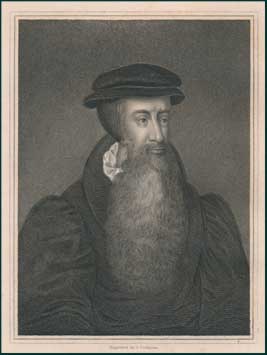
24 November 1572 A.D. John Knox: God’s Firebrand Finally Extinguished


24 November 1572 A.D.  John Knox: God’s Firebrand Finally Extinguished

Myers, David T.  “November 24: Death of John Knox (1572).”  This Day in Presbyterian History.  24 Nov 2014.  http://www.thisday.pcahistory.org/2014/11/november-24-death-of-john-knox-1572/.  Accessed 24 Nov 2014.

November 24: Death of John Knox (1572)


On November 24, 1572, Scottish clergyman and reformer John Knox died in Edinburgh.

God’s Firebrand Finally Extinguished


The nickname for John Knox, as used in our title above, was bestowed on him by no less a fellow Reformer than John Calvin. It correctly characterized his life and ministry from the time he strapped on a literal sword to defend the life and ministry of George Wishart to the times of the Scottish Reformation to the very day he went home to receive his eternal rewards. That time came on November 24, 1572 in Edinburgh, Scotland.

Oppressed with the infirmities of old age, Knox recognized that in God’s providence his time had come to depart this old earth. Sensing that, he prevailed upon the elders of that church to call as the new pastor the Rev. James Lawson as his successor. Lawson was at that time the professor of philosophy in the college of Aberdeen. Not satisfied with a “mere” letter from the Session, Knox followed up their letter with one of his own, urging Lawson to receive the call and come quickly, stressing that if he delayed too long in answering, he might find Knox dead! When Dr. Lawson arrived, he promptly preached two sermons to the congregation. On November 9, the call was placed in his hands. As the successor to John Knox answered in the affirmative, Knox then preached his last sermon to the congregation, exhorting them to stand fast in the faith, and with that, his farewell was given to the congregation.

On the 17th of November, the Session of St. Giles was called to his bedside. The parting words of the Reformer are too important to be absent here, so here they are:

“The time is approaching, for which I have long thirsted, wherein I shall be relieved and be free from all cares, and be with my Savior forever; and now, God is my witness, whom I have served with my spirit in the gospel of His Son, that I have taught  nothing but the true and solid doctrines of the gospel, and that end which I purposed in all my doctrine, was to instruct the ignorant, to confirm the weak, to comfort the consciences of those that were humbled under the sense of their sins, and to denounce the threatening of God’s Word against such as were rebellious. I am not ignorant, that, in my heart, I never hated the persons of those against whom I thundered God’s judgments; I did only hate their sins, and labored, according to my power, to gain them to Christ; that I did forbear none of whatsoever condition, I did it out of fear to my God, who placed me in this function of the ministry, and I know will bring me to an account.” After some words to the new pastor, he commended the whole Session to the grace of God.

From that day until the day of his death, there was read daily to him by his wife a chapter from the Epistle to the Ephesians, the 53rd chapter of Isaiah, 1 Corinthians chapter 15, and John 17, from where, he said to his wife, he had first cast his anchor.  Sermons from John Calvin in French were read to him by his assistant, John Bannatyne.

A difficult life of ministry brought to a close, John Knox departed this world in peace and honor.

Words to Live By:
How a person dies is noteworthy to the overall testimony of his life. Once, when a religious lady of his acquaintance entered his sick room, she began to commend him for the work of the Protestant Reformation. He protested her words, saying that he “wholly relied on the free mercy of God, manifesting to mankind through his dear Son, Jesus Christ, whom alone [he] embrace[d] for wisdom, and righteousness, and sanctification, and redemption.” That should be every reader’s hope and assurance. Is it yours, reader?

Thursday, May 15, 2014

15 May 1556 A.D John Knox Called Before Church of Black Friars, Edinburgh, to Face Legal Proceedings.


15 May 1556 A.D   The Warrior-Saint John Knox Called Before Church of Black Friars, Edinburgh, to Face Legal Proceedings. (Days Later in the Same Year, Thomas Cranmer, would be burned at stake.)

But before proceeding, a few verses from “For All the Saints.”  The video is at the end.  https://www.youtube.com/watch?v=EQcTn_oEuxU

The story is resume.  Christianitytoday.com tells its version of the story at:  http://www.christianity.com/church/church-history/timeline/1501-1600/john-knoxs-friends-turn-the-tables-11629996.html

When Knox first preached, his sermons consisted largely of fulminations against Roman Catholic practices. They gave his listeners something to protest against, but nothing to put in place of that which they were asked to discard. In 1556, after a visit to Geneva, Knox began to preach a new kind of sermon, a sermon in which he not only tore down the old but showed his listeners that as God's elect they must build a new kind of church in place of that which they removed.

Many nobles came to hear him speak of the new nation he envisioned, a nation in which the true Kirk (church), with Christ at its head, would triumph. The bishops of the old order trembled. Should Knox have his way-- and his growing popularity indicated he might--they would be robbed of their authority. Typical of the opposition he faced was their summons to appear at the Church of the Blackfriars in Edinburgh and face legal proceedings. He appeared in Edinburgh on this day May 15, 1556.

Perhaps the bishops had hoped to humble him. Instead he turned the tables. Many men of high standing, including the noble William Keith, the Earl Marischal, appeared with him. Regent Mary of Guise (mother of Mary, Queen of Scots) dismissed the summons, and Knox went on to preach to large crowds in Edinburgh. He also wrote her a letter of thanks, asking for toleration of all Protestants. She treated it with contempt.

But Scotland was not yet ready for the Knox brand of reform. The nobles wanted to revive feudalism; the government's advisors sought to put down the Scots with a mercenary army. Once again John Knox left for Geneva where he ministered to fellow exiles. In Geneva he embarrassed Calvin by issuing over the Reformer's objections a notorious "blast" against women rulers. When reform-minded Elizabeth came to the throne of England, Knox had to find a way out of his words because he needed her help.

When Knox returned to Scotland, he thundered loudly for reform. Riots broke out and the rioters smashed Roman Catholic images. These riots provoked war. Several times the reformer and the Queen of Scotland met face to face. Each found in the other a powerful opponent. Knox told her solemnly, "...I am sent to preach the evangel of Jesus Christ to such as please to hear it; and it hath two parts, repentance and faith." Mary did not accept his brand of faith. In the end she abdicated after a scandal and the mysterious murder of her husband. John Knox remained preeminent in the life of his nation. When the constitution of the Church of Scotland was formulated, he was a key player.

Knox is remembered as the "Thundering Scot." More than any other major reformer, his teaching allowed room for revolution. He believed that under some circumstances, duly constituted Christian leaders have an obligation to revolt against tyranny.

Bibliography:

1.      Boreham, F. W. "John Knox's Text" in Life Verses, vol 1. Grand Rapids, Michigan: Kregel, 1995.

2.      MacGregor, Geddes. The Thundering Scot; a portrait of John Knox. Philadelphia: Westminster Press, 1957.

3.      Knox, John. History of the Reformation in Scotland.

Friday, May 2, 2014

2 May 1559 AD: Oh no, not him-->Scots Reformer, John Knox, Returns/Steps Ashore in Scotland


2 May 1559 A.D.  Scots Reformer, John Knox, Returns from Geneva and Steps Ashore in Scotland

Mr. Myers tells the story.

Myers, David T. “May 2: An Invitation to Return to Scotland.” This Day in Presbyterian History.  2 May 2014. http://www.thisday.pcahistory.org/2014/05/may-2/. Accessed 2 May 2014.

May 2:  An Invitation to Return to Scotland


2 May, 2014

Consternation! He’s Back!

It was the happiest time in the ministry of John Knox in the sixteenth century.  Ministering in what he had called “the most perfect school of Christ that ever was on the earth since the days of the apostles,” Geneva, Switzerland was where John Knox spent his exile from his beloved Scotland. It was not a vacation in any sense of the word. He preached three sermons a week, ministered to the English and Scottish exiles there, and studied the Scriptures in the Hebrew and Greek for the purpose of translating a new version to be known as the Geneva Bible afterwards.

On the tenth of March, 1557, Knox received a communication from five nobles in Scotland which stated that the faithful believers in Scotland “have a godly thirst day by day of your presence ” back in Scotland. Further, these believers are “not only glad to hear of your doctrine, but are ready to jeopardize their lives and goods in the forward setting of the glory of God, as He will permit.” In essence, John Knox was missed by the faithful back in Scotland who wanted  him to return to them.

After receiving counsel from John Calvin and other godly ministers in Geneva, they with one consent urged him to return home.  He left at the end of September, 1557, reaching Dieppe, France, on February 19, 1559. He had been there once before, and preached with great success to the Protestants of that area. However, upon arriving, he received two letters which brought him grief, as those same five nobles now urged him to delay his return to Scotland. He replied with vigor, urging them to change their minds about this delay. Meanwhile, in the intervening seven weeks before he was to receive an answer, he preached the Word of God in Dieppe with great results, with the number of the faithful increasing in that area.

John Knox finally received an answer with a renewed invitation to return to Scotland.  Accompanying that letter was a bond or covenant in which the Protestant nobles pledged themselves to “maintain, set forward, and establish the Most Blessed Word of God and His congregation.”

With that, Knox tried to enter through England, but was not permitted to do so by the Queen. So he sailed directly to Leith, Scotland, landing on May 2, 1559, never again to leave his place of birth. It was said that the provincial council had been meeting for several days scheming on how to proceed to the trials of Protestant ministers in the kingdom. When they were in the midst of a meeting on May 3rd, one of the number rushed into the chamber to say, “John Knox! John Knox is come! He is come! He slept last night in Edinburgh!” Panic struck the meeting as they broke off their meeting with great haste and confusion. Nothing better could prove the importance of his timely arrival than the consternation it brought in the hearts of his antagonists.

Words to Live By: We will ever see attempts by Satan to hinder the great work of Reformation, both then and now. We thus need to see with the eyes of faith the oft quoted conviction of the apostle Paul, when in 1 Corinthians 16:9http://www.logos.com/images/Corporate/LibronixLink_dark.png, he exclaimed that “a wide door for effective service has opened to me, and there are many adversaries.” Nothing has changed today for biblical faith and life. For every wide door for service, there will be many adversaries of the gospel. Be faithful, and despite their presence, work for Christ now.

“I will not be afraid of ten thousands of people, that have set themselves against me round about.” —(Psalm 3:6, KJVhttp://www.logos.com/images/Corporate/LibronixLink_dark.png)

Thursday, April 24, 2014

Mr. (Rev.Dr.Prof.) Carl Trueman on "John Knox" (Audio, 60 Mins)

John Knox & Scottish Covenanters (28 Mins)

Since the Reformation in 1560, Scotland's national church had been Presbyterian. John Knox and his associates had completed the work of changing Scotland from Roman Catholicism to Protestantism. The Scots felt that their pure religion of Biblical worship and doctrine along with their liberty which had cost so much was worth fighting for. The struggle for religious and civil liberties during the 1600's was not with Romanism, but with the Episcopalians of England. The British monarchy, which held both religious and civil authority tried to force its prayer book and church government of archbishops, bishops, deans and church laws upon the people of Scotland. When King Charles I and his successors endeavored to force the Scots to conform, is when the conflict became severe and even bloody. For over fifty years the Scots fought a long and bitter fight until 1688 when they succeeded in reestablishing Presbyterianism in Scotland.


John Knox and the Birth of the Scottish Reformation

This mini-documentary, filmed on location in Scotland, examines the early years of the Scottish reformer, John Knox. The film features the castles and churches that played a role in the history of the turbulent years of the sixteenth century. On the eve of the 500th anniversary of the birth of John Knox, Knox Robinson Publishing has produced this documentary to accompany the release of the novel 'The First Blast of the Trumpet', a thrilling fictionalised account of John Knox's early life. Available in all good bookstores, Amazon and the Knox Robinson Publishing website.


Wednesday, April 23, 2014

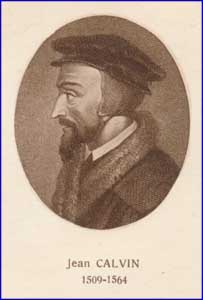
23 Apr 1561 AD: John Calvin's Letter to John Knox


23 April 1561 A.D.  John Calvin’s Letter to John Knox


April 23: Calvin Writes to Knox (1561)


An excerpt from Selected Works of John Calvin: Tracts and Letters, edited by Henry Beveridge and Jules Bonnet (Baker, 1983), vol. 7, p. 183.

“There exists but a small number of letters exchanged between Knox and Calvin. Those of the Scotch Reformer alluded to [earlier in this letter] in Calvin’s answer, have been lost and the letters of the Reformer of Geneva have not had a better fate. Dr. McCrie, the learned historian of Knox, affords no explanation of the loss of this precious correspondence, which leaves in history a void so much to be regretted.”

calvinJohnGeneva, 23d April 1561.

“. . . I come now to your letter, which was lately brought to me by a pious brother who has come here to pursue his studies. I rejoice exceedingly, as you may easily suppose, that the gospel has made such rapid and happy progress among you. That they should have stirred up violent opposition against you is nothing new. But the power of God is the more conspicuously displayed in this, that no attacks either of Satan or of the ungodly have hitherto prevented you from advancing with triumphant constancy in the right course, though you could never have been equal to the task of resistance, unless He who is superior to all the world had held out to you from heaven a helping hand. With regard to ceremonies, I trust, even should you displease many, that you will moderate your rigor. Of course it is your duty to see that the church be purged of all defilements which flow from error and superstition. For it behooves us to strive sedulously that the mysteries of God be not polluted by the admixture of ludicrous or disgusting rites. But with this exception, you are well aware that certain things should be tolerated even if you do not quite approve of them. I am deeply afflicted, as you may well believe, that the nobles of your nation are split into factions, and it is not without reason that you are more distressed and tormented, because Satan is now plotting in the bosom of your church, than you were formerly by the commotions stirred up by the French. But God is to be intreated that he may heal this evil also. Here we are exposed to many dangers. Nothing but our confidence in the divine protection exempts us from trepidation, though we are not free from fears.

knoxJohn04Farewell, distinguished sir and honored brother. May the Lord always stand by you, govern, protect, and sustain you by his power. Your distress for the loss of your wife justly commands my deepest sympathy. Persons of her merit are not often to be met with. But as you have well learned from what source consolation for your sorrow is to be sought, I doubt not but you endure with patience this calamity. You will salute very courteously all your pious brethren. My colleagues also beg me to present to you their best respects.”

Words to Live By:
In my younger years in the ministry, this verse never failed to temper my agitated feelings against those who were my opponents in doctrine and life:
And the Lord’s servant must not be quarrelsome but kind to everyone, able to teach, patiently enduring evil, correcting his opponents with gentleness, God may perhaps grant them repentance leading to a knowledge of the truth, and they may escape from the snare of the devil, after being captured by him to do his will.” — (2 Timothy 2:24-26, ESV
http://www.logos.com/images/Corporate/LibronixLink_dark.png)