Reformed Churchmen

We are Confessional Calvinists and a Prayer Book Church-people. In 2012, we remembered the 350th anniversary of the 1662 Book of Common Prayer; also, we remembered the 450th anniversary of John Jewel's sober, scholarly, and Reformed "An Apology of the Church of England." In 2013, we remembered the publication of the "Heidelberg Catechism" and the influence of Reformed theologians in England, including Heinrich Bullinger's Decades. For 2014: Tyndale's NT translation. For 2015, John Roger, Rowland Taylor and Bishop John Hooper's martyrdom, burned at the stakes. Books of the month. December 2014: Alan Jacob's "Book of Common Prayer" at: http://www.amazon.com/Book-Common-Prayer-Biography-Religious/dp/0691154813/ref=sr_1_1?ie=UTF8&qid=1417814005&sr=8-1&keywords=jacobs+book+of+common+prayer. January 2015: A.F. Pollard's "Thomas Cranmer and the English Reformation: 1489-1556" at: http://www.amazon.com/Thomas-Cranmer-English-Reformation-1489-1556/dp/1592448658/ref=sr_1_1?ie=UTF8&qid=1420055574&sr=8-1&keywords=A.F.+Pollard+Cranmer. February 2015: Jaspar Ridley's "Thomas Cranmer" at: http://www.amazon.com/Thomas-Cranmer-Jasper-Ridley/dp/0198212879/ref=sr_1_1?ie=UTF8&qid=1422892154&sr=8-1&keywords=jasper+ridley+cranmer&pebp=1422892151110&peasin=198212879

Showing posts with label Doctor. Show all posts

Wednesday, February 4, 2015

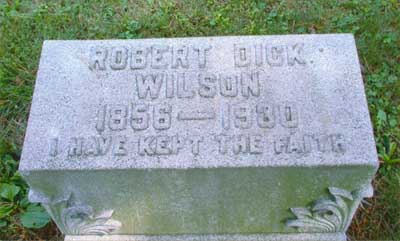
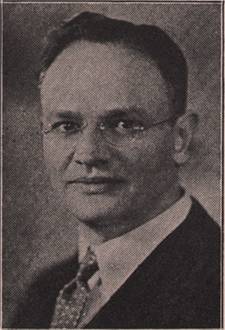
4 February 1856 A.D. Robert Dick Wilson’s Birth—Arch-Presbyter or Bishop (Presbyterian), Doctor, Professor at Old Princeton, Semitics Scholar, Author, & Co-Founder of Westminster


4 February 1856 A.D. Robert Dick Wilson’s Birth—Arch-Presbyter or Bishop (Presbyterian), Doctor, Professor at Old Princeton, Semitics Scholar, Author, & Co-Founder of Westminster

Archivist. “February 4: Dr. Robert Dick Wilson.” This Day in Presbyterian History. 4 Feb 2014. http://www.thisday.pcahistory.org/2014/02/february-4-3/   Accessed 2 Feb 2015.


February 4: Dr. Robert Dick Wilson


A Noble Example

Robert Dick Wilson was the fifth professor, and last apparently, who first served at Western Theological Seminary in Pittsburgh and then went on to a career at the Princeton Theological Seminary. The fourth such professor was Benjamin Breckinridge Warfield.

Dr. Wilson had received his A.B. and his M.A. from Princeton University and his Th.B. from Western Theological Seminary. Then he had studied for two years at the University of Berlin prior to receiving his Ph.D. from Princeton University, whereupon he took up his teaching position at Western Theological Seminary, first as an instructor, 1883-1885, and then as a professor, 1885-1900.

While teaching at Western, Dr. Wilson gathered a group of students about him and breathed into them, even the least promising, the spirit of research and adventure in the study of the Word of God. Undoubtedly he carried this same enthusiasm and pedagogy with him when he left for Princeton in 1900. It was said of Dr. Wilson, that “he seemed to fit into Princeton as an old glove fits the hand.”

Born in Indiana, Pennsylvania on February 4, 1856, Robert Dick Wilson was the son of a wealthy merchant. Like his brother, he was a voracious reader, and his parents encouraged their children in their studies. Well before graduating from college, Robert was adept in reading nine languages and already had his Latin, Greek and Hebrew well in hand. Over the course of his life, he would come to master several dozen languages, focusing primarily on ancient near-eastern tongues. Wilson’s linguistic talents were judged comparable to those of an earlier Princeton professor, J. Addison Alexander, and in his own day, Wilson was judged by many as the world’s greatest Old Testament scholar.

He devoted all of this vast learning to the defence of Holy Scripture. He believed with all his mind and heart that the Bible is true, and he supported his belief with a wealth of scientific material which even his opponents could not neglect. Only a short time before his death he was engaged in an answer to a notable mono­graph, published at Oxford, which had recently devoted itself to a consideration of his views.

He was greatly beloved as a teacher and as a friend. With the simplicity of a true scholar, he was always ready to cast reserve aside and receive his students into his heart. He called them his “boys”, and they responded with affection as well as with respect.

But great as were Dr. Wilson’s achievements throughout a long and fruitful life, his greatest achievement was his last. It was the achievement by which, putting selfish considerations and unworthy compromise of principle aside, he left his home at Princeton and entered the Faculty of a new institution devoted unreservedly to the Word of God. It is arguable that no one man sacrificed more in establishing the new school.

Many arguments might have been adduced to lead Dr. Wilson to remain at Princeton Seminary after the reorganization of that institution in 1929. He was at that time in his seventy-fourth year. An honorable and advantageous retirement awaited him whenever he desired. He had a good salary and a comfortable home. He had the friends that he had made at Princeton during a residence there of nearly thirty years. Might he not retain these advantages without being un­faithful to the cause to which he had devoted his life? Would not the new Board of Princeton Seminary keep in the background, for a time at least, the real character of the revolution that had been wrought? Would not the doctrinal change be gradual only, as at so many other institutions, formerly evangelical, which have conformed to the drift of the times? Could he not, meanwhile, serve God by teaching the truth in his own class-room, no matter what the rest of the institution did? Could he not round out his life in peace? Could he not leave to younger men the battle for the Faith?

Those considerations and many like them were no doubt presented to Dr. Wilson in very per­suasive form. But he would have none of them. His Christian conscience, trained by a lifetime of devotion to God’s Word, cut through such argu­ments with the keenness of a Damascus blade. He penetrated to the real essence of the question. He saw that for him to remain at Princeton would be to commend as trustworthy what he knew to be untrustworthy, that it would be to lead Christ’s little ones astray. He knew that a man cannot have God’s richest blessing, even in teaching the truth, when the opportunity to teach the truth is gained by compromise of prin­ciple. He saw clearly that it was not a time for him to think of his own ease or comfort, but to bear testimony to the Saviour who had bought him with His own precious blood.

He did bear that testimony. He left his home at Princeton, and all the emoluments and honors that awaited him there. He cast in his lot with a new institution that had not a dollar of endow­ment and was dependent for the support of its professors upon nothing but faith in God.


Dr. Wilson was supremely happy in that decision. He never regretted it for a moment. He entered joyfully into the life of the new seminary, and God richly blessed him there. Then, having rounded out more than the allotted period of three-score years and ten, a Christian soldier without tarnish of compromise upon his shield, he entered into the joy of his Lord. He died early in October of 1930, at the beginning of Westminster’s second academic year.

Words to Live By:
The gospel cannot well be preached unless there be a school of the prophets to train men to preach it in all its purity and all its power. And these schools must be found consistently faithful to the Lord if they are to properly fulfill their role. Pray for these schools. Pray for the men who are being raised up to proclaim the precious Gospel of saving grace in Christ Jesus alone. Pray that they would be courageous, sparing no effort in giving all their time and talents in serving the Lord. Pray for those who teach, for those who administer, and for those who serve. Pray that together all their efforts would serve to expand the kingdom of our Lord and Savior throughout all the earth.

[A large portion of the above is taken from "The Power of a Noble Example," a tribute published by Westminster Theological Seminary upon the death of Dr. Robert Dick Wilson. To view that document and other tributes to Dr. Wilson, click here.]

4 February 1856 A.D. Robert Dick Wilson’s Birth—Arch-Presbyter (Presbyterian), Doctor, Professor at Old Princeton, Semitics Scholar, Author, & Co-Founder of Westminster


4 February 1856 A.D. Robert Dick Wilson’s Birth—Arch-Presbyter (Presbyterian), Doctor, Professor at Old Princeton, Semitics Scholar, Author, & Co-Founder of Westminster


Help from Wiki.


Robert Dick Wilson (February 4, 1856 – October 11, 1930) was an American linguist and Presbyterian scholar who devoted his life to prove the reliability of the Hebrew Bible. In his quest to determine the accuracy of the original manuscripts, Wilson learned 45 languages, including Hebrew, Aramaic, and Greek, as well as all the languages into which the Scriptures had been translated up to 600 AD.

Contents


Biography


Wilson was born in Indiana, Pennsylvania. He proved himself an outstanding language student even as an undergraduate. While at Princeton University, he was able to read the New Testament in nine languages. He graduated from Princeton at the age of 20, later receiving a master's degree and doctorate before doing post-graduate work in Germany at the Humboldt University of Berlin. In 1883, Wilson became Professor of the Old Testament at Western Theological Seminary (later known as Pittsburgh Theological Seminary), where he had done some of his graduate studies. In 1900, he returned to Princeton as the William Henry Green Professor of Semitic Languages and Old Testament Criticism at Princeton Theological Seminary.

Throughout his career, he opposed the higher criticism, which held that the Bible was inaccurate on many points and not historically reliable. Professor Wilson wrote, "I have come to the conviction that no man knows enough to attack the veracity of the Old Testament. Every time when anyone has been able to get together enough documentary 'proofs' to undertake an investigation, the biblical facts in the original text have victoriously met the test" (quoted in R. Pache, The Inspiration and Authority of Scripture).

In the late 1920s, he left Princeton to teach at the new, conservative Westminster Theological Seminary. Among his other works, Wilson contributed articles to the International Standard Bible Encyclopedia, a noted Bible reference of the early 20th century.

Works


  • Introductory Syriac Method and Manual (New York: Scribners, 1891).
  • Elements of Syriac Grammar by an inductive method (New York: Scribners, 1891).
  • Notes on Hebrew Syntax (Allegheny: no publisher, 1892).
  • The Lower Criticism of the Old Testament as a preparation for the higher criticism (Princeton: C.S. Robinson, 1901).
  • A Hebrew Grammar for Beginners (Leipzig: W. Drugulin, 1908).
  • The Present State of the Daniel Controversy (New York: Bible Teachers Training School, 1919).
  • Is The Higher Criticism Scholarly? (Chicago: Sunday School Times, 1922).
  • A Scientific Investigation of the Old Testament (Philadelphia: Sunday School Times, 1926).
  • The Radical Criticism of the Psalter (London: Victoria Institute, 1927).
  • Studies in the Book of Daniel 2 Vols. (Vol. 1: New York: Putnam, 1917; Vol. 2: New York: Revell, 1938; 2 in 1 vol, Grand Rapids: Baker, 1979).
  • The Robert Dick Wilson Manuscript Collection. Special Collections, Princeton Theological Seminary Library.

See also


References


External links


Monday, February 2, 2015

2 February 1977 A.D. Mr. J. Oliver Buswell Passes—Presbyter, Doctor, Professor, Author, & Army Chaplain (w. Purple Heart)


2 February 1977 A.D. Mr. J. Oliver Buswell Passes—Presbyter, Doctor, Professor, Author, & Army Chaplain (w. Purple Heart)


Myers, David T. “February 2: J.Oliver Buswell.”  This Day in Presbyterian History.  2 Feb 2015. http://www.thisday.pcahistory.org/2015/02/february-2-4/.  Accessed 2 Feb 2015.

February 2: J. Oliver Buswell, Jr.


On February 2, 1977, Dr. James Oliver Buswell Jr. was called to his heavenly home. It can truly be said of him, he had fought a good fight, he had finished his course, and he had kept the Faith.


At the age of 82 he could look back upon a life of dedication and service to his Master, Who had endowed him with many gifts, great wisdom and out¬standing leadership. He has been taken.from our midst, but his labors stand as a testimony of praise to God, Who was pleased to use him in many and varied ministries.


As a seminary student he entered the military service of his country as a Chaplain in the First World War, where he ministered to soldiers even in the thick of battle. He was wounded in the line of duty and was cited in General Orders and received the Purple Heart and Silver Star.


After the war he took up a pastorate in the Perseverance Presbyterian Church, Milwaukee, Wisconsin—1919 to 1922. His next pastorate was in the Grace Reformed Presbyterian Church in Brooklyn, N.Y., from 1922 to 1926.


In the fall of 1925 he delivered a series of evangelistic messages at Wheaton College, Wheaton, 111. Shortly after that Dr. Charles A. Blanchard, the President of Wheaton College, died. Dr. Buswell was called to be the third president of Wheaton and was installed in April of 1926. He served there for 14 years in a most effective manner. During his administration the College grew numerically, its financial position was strengthened, new facilities were added, and it became fully accredited by the North Central Association of Colleges and Universities. It was during his administration that the Wheaton Graduate School was established. He remained at Wheaton until 1940.


Following this he taught for a short time at Faith Seminary. In January of 1941 he was called to the presidency of the National Bible Institute of New York City, which, under his leadership became Shelton College. The school also grew and developed under his 15 years of able leadership.


In 1956 he was called to be Dean of Covenant Seminary, St. Louis, Missouri, where he served for 14 years until his retirement in 1970. He and his wife moved to The Quarryville Presbyterian Home as guests, but here too he continued his ministry of speaking and writing.


He is known for his writings, especially the two volumes of Systematic Theology of the Christian Religion, which is widely used today.


In 1936 Dr. Buswell, together with Dr. J. Gresham Machen, Dr. Harold S. Laird, and others, took his stand fearlessly for the Word of God in opposition to the forces of modernism in the Presbyterian Church U.S.A. There was a great price to be paid from a human standpoint but, like Paul, he counted not his life dear to himself that he might finish the course God had given him. He, with the others mentioned, became the leaders of a new movement committed uncompromisingly to a loyalty to God and the Scriptures.


He helped form the Presbyterian Church of America in June of 1936, which then changed its name to the Orthodox Presbyterian Church. In the of 1937 he was a leader in the group which became the Bible Presbyterian Church and later changed its name to the Evangelical Presbyterian Church. In all of this trying and developing experience of the church his leadership was evident and greatly respected.


He served on the Fraternal Relations Committee used to bring about the union of the Reformed Presbyterian Church in North America and the Evangelical Presbyterian Church in 1965. This resulted in the formation of the Reformed Presbyterian Church, Evangelical Synod.


One of the key issues which evidenced departure from the Word of God was that of the Foreign Missions Board of the Presbyterian Church U.S.A. Out of this arose the Independent Board for Presbyterian Foreign Missions. Dr. Buswell was one of the founders under the leadership of Dr. Machen. In the developing Evangelical Presbyterian Church, the same urgency of missions continued under Dr. Buswell’s leadership and the Board of World Presbyterian Missions was created and continued to serve as the missionary arm of the Reformed Presbyterian Church, Evangelical Synod. Dr. Buswell served on this board until his death.


Dr. Buswell served on many boards, agencies and committees of the Re¬formed Presbyterian Church, Evangelical Synod. When the denomination was newly established, he had the joy of having a great input to its growth and development.

A great man has fallen, but God’s course continues—“He being dead, yet speaketh.” He has left the challenge to those who continue under the same Head of the Church, our Lord Jesus Christ.


Dr. Buswell was survived by his dear wife, a faithful help meet for 59 years, and four children, all active in God’s work: Jane (Mrs. Philip Foxwell), Ruth (Mrs. Edward Noe), Dr. James Oliver Buswell III, and Dr. John Buswell. There are also ten grandchildren and seven great grandchildren as well as a host of friends, both in heaven and in all parts of the world.


As a member of the Philadelphia Presbytery, our Synod, numerous boards and agencies, Dr. Buswell deserves the thanks to God which we all join in giving for this our fellow Christian. We thank God upon every remembrance of him. Our prayers and sincere sympathy are with his dear wife and all the members of his family. Joshua 1:2-3: “Moses my servant is dead; now therefore arise, go over this Jordan, thou, and all this people, unto the land which I do give to them, even to the children of Israel. Every place that the sole of your foot shall tread upon, that have I given unto you, as I said unto Moses.”


Words To Live By:


The challenge is for us to arise and possess that which God has promised us as His people. There remains yet much to be possessed for God’s kingdom.


[The text above, with a few minor edits, was the text of the Memorial for Dr. Buswell published in the Minutes of the 155th General Synod of the Reformed Presbyterian Church, Evangelical Synod.]