Showing posts with label Predestination. Show all posts
Showing posts with label Predestination. Show all posts
Wednesday, April 23, 2014


Wednesday, October 30, 2013
(Mr. Jake Griesel): Johann von Staupitz (1460-1524) on Predestination
http://deovivendiperchristum.wordpress.com/2013/10/30/johann-von-staupitz-c-1460-1524-on-gods-eternal-predestination/
Johann von Staupitz (c. 1460-1524) on God’s eternal predestination
by Jake Griesel
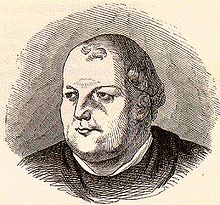
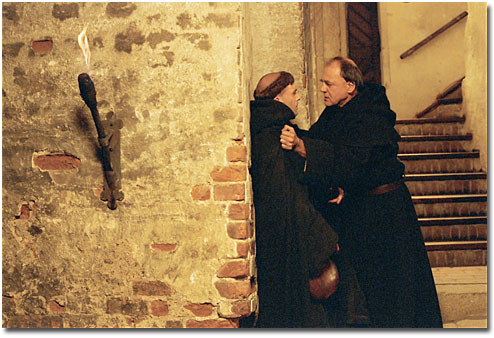
Towards the end of the Middle Ages there was what one may describe as a Neo-Augustinian renaissance which included a number of outstanding theologians such as Gregory of Rimini. This increased interest in Augustine’s writings to a large extent set the table for the Protestant Reformation, specifically with regard to the doctrine of predestination. Johann von Staupitz (c. 1460-1524) was Vicar-General of the Augustinian Order in Germany and a very influential mentor of the young monk Martin Luther. Von Staupitz, however, later had to release Luther from the Augustinian Order (perhaps you’ve seen the 2003 film Luther – I remember the scene where Luther is released by Von Staupitz distinctly – see picture below) to preserve the good name of the Order with Rome.
Though Von Staupitz never joined the Reformation and remained a Catholic both in disposition as well as in doctrine in a number of areas, he nonetheless still adhered to a number of Protestant-leaning doctrines, one of which was his view of predestination. He came to be associated with the “Lutheran heretics” as a result of it, and in 1559 Pope Paul IV put Von Staupitz’s works on the Index of Prohibited Books.
Below are a few excerpts from his work Eternal Predestination and its Execution in Time:
For the rest, see:
http://deovivendiperchristum.wordpress.com/2013/10/30/johann-von-staupitz-c-1460-1524-on-gods-eternal-predestination/
Johann von Staupitz (c. 1460-1524) on God’s eternal predestination
by Jake Griesel

Towards the end of the Middle Ages there was what one may describe as a Neo-Augustinian renaissance which included a number of outstanding theologians such as Gregory of Rimini. This increased interest in Augustine’s writings to a large extent set the table for the Protestant Reformation, specifically with regard to the doctrine of predestination. Johann von Staupitz (c. 1460-1524) was Vicar-General of the Augustinian Order in Germany and a very influential mentor of the young monk Martin Luther. Von Staupitz, however, later had to release Luther from the Augustinian Order (perhaps you’ve seen the 2003 film Luther – I remember the scene where Luther is released by Von Staupitz distinctly – see picture below) to preserve the good name of the Order with Rome.

Though Von Staupitz never joined the Reformation and remained a Catholic both in disposition as well as in doctrine in a number of areas, he nonetheless still adhered to a number of Protestant-leaning doctrines, one of which was his view of predestination. He came to be associated with the “Lutheran heretics” as a result of it, and in 1559 Pope Paul IV put Von Staupitz’s works on the Index of Prohibited Books.
Below are a few excerpts from his work Eternal Predestination and its Execution in Time:
For the rest, see:
http://deovivendiperchristum.wordpress.com/2013/10/30/johann-von-staupitz-c-1460-1524-on-gods-eternal-predestination/
Monday, October 7, 2013
Mr. Andy Underhile: "Preaching Election"

Mr. Andy Underhile
http://andycontramundum.blogspot.com/2011/01/preaching-election.html
Preaching Election
I heard of a minister who had introduced the truth about Election to his congregation. He gradually began to see the consequences of it in terms of his own congregation, which was without a doubt like the mixed crowd that went up out of Egypt when Israel was "born" as a people of God. He saw many of this mixed crowd taking offense when this truth was brought up and began to fear for them lest they leave the church, with the result that the church's finances would of course be seriously endangered, as well as his own reputation as a pleasant, sensitive and open-minded man. Slowly he began to turn from the Word of God and one day said with strong emphasis, "If teaching doctrine is going to split my congregation, I'll never preach doctrine again."
What did this really indicate? What is "doctrine"? Doctrine is teaching, instruction; and Biblical doctrine is teaching what the Bible says. So here we have a minister of the Gospel who determines in his heart and promises publicly that he will never again teach what the Bible teaches about the true nature of man, about the true meaning of the Gospel, and about the real significance of God’s sovereign grace. How long can the Church of God remain a force in the world when its pastors depart so far from following the pattern set by the Shepherd of souls?
But when does one meet the topic of Election head on and proclaim it as an essential part of the Gospel? How does one present it? Traditionally, Calvinism starts with the Total Depravity of man and not as Arminianism does with man's alleged capability to exercise saving faith on his own. Such a capacity, they have held, is what God foresees and makes the basis of Election. But this places man in the position of being able to cooperate with God, actually of being needed by God in a cooperative capacity before his salvation can be effected. In a very real sense man becomes his own savior, though not without God's help. On the contrary, the Biblical view of man is best epitomized by the term Total Spiritual Inability. If we start here we will most reasonably move on to the question of why God should be interested in man at all. From this we ask, “If man's salvation is wholly dependent upon the will of God, on what basis did God then decide to save certain individuals but not others?” You see, there is a certain logic to the ordering of the questions in the whole Calvinist position and above all it is a system so deeply rooted in Scripture that it can justifiably be identified with the Gospel itself. Calvinism is the Gospel and to teach Calvinism is in fact to preach the Gospel.
But when does one meet the topic of Election head on and proclaim it as an essential part of the Gospel? How does one present it? Traditionally, Calvinism starts with the Total Depravity of man and not as Arminianism does with man's alleged capability to exercise saving faith on his own. Such a capacity, they have held, is what God foresees and makes the basis of Election. But this places man in the position of being able to cooperate with God, actually of being needed by God in a cooperative capacity before his salvation can be effected. In a very real sense man becomes his own savior, though not without God's help. On the contrary, the Biblical view of man is best epitomized by the term Total Spiritual Inability. If we start here we will most reasonably move on to the question of why God should be interested in man at all. From this we ask, “If man's salvation is wholly dependent upon the will of God, on what basis did God then decide to save certain individuals but not others?” You see, there is a certain logic to the ordering of the questions in the whole Calvinist position and above all it is a system so deeply rooted in Scripture that it can justifiably be identified with the Gospel itself. Calvinism is the Gospel and to teach Calvinism is in fact to preach the Gospel.
The opinion of the great Christian warriors of the past 1900 years has been amazingly consistent in this. They have never questioned the aptness or the need of openly proclaiming the sovereignty of God's grace. Certainly Paul's Epistles make no apology, nor does Peter. John's Gospel is equally unequivocal in the matter.
Augustine was straightforward indeed. In his De Bono Perseveratiae he affirms that the preaching of the Gospel and the preaching of Predestination are but two sides of the same coin. 1 He is very explicit in this matter. In his correspondence with Prosper and Hilary, written about 428/9 A.D., he acknowledges 2 that people were saying that since the doctrine of Predestination clearly implies that some will receive the Word and will obey and will come into the faith and persevere in it, while others "are lingering in the delight of their sins." If one is predestinated to be chosen though as yet still unsaved he will receive the necessary grace to believe in any case, and therefore won't need exhortation. If, on the other hand, a man is predestinated to be rejected he will not receive the strength to obey the Gospel and threatenings will serve no purpose. Augustine replies: “Although these things are true, they ought not to deter us from confessing the grace of God…For if on the hearing of this some should be turned to torpor and slothfulness, and from striving should go headlong into lust after their own desires, is it therefore to be counted that what has been said about the foreknowledge of God is false? If God has foreknown that they will be good, will they not be good whatever the depth of evil in which they now engage? And if He has foreknown them for evil, will they not be evil whatever goodness may now be discerned in them?”
Augustine was straightforward indeed. In his De Bono Perseveratiae he affirms that the preaching of the Gospel and the preaching of Predestination are but two sides of the same coin. 1 He is very explicit in this matter. In his correspondence with Prosper and Hilary, written about 428/9 A.D., he acknowledges 2 that people were saying that since the doctrine of Predestination clearly implies that some will receive the Word and will obey and will come into the faith and persevere in it, while others "are lingering in the delight of their sins." If one is predestinated to be chosen though as yet still unsaved he will receive the necessary grace to believe in any case, and therefore won't need exhortation. If, on the other hand, a man is predestinated to be rejected he will not receive the strength to obey the Gospel and threatenings will serve no purpose. Augustine replies: “Although these things are true, they ought not to deter us from confessing the grace of God…For if on the hearing of this some should be turned to torpor and slothfulness, and from striving should go headlong into lust after their own desires, is it therefore to be counted that what has been said about the foreknowledge of God is false? If God has foreknown that they will be good, will they not be good whatever the depth of evil in which they now engage? And if He has foreknown them for evil, will they not be evil whatever goodness may now be discerned in them?”
For the rest, see:
Monday, October 8, 2012
9th Cent. Gottschalk & Primary Sources (Latin)
http://gottschalk.inrebus.com/intro.html
Gottschalk of Orbais: Life and Works
A Medieval Teacher of Twofold Predestination
Gottschalk of Orbais was the first, since the council of Orange (529), to apply so consistently the principles of later Augustine. He taught that God predestined both the elect to eternal life and the reprobate to eternal death. Several centuries would be needed until Thomas Bradwardine (c. 1290-1349), Gregory of Rimini (d. 1358) and John Wycliffe (c. 1330-1384) could voice the same ideas. Gottschalk’s life, rich in dramatic events, is an integral part of the cultural and political life of Germany, France, Italy and Croatia at the dawn of their history. However, Gottschalk of Orbais still remains in the shadow of his more famous contemporaries. Indeed, if a bibliography of the works that treat on Gottschalk is rather large, it can hardly be said that his life and teaching are thoroughly researched.
Gottschalk was born in Saxony, in the family of a count named Bernus. His date of birth is not known. However, since he was delivered as an oblate child to the monastery of Fulda together with his inheritance in Charlemagne’s lifetime (d. January 28, 814), and an oblate normally could not be younger than 10, Gottschalk was possibly born about 803. Saxony had been conquered not long before that, and Bernus seems to have been among the first counts appointed in the area.
Fulda was an important educational center, especially since 803, when Rabanus Maurus, Alcuin’s pupil, became the head of its school. Gottschalk studied Latin, the Bible, the fathers, and the basics of the classical literature. He probably did well, since they sent him to Reichenau, where Haito, Reginbert, Grimald and Wettin taught at the time. In this cloister located on a solitary island on the Untersee Gottschalk met Walafrid Strabo, with whom he came back to Fulda. There he might know deacon Lupus as well, who would later become abbot of Ferrières.
Fulda was an important educational center, especially since 803, when Rabanus Maurus, Alcuin’s pupil, became the head of its school. Gottschalk studied Latin, the Bible, the fathers, and the basics of the classical literature. He probably did well, since they sent him to Reichenau, where Haito, Reginbert, Grimald and Wettin taught at the time. In this cloister located on a solitary island on the Untersee Gottschalk met Walafrid Strabo, with whom he came back to Fulda. There he might know deacon Lupus as well, who would later become abbot of Ferrières.
Some time after 822, when Rabanus was appointed abbot of Fulda, Gottschalk became a monk, but upon his return from Reichenau he declared that he had done so under compulsion, and requested to give back his inheritance donated to the monastery by his father. In June 829 a synod was convened in Mainz, which had to pronounce judgment concerning this case. Gottschalk was given back his freedom, but under condition of an oath never to request back his inheritance. The young man left Fulda, but neither his abbot nor he himself felt satisfied with the decision.
Gottschalk’s arguments were as follows: a monk is basically a slave, even though God’s slave. However, according to the Saxon laws a man could be bereft of his freedom only in presence of Saxon witnesses, which condition had not been fulfilled. Rabanus, on the other hand, emphasized that the property requested by Gottschalk had been inherited by Louis the Pious from his father and could not be given back to the rebellious monk. Moreover, he regarded as heretical the wish itself to be freed from the vows under such a pretext.
In August 829 another synod took place, presided by the emperor Louis, where the case was considered a second time. The decision is not known, but it is reasonable to suggest that Gottschalk’s liberation from the vows was confirmed, even though he never got back his inheritance.
Released, the young man set out for a journey. He spent some time at the monastery of Corbie in Picardy, where he met monks Gislemar and Ratramnus, with whom he would later correspond, and, possibly, Paschasius Radbertus, who in 843 would become abbot of Corbie and whose views on the Eucharist Gottschalk would attack in his treatise On the Lord’s Body and Blood. There is also no doubt that Gottschalk visited Hautvilliers, where he wrote a poetical dedication for the Ebbo Gospels, a wonderful work of the Carolingian art ordered by the archbishop of Reims to Peter, the then abbot of Hautvilliers. Under the protection of the Saxon archbishop the young man lived for some time at his residence in Reims.
However, even before 835, when Ebbo was deposed, under the conditions that are not fully clear Gottschalk became a monk again, having entered the monastery of Orbais, near Château-Thierry, which lays in the archdiocese of Soissons. It is hard to determine how much time he spent there. However, it is possible that he did not stay at the cloister for a long time after the deposition of his former patron. In the political context of the time Ebbo’s enemies could become dangerous for Gottschalk. Nevertheless, a Benedictine could not leave his monastery without a special dispensation of an abbot or without a specific errand. Pope Gregory the Great had decreed that a monk could break the ties with the monastery in case he was needed as a priest in a mission. As it seems that was the reason why Gottschalk was ordained by Rigbold, an interim bishop of Reims. This happened without the knowledge of Rothad, the bishop of Soissons, which later was considered as a serious infringement upon the canon law.
Between 835 and 840, probably with the permission of Bavo, the abbot of Orbais, and possibly at the head of a group of monks, Gottschalk made his way to the south-east of the empire, to Frioul. There he is received by the margrave Eberhard, a son-in-law to Louis the Pious. It is then that the monk from Saxony began to preach his teaching on twofold predestination on a large scale. His influence grew so wide that Rabanus Maurus, Gottschalk’s former abbot, wrote two letters: first to Noting (Rudolph of Fulda calls him a bishop of Verona), and then to Eberhard himself. In 846 Gottschalk went on a mission to Dalmatia. Even though in the Annals of St Bertin we read that the rebellious Benedictine was “shamefully ejected” from Italy (as it is often suggested, by Eberhard at Rabanus’ request), it would be hard to believe that a margrave of Frioul might allow a person denounced as a heretic to preach to the Slavs in the region for which he was personally responsible. It is more likely that the consequences of Rabanus’ involvement were felt only upon Gottschalk’s return from the Balkans. The monk at once felt compelled to make his way to Fulda.
Back at the monastery, he was received by the abbot Hatto who had supported Gottschalk in his conflict with Rabanus when he was a simple monk himself as yet. As for Maurus, in the meantime he had become the archbishop of Mainz and an eminent political figure. However, it did not prevent Gottschalk from speaking against him at the synod of Mainz, which took place in October 848 in presence of Louis the German and several abbots and bishops of the Western Frankish lands, including Einhard, Charlemagne’s biographer and the bishop of Seligenstadt. In the annals’ reports the case is stated very briefly: Gottschalk was flogged, compelled to swear that he would never come back into Louis’ realm, and sent to Reims, since Orbais fell under the jurisdiction of that ecclesiastical province.
Hincmar of Reims was eager to finish it off with the condemnation of the rebellious monk as soon as possible. This was done on a small synod, which took place at the royal villa named Quierzy in March 849, in presence of Charles the Bald. Gottschalk was accused of violation of the monastic regulations, deposed from priesthood, flogged again and compelled to throw into a fire a florilegium of scriptural and patristic quotations that he had compiled as a proof of the orthodoxy of his teaching. The sentence included a command of “eternal silence” and imprisonment at the monastery of Hautvilliers, where the condemned monk spent the rest of his life.
The same year Gottschalk tried to obtain a test of his orthodoxy through the ordeal, but his challenge seems to have remained without any answer. Hincmar wrote a letter, in which he explained to the monks and simple of his diocese how pernicious the ideas of the dangerous trouble-maker were.
However, the archbishop of Reims seems to have had doubts concerning the decision that was too hasty. He asked twice other bishops if he was to commune Gottschalk on Easter, and later addressed himself to the leading theologians of the period with respect to the problem of predestination. Prudentius of Troyes and Lupus of Ferrières answered that both Augustine and the Scripture taught the same way as Gottschalk. Rabanus Maurus was already about seventy and he refused to take further part in the controversy. Simultaneously, Charles the Bald asked for advice too, addressing himself to Lupus and Ratramnus. Their answers were in Gottschalk’s favor.
Only John Scot sided with Hincmar and his party. However, the arguments adduced by this mind plunged into the mystical ideas of Dionysius the Areopagite were so sophisticated that they only bewildered everybody including Hincmar, who repeatedly denied that he ever read the work or knew who was its author. Nevertheless, it was too late: some scandalous assertions of John Scot (denial of the reality of hell as well as good and evil as such) allowed the church of Lyons to intervene. At the same time Prudentius of Troyes published a refutation of John Scot’s treatise at the request of his suffragan, Wenilo of Sens.
As for Hincmar, he did not retreat. In 853, again in the presence of Charles and again at Quierzy, a large council was convened that accepted four capitula condemning the teaching on twofold predestination. It only gave occasion for new attacks from the part of Florus of Lyons in the realm of Lothair. In January 855 at Valence another council took place, where representatives of the archbishoprics of Lyons, Vienne and Arles accepted capitula, which acutely conflicted with those of Quierzy. Moreover, at the ordination of Aeneas as the bishop of Paris Prudentius of Troyes requested that Aeneas subscribed to a document, which spoke against the capitula of Quierzy.
Political unrest of the period postponed further discussion for some time. By 859 Hincmar grew so influential that his adversaries were ready for any compromise. The case was again considered at the conference at Langres and then at the council of Savonnières in June 859, but the final decision was not made because of the pertinacity of Hincmar’s party. The strife was ended by a conciliatory and a rather vague document accepted at the council of Tusey in October 860, which in fact meant that Hincmar had no more adversaries who would be ready to contradict him. When in 863 Pope Nicholas I summoned the archbishop together with Gottschalk at the council of Metz, Hincmar did not consider it necessary to appear there. He wrote to the Pope that he had not received the summons in due time.
Gottschalk died in October 868. According to Hincmar, he refused to receive clothes from the monks who were in communion with the archbishop, walked naked and didn’t want to take baths and even wash his face and hands. Gottschalk asserted that the Son entered him and then the Father and the Holy Spirit, having scorched his beard around the mouth. He also said that God forbad him to pray about Hincmar and prophesied that the archbishop would die and he himself would occupy the chair of Reims, but would be poisoned seven years later and die himself as a martyr. These prophesies were not fulfilled, and Hincmar wrote explicitly that his prisoner was possessed by a demon.
As for Gottschalk’s theological works, beside the fragments, only two of his writings were known for a long time: the Shorter and the Longer Confessions. Both were several times published by the early researchers of Gottschalk’s theological heritage. The first to publish them was James Ussher (1581-1656), an Anglican archbishop of Armagh. He did not mention which manuscripts he used. Jilbert Mauguin (d. 1674), a French Jansenist, mentions that Usher had taken the text ex pervetusto codice, which codex had been delivered to him by Jacques Sirmond (1559-1651), but only for reference, not for publication (the learned Jesuit probably planned to publish the Confession in his own book). However, in a letter dated by December 10, 1630 that was addressed to S. Ward, the archbishop of Armagh wrote that he had received the texts of both confessions from Corbie, which freed him from the obligations that he assumed with respect to Sirmond.
Nowadays only one manuscript containing the Shorter Confession is known: it is the ms. 12292 of the National Library in Paris, fol. 2rv. It goes back to the 9th century and comes from the library of Saint Germain des Près (ms. 623, later ms. 852), to which it was brought from Corbie. However, the archbishop of Armagh did not use this manuscript: ms. 12292 does not contain the Longer Confession (no ancient copy of that text is now extant). Moreover, Ussher’s edition of the Shorter Confession contains important variant readings as compared to ms. 12292.
Trying to determine where the manuscript used by the first editor could go, Dom Cyrille Lambot was able to ascertain that in 1666 the archbishop’s library was passed over to the Trinity College in London, but the manuscript was not there by that time: it was acquired by James Ware (1594-1666) and later by Henry, duke of Clarendon, in whose library it was catalogued as ms. 89 in 1697. This collection was partly delivered to the British Museum (Clarendon Collection) and partly to the Bodleian Library (Rawlinson Collection), but the manuscript was not found either in London or in Oxford.
In 1650 both Confessions were also published by Mauguin. He took the text of the Shorter Confession from the manuscript which is known to us as BN lat. 12292. As for the Longer Confession, the editor only mentioned Ussher’s edition, but his version has important variant readings as compared to the editio princeps. Lambot suggested that Mauguin also used Sirmond’s manuscript.
The second of the extant manuscripts is the ms. 1831-1833 of the Royal Library of Brussels. It goes back to late 9th or early 10th century and contains one of Gottschalk’s Trinitarian works.
The most important find was made as late as in 1931, when Dom Germain Morin discovered a rich collection of Gottschalk’s theological texts in the ms. 584 in the Library of Bern. The manuscript goes back to the 9th century and came to Bern from the Bongars library. This event prompted a critical edition of Gottschalk’s works, which was effected in 1945 by Lambot.
Gottschalk’s doctrine still waits for its researchers, who have to determine its correlation both with the teaching of later Augustine and the opinions of Gottschalk’s contemporaries. The influence that the 9th century controversy over predestination exerted on the western church is not fully appreciated as yet.
However, Gottschalk’s genius, thanks to precious finds of the 20th century, begins to shine forth, which puts him on the same plane with other great Carolingians.
Gottschalk of Orbais: Original Writings
Works of Gottschalk in Latin
For a long time the most of the original Latin writings by Gottschalk of Orbais were believed to be definitively lost. It is only in 1931 that his theological and grammatical works were discovered by Dom G. Morin in the library of Bern. In 1945 these were published by Dom C. Lambot, but this edition did not contain Gottschalk’s poetry (scattered through three separate volumes of MGH) and his letter to Ebbo (attributed to Gottschalk by Lambot only later). Thus the Latin works of Gottschalk have never been gathered in one place. Moreover, they have never been available in any collection of the electronic texts. The aim of this page is to make available to researchers the complete works of Gottschalk in text format. Eventually it will contain his letters, poetry, confessions, theological and grammatical works as well as the fragments of his writings preserved by other authors.
- [Epistola ad Lupum]
- [Epistola ad Ebbonem]
Letters
- Ut quid iubes
- Ad Ratramnum
- Horarium
- O mi custos
- Heu valeo
- O Deus miseri miserere servi
- O veneranda dei suboles
- Christe mearum lux tenebrarum
- Spes mea Christe
- Christe rex regum
- Quo ne tu missus
Poetry
- Confessio Godescalchi monachi damnati
- Gotteschalci Confessio prolixior
Theological Works from the ms Berne 584
DE TRINA DEITATE - [I]
- [II]
- [III]
- [IV] Item de Trinitate
Confessions
- [V] [EXCERPTA DE TRINITATE]
DE PRAEDESTINATIONE
- [VII]
- [VIII] Testimonia evangeliorum de praedestinatione electorum sive reproborum et de sola electione electorum. Item testimonia apostoli Pauli de re praedicta
- [IX]
- [X]
- [XI] Item contra illos qui adfirmant reprobos esse redemptos
- [XII] Item testimonia de re praedicta
- [XIII]
- [XIV] Item de reprobis baptizatis
- [XV]
- [XVI]
- [XVII] Quare filius nunc aequalis nunc minor Patre dicatur
- [XVIII] Item de electis et reprobis
http://en.wikipedia.org/wiki/Gottschalk_of_Orbais
Gottschalk of Orbais
From Wikipedia, the free encyclopedia
Gottschalk (also Godescalc, Gotteschalchus) of Orbais (c. 808 – October 30, 867?) was a Saxon theologian, monk and poet who is best known for being an early advocate of the doctrine of two-fold predestination. From his friend Walahfrid Strabo, Gottschalk also received the nickname Fulgentius, after Fulgentius the Mythographer, whom he may have studied intensively.[1]
Early career
Gottschalk was born near Mainz, and was given to the monastic life (oblatus) from infancy by his parents. His father was a Saxon, Count Bern or Bernius. He was trained at the monastery of Fulda, then under the abbot Hrabanus Maurus, and became the friend of Walafrid Strabo and Loup de Ferrières. In June 829, at the synod of Mainz, on the pretext that he had been unduly constrained by his abbot, he sought and obtained his liberty, withdrew first to Corbie, where he met Ratramnus, and then to the monastery of Orbais in the diocese of Soissons. There he studied St Augustine, with the result that he became an enthusiastic believer in the doctrine of absolute predestination, in one point going beyond his master — Gottschalk believing in a predestination to condemnation as well as in a predestination to salvation, while Augustine had contented himself with the doctrine of preterition as complementary to the doctrine of election.
Priesthood
Between 835 and 840 Gottschalk was ordained priest, without the knowledge of his bishop, by Rigbold, chorepiscopus of Reims. Before 840, deserting his monastery, he went to Italy, preached there his doctrine of double predestination, and entered into relations with Notting, bishop of Verona, and Eberhard, margrave of Friuli.
Driven from Italy through the influence of Hrabanus Maurus, now archbishop of Mainz, who wrote two violent letters to Notting and Eberhard, he travelled through Dalmatia, Pannonia and Noricum, but continued preaching and writing.
Gottschalk was at Trpimir I of Croatia's court between 846 and 848, and his work De Trina deitate is an important source of information for Trpimir's reign. Gottschalk was a witness to the battle between Trpimir and Byzantine strategos, probably of Dalmatia, when Trpimir was victorious.
Predestination
In October 848 he presented to the synod at Mainz at St. Alban's Abbey a profession of faith and a refutation of the ideas expressed by Hrabanus Maurus in his letter to Notting. He was convicted, however, of heresy, beaten, obliged to swear that he would never again enter the territory of Louis the German, and handed over to Hincmar, archbishop of Reims, who sent him back to his monastery at Orbais. The next year at a provincial council at Quierzy, presided over by Charles the Bald, he attempted to justify his ideas, but was again condemned as a heretic and disturber of the public peace, was degraded from the priesthood, whipped, obliged to burn his declaration of faith, and shut up in the monastery of Hautvilliers.
There Hincmar tried again to induce him to retract. Gottschalk however continued to defend his doctrine, writing to his friends and to the most eminent theologians in the lands of Charles the Bald and Louis the German. A great controversy resulted. Prudentius of Troyes, Wenilo of Sens, Ratramnus of Corbie, Loup de Ferrières and Florus of Lyon wrote in his favour. Hincmar wrote De praedestinatione and De una non trina deitate against his views, but gained little aid from Johannes Scotus Eriugena, whom he had called in as an authority.
The question was discussed at the councils of Quierzy (853), of Valence (855) and of Savonnières (859). Finally Pope Nicholas I took up the case, and summoned Hincmar to the council of Metz (863). Hincmar either could not or would not appear, but declared that Gottschalk might go to defend himself before the pope. Nothing came of this, however, and when Hincmar learned that Gottschalk had fallen ill, he forbade him the sacraments or burial in consecrated ground unless he would recant. This Gottschalk refused to do. He died on 30 October between 866 and 870.
Writings
Gottschalk was a vigorous and original thinker, but also of a violent temperament, incapable of discipline or moderation in his ideas as in his conduct. Of his many works we have the two professions of faith (cf. Migne, Patrologia Latina, cxxi. c. 347 et seq.), and some poems, edited by L Traube in Monumenta Germaniae historica: Poetae Latini aevi Carolini (707-738). Some fragments of his theological treatises have been preserved in the writings of Hincmar, Erigena, Ratramnus and Loup de Ferrières. Some of Gottschalk's works (including De Praedestinatione) have been newly discovered in 1931 in a library in Bern. D.C. Lambot's Oeuvres théologiques et grammaticales de Godescalc d’Orbais (1945) has good overview of Gottschalk's works.
From the 17th century, when the Jansenists exalted Gottschalk, much has been written on him. Two studies are F. Picavet, Les Discussions sur la liberté au temps de Gottschalk, de Raban Maur, d'Hincmar, et de Jean Scot, in Comptes rendus de l'acad. des sciences morales et politiques (Paris, 1896); and A. Freystedt, Studien zu Gottschalks Leben und Lehre, in Zeitschrsft für Kirchengeschichte (1897), vol. xviii.
References
 This article incorporates text from a publication now in the public domain: Chisholm, Hugh, ed. (1911). "Gottschalk". Encyclopædia Britannica (11th ed.). Cambridge University Press.
- Egon Bondy wrote a study on Gottschalk, published in his book Gottschalk, Kratés, Jao Li, Doslov (Gottschalk, Crates, Jao Li, Afterword; written in 1988, published by Zvláštní vydání, Brno 1991)
- Whitbread, Leslie George (intro and tr.). Fulgentius the Mythographer: The Mythologies. The exposition of the content of Virgil according to moral philosophy. The explanation of obsolete words. On the ages of the world and of man. On the Thebaid. Columbus, 1971.

External links
- "Gottschalk". Encyclopaedia Britannica. 10 (9th ed.). 1879.
------------------------
http://gottschalk.inrebus.com/transl.html
Gottschalk & A Medieval Predestination Controversy (Texts Translated From The Latin)
Edited & Translated by Victor Genke & Francis X. Gumerlock
Since 2003 Victor Genke and Francis X. Gumerlock have been working on a collection of translated primary sources on Gottschalk and the strife that he aroused. The book appeared in print in 2010 as the 47th volume of Marquette University Press Mediaeval Philosophical Texts in Translation series:
The contents are as follows:


Aegerter, Emmanuel. “Gottschalk et le problème de la prédestination au IXe siècle,” Revue de l’histoire des religions, 116 (1937): 187-233.
Amann, Émile. “La controverse prédestinatienne.” In Augustin Fliche and Victor Martin, eds., Histoire de l’église depuis les origines jusqu’à nos jours. Paris: Bloud and Gay, 1947, 320-44.
Bischoff, Bernhard. “Gottschalks Lied für den reichenauer Freund.” In Medium Aevum Vivum: Festschrift für Walther Bulst. Hans Robert Jauss and Dieter Schaller, eds. Heidelberg: C. Winter, 1960, 61-8.
Boller, Bernard. Gottschalk d’Orbais de Fulda à Hautvillers: une dissidence. Préface de Michel Wieviorka. Paris: Société des Écrivains, 2004.
Cappuyns, Maïeul. Jean Scot Erigène. Sa vie, son oeuvre, sa pensée. Louvain: Abbaye du Mont César, 1933.
Châtillon, F. Review of Cyrille Lambot’s Oeuvres théologiques et grammaticales de Godescalc d’Orbais. Revue du moyen âge latin 5 (1949): 255-72.
Devisse, Jean. Hincmar archevêque de Reims 845-882. 3 vols. Geneva: Librairie Droz, 1975-1976.
Diem, Albrecht. “Een Verstoorder Van De ‘Ordo’: Gottschalk Van Orbais En Zijn Leer Van De Dubble Predestinatie.” In Mayke de Jong, Marie-Therese Bos, and Carine van Rijn, eds. Macht Et Gezag in De IXde Eeuw. Utrechtse Historische Cahiers 16. Hilversum: Verloren, 1995, 115-31.
Dinkler, Erich. Gottschalk der Sachse. Stuttgart: W. Kahlhammer, 1936.
Dörries, Hermann. Gottschalk, ein christlicher Zeuge der deutschen Frühzeit. Göttingen: Franz-Seldte, 1939.
Evans, Gillian R. “The Grammar of Predestination in the Ninth Century.” Journal of Theological Studies, N.S., 33.1 (1982): 134-45.
Evert, Boyd Harry. “Gottschalk of Orbais and the Debate over Predestination in the Ninth Century.” Master’s thesis. University of Dallas, 1994.
Fickermann, Norbert. “Wiedererkannt Dichtungen Gottschalks.” Revue bénédictine 44 (1932): 314-21.
Freystedt, Albert. “Der Ausgang des Prädestinationsstreites im 9 Jahrhundert.” Zeitschrift für wissenschaftliche Theologie 41 (1898): 112-35.
_____. “Gottschalk, der Monch.” In Encyclopädie für protestantische Theologie und Kirche, Vol. 7. Leipzig: Hinrichs, 1889, 39-41.
_____. “Der Streit uber die göttliche Trinität im 9. Jahrhundert.” Zeitschrift für wissenschaftliche Theologie 41 (1898): 392-401.
_____. “Studien zu Gottschalks Leben und Lehre.” Zeitschrift für Kirchengeschichte 18 (1897/1898): 1-22, 161-81, 529-45.
_____. “Der Synodale Kampf im Prädestinationsstreit der 9. Jahrhunderts in den Jahren 853 bis 860.” Zeitschrift für wissenschaftliche Theologie 36 (1893): 447-78.
_____. “Der wissenschaftliche Kampf im Prädestinationsstreit des 9. Jahrhunderts.” Zeitschrift für wissenschaftliche Theologie 36 (1893):315-68.
Ganz, David. “The Debate on Predestination.” In Gibson, Margaret T. and Nelson, Janet L. eds. Charles the Bald. Court and Kingdom, 2nd ed. Brookfield, VT: Variorum, 1990, 283-302.
Gaudard, Frédéric J. “Gottschalk moine d’Orbais; ou, le commencement de la controverse sur la prédestination au IXe siècle.” Diss. Saint-Quentin: J. Moureau, 1887.
Godet, Philippe. “Gotescale ou Gottschalk.” In Dictionnaire de théologie catholique, Vol. 6. Paris: Letouzey et Ané, 1920, 53-5, 1500-2.
Günther, Max Hermann Rudolf Gerhard. “Der Mönch Gottschalk.” Deutsche Volkstum (1928): 264-7.
Gustavsson, Louise Reinecke. “Gottschalk Reconsidered: A Study of His Thought as It Bears on His Notion of Predestination.” Ph. D. diss. Yale University, 1964.
Hanko, Ronald. “Gotteschalk’s Doctrine of Double Predestination,” Protestant Reformed Theological Journal, 12.1 (1978): 31-64.
Hartmann, Wilfried. “Die Mainzer Synoden des Hrabanus Maurus.” In Kottje, Raymund and Harald Zimmerman, eds. Hrabanus Maurus. Lehrer, Abt und Bischof. Wiesbaden: Steiner, 1982, 130-44.
Herding, Otto. “Über die Dichtungen Gottschalks von Fulda.” In Festschrift Paul Kluckhohn und Hermann Schneider gewidmet zu ihrem 60 Geburtstag. Tübingen: Mohr, 1948, 46-72.
Hercigonja, Eduard. Tropismena i trojezična kultura hrvatskoga srednjovjekovlja. Zagreb: Matica hrvatska, 1994.
“Hincmar et le concile de Valence dans l’affaire de Godescalc.” [No author listed] Analecta juris pontificalis 7e serie, 61e liv. (1864): 540-63.
Jolivet, Jean. “L’enjeu de la grammaire pour Godescalc,” in Jean Scot Érigène et l’histoire de la philosophie. Colloques Internationaux du Centre National de la Recherche Scientifique, No. 561. Paris: Éditions du Centre National de la Recherche Scientifique, 1977, 79-87.
_____. Godescalc d’Orbais et la trinité: la méthode de la théolgie à l’époque carolingienne. Paris: J. Vrin, 1958.
Kadner, D. “Aus den neuentdeckten Traktaten des Mönches Gottschalk.” Zeitschrift für Kirchengeschichte 61 (1942): 348-58.
Katičić, Radoslav. Litterarum studia. Književnost i naobrazba ranoga hrvatskog srednjovjekovlja. Zagreb: Matica hrvatska, 1998.
Kagerah, Walter. “Bisher unbekannte Worte des Mönches Gottschalk.” Die Wartburg 36 (1937): 80-4.
_____. “Gottschalk der Sachse.” Die Wartburg 34 (1935): 386-91.
_____. “Gottschalk der Sachse.” Diss. Greifswald, 1938.
_____. Gottschalk der Sachse: ein Gottsucher aus deutscher Frühzeit. Berlin: Evangel. Bundes, 1936.
Katić, L. “Saksonac Gottschalk na dvoru kneza Trpimira.” Bogoslovska Smotra 30 (1932), 403-432.
Lambot, Cyrille. “Godescalco d’Orbais.” In Enciclopedia Cattolica, Vol. 6. Vatican City: Ente per l’Enciclopedia cattolica e per il Libro cattolico, 1951, 888-9.
_____. “Opuscules grammaticaux de Gottschalk.” Revue bénédictine 44 (1932): 120-4.
Lavaud, Benoît. “Précurseur de Calvin ou témoin de l’augustinisme? Le cas de Godescalc.” Revue thomiste 15 (1932), 71-101.
_____. “Prédestination. IV. La controverse sur la prédestination au IXe siècle,” Dictionnaire de théologie catholique, Vol. 12. Paris: Letouzey et Ané, 1935, 2901-35.
McKeon, Peter R. “The Carolingian Councils of Savonnières (859) and Tusey (860) and Their Background,” Revue bénédictine, 84 (1974): 75-110.
Monnier, F. “De Gothescalci et Johannis Scoti Erigenae controversia.” Diss. Paris, 1853.
Morin, Germain. “Gottschalk retrouvé,” Revue bénédictine, 43 (1931): 303-12.
Navarro Giron, Maria-Angeles. La Carne De Cristo. El Misterio Eucaristico a La Luz De La Controversia Entre Pascasio Radberto, Ratramno, Rabano Mauro Y Godescalco. Publicaciones De La Universidad Pontificia Comillas. S. I. Estudios 44. Madrid: Universidad Pontificia Comillas ad Madrid, 1989.
Nineham, D. E. “Gottschalk of Orbais: Reactionary or Precursor of the Reformation?” Journal of Ecclesiastical History, 40.1 (1989): 1-18.
O’Donnell, J. M. “Gottschalk of Orbais.” In New Catholic Encyclopedia, 2nd ed. Vol. 6. New York: Thomson, 2003, 371-2.
Perugi, Giuseppe Ludovico. Gottschalc. Rome: Athenaeum, 1911.
Picavet, François. “Les discussions sur la liberté au temps de Gottschalk, de Raban Maur, d’Hincmar et de Jean Scot.” Séances et travaux de l’Académie des Sciences morales et politiques 145 (1896): 644-69.
Prichard, James Cowles. The Life and Times of Hincmar, archbishop of Rheims. Littlemore: A. A. Masson, 1849.
Rädle, Fidel. “Gottschalk der Sachse.” In Die deutsche Literatur des Mittelalters, Verfasserlexikon, Vol. 3. Berlin and New York, 1981, 189-99.
_____. “Gottschalks Gedicht an seinen letzen Freund.” In Sigrid Krämer and Michael Bernhard, eds. Scire Litteras. Forschungen zum mittelalterishen Geistesleben. Munich: Bayerische Akademie der Wissenschaften 1988, 315-25.
Rosa, E. “Il Monaco Gottescalco e la controversia predestinaziana.” La civiltà cattolica 62 (1911): 188-201.
Schrimpf, Gangolf. “Die ethischen Implikationen der Auseinandersetzung zwischen Hraban und Gottschalk um die Prädestinationslehre.” In Winfried Böhne, ed. Hrabanus Maurus und seine Schule. Fulda: Rabanus Maurus Schule, 1980, 164-74.
_____. “Hraban und der Prädestinationsstreit des 9. Jahrhunderts.” In Kottje, Raymund and Harald Zimmerman, eds. Hrabanus Maurus. Lehrer, Abt und Bischof. Wiesbaden: Steiner, 1982, 145-53.
Schrörs, Heinrich. Hinkmar, Erzbischof von Reims; sein Leben und seine Schriften. Freiburg: Herder, 1884; Hildesheim: G. Olms, 1967.
_____. Der Streit über die Prädestination im IX. Jahrhundert. Freiburg: Herder, 1884.
Stegmüller, Otto. “Martin von Tours oder Gottschalk von Orbais.” Revue bénédictine 76 (1966): 177-230.
Tavard, George H. Trina Deitas. The Controversy between Hincmar and Gottschalk. Milwaukee: Marquette University Press, 1996.
Turmel, Joseph. “La controverse prédestinatienne au IXe siècle.” Revue d’histoire de la littérature religieuse 10 (1905): 47-69.
Vielhaber, Klaus. Gottschalk der Sachse. Bonner historische Forschungen, 5. Bonn: L. Röhrscheid, 1956.
Weber, Marie-Luise. Die Gedichte des Gottschalk von Orbais. New York: P. Lang, 1992.
Wiggers, Gustav Friedrich. “Schicksale der augustinishcen Anthropologie von der Verdammung des Semipelagionismus auf dem Synoden zu Orange und Valence 529 biz zur Reaction des Mönchs Gottschalk für den Augustinismus. Fünfte Abteilung: Der Mönch Gottschalk.” Zeitschrift für die historische Theologie 29 (1859): 471-594.
Zechiel-Eckes, Klaus. “Die Kontroverse um die göttliche Prädestination.” In his Florus von Lyon als Kirchenpolitiker und Publizist. Stuttgart: Thorbecke, 1999, 77-177.
The contents are as follows:
INTRODUCTIONPART 1: WRITINGS OF GOTTSCHALKReply to Rabanus Maurus
Confession of Faith at Mainz
Tome to Gislemar
Shorter Confession
Longer Confession
Answers to Various Questions
On Predestination
On Different Ways of Speaking About Redemption
Another Treatise on Predestination
PART 2: OTHER WRITINGSRabanus Maurus
Letter to Noting
Letter to Eberhard
Letter to Hincmar on the Council of Mainz
Hincmar of Reims
Sentence Against Gottschalk at Synod of Quierzy
Letter to the Laity of his Diocese
Letter to Amolo
Letter to Rudolph and Frotarius
Letter to Pope Nicholas
Letter to Egilo
Amolo of Lyons
Letter to Gottschalk
On Grace and Foreknowledge
Florus of Lyons
Sermon on Predestination
BIBLIOGRAPHY
---------------------


Gottschalk of Orbais: Select Bibliography
Amann, Émile. “La controverse prédestinatienne.” In Augustin Fliche and Victor Martin, eds., Histoire de l’église depuis les origines jusqu’à nos jours. Paris: Bloud and Gay, 1947, 320-44.
Bischoff, Bernhard. “Gottschalks Lied für den reichenauer Freund.” In Medium Aevum Vivum: Festschrift für Walther Bulst. Hans Robert Jauss and Dieter Schaller, eds. Heidelberg: C. Winter, 1960, 61-8.
Boller, Bernard. Gottschalk d’Orbais de Fulda à Hautvillers: une dissidence. Préface de Michel Wieviorka. Paris: Société des Écrivains, 2004.
Cappuyns, Maïeul. Jean Scot Erigène. Sa vie, son oeuvre, sa pensée. Louvain: Abbaye du Mont César, 1933.
Châtillon, F. Review of Cyrille Lambot’s Oeuvres théologiques et grammaticales de Godescalc d’Orbais. Revue du moyen âge latin 5 (1949): 255-72.
Devisse, Jean. Hincmar archevêque de Reims 845-882. 3 vols. Geneva: Librairie Droz, 1975-1976.
Diem, Albrecht. “Een Verstoorder Van De ‘Ordo’: Gottschalk Van Orbais En Zijn Leer Van De Dubble Predestinatie.” In Mayke de Jong, Marie-Therese Bos, and Carine van Rijn, eds. Macht Et Gezag in De IXde Eeuw. Utrechtse Historische Cahiers 16. Hilversum: Verloren, 1995, 115-31.
Dinkler, Erich. Gottschalk der Sachse. Stuttgart: W. Kahlhammer, 1936.
Dörries, Hermann. Gottschalk, ein christlicher Zeuge der deutschen Frühzeit. Göttingen: Franz-Seldte, 1939.
Evans, Gillian R. “The Grammar of Predestination in the Ninth Century.” Journal of Theological Studies, N.S., 33.1 (1982): 134-45.
Evert, Boyd Harry. “Gottschalk of Orbais and the Debate over Predestination in the Ninth Century.” Master’s thesis. University of Dallas, 1994.
Fickermann, Norbert. “Wiedererkannt Dichtungen Gottschalks.” Revue bénédictine 44 (1932): 314-21.
Freystedt, Albert. “Der Ausgang des Prädestinationsstreites im 9 Jahrhundert.” Zeitschrift für wissenschaftliche Theologie 41 (1898): 112-35.
_____. “Gottschalk, der Monch.” In Encyclopädie für protestantische Theologie und Kirche, Vol. 7. Leipzig: Hinrichs, 1889, 39-41.
_____. “Der Streit uber die göttliche Trinität im 9. Jahrhundert.” Zeitschrift für wissenschaftliche Theologie 41 (1898): 392-401.
_____. “Studien zu Gottschalks Leben und Lehre.” Zeitschrift für Kirchengeschichte 18 (1897/1898): 1-22, 161-81, 529-45.
_____. “Der Synodale Kampf im Prädestinationsstreit der 9. Jahrhunderts in den Jahren 853 bis 860.” Zeitschrift für wissenschaftliche Theologie 36 (1893): 447-78.
_____. “Der wissenschaftliche Kampf im Prädestinationsstreit des 9. Jahrhunderts.” Zeitschrift für wissenschaftliche Theologie 36 (1893):315-68.
Ganz, David. “The Debate on Predestination.” In Gibson, Margaret T. and Nelson, Janet L. eds. Charles the Bald. Court and Kingdom, 2nd ed. Brookfield, VT: Variorum, 1990, 283-302.
Gaudard, Frédéric J. “Gottschalk moine d’Orbais; ou, le commencement de la controverse sur la prédestination au IXe siècle.” Diss. Saint-Quentin: J. Moureau, 1887.
Godet, Philippe. “Gotescale ou Gottschalk.” In Dictionnaire de théologie catholique, Vol. 6. Paris: Letouzey et Ané, 1920, 53-5, 1500-2.
Günther, Max Hermann Rudolf Gerhard. “Der Mönch Gottschalk.” Deutsche Volkstum (1928): 264-7.
Gustavsson, Louise Reinecke. “Gottschalk Reconsidered: A Study of His Thought as It Bears on His Notion of Predestination.” Ph. D. diss. Yale University, 1964.
Hanko, Ronald. “Gotteschalk’s Doctrine of Double Predestination,” Protestant Reformed Theological Journal, 12.1 (1978): 31-64.
Hartmann, Wilfried. “Die Mainzer Synoden des Hrabanus Maurus.” In Kottje, Raymund and Harald Zimmerman, eds. Hrabanus Maurus. Lehrer, Abt und Bischof. Wiesbaden: Steiner, 1982, 130-44.
Herding, Otto. “Über die Dichtungen Gottschalks von Fulda.” In Festschrift Paul Kluckhohn und Hermann Schneider gewidmet zu ihrem 60 Geburtstag. Tübingen: Mohr, 1948, 46-72.
Hercigonja, Eduard. Tropismena i trojezična kultura hrvatskoga srednjovjekovlja. Zagreb: Matica hrvatska, 1994.
“Hincmar et le concile de Valence dans l’affaire de Godescalc.” [No author listed] Analecta juris pontificalis 7e serie, 61e liv. (1864): 540-63.
Jolivet, Jean. “L’enjeu de la grammaire pour Godescalc,” in Jean Scot Érigène et l’histoire de la philosophie. Colloques Internationaux du Centre National de la Recherche Scientifique, No. 561. Paris: Éditions du Centre National de la Recherche Scientifique, 1977, 79-87.
_____. Godescalc d’Orbais et la trinité: la méthode de la théolgie à l’époque carolingienne. Paris: J. Vrin, 1958.
Kadner, D. “Aus den neuentdeckten Traktaten des Mönches Gottschalk.” Zeitschrift für Kirchengeschichte 61 (1942): 348-58.
Katičić, Radoslav. Litterarum studia. Književnost i naobrazba ranoga hrvatskog srednjovjekovlja. Zagreb: Matica hrvatska, 1998.
Kagerah, Walter. “Bisher unbekannte Worte des Mönches Gottschalk.” Die Wartburg 36 (1937): 80-4.
_____. “Gottschalk der Sachse.” Die Wartburg 34 (1935): 386-91.
_____. “Gottschalk der Sachse.” Diss. Greifswald, 1938.
_____. Gottschalk der Sachse: ein Gottsucher aus deutscher Frühzeit. Berlin: Evangel. Bundes, 1936.
Katić, L. “Saksonac Gottschalk na dvoru kneza Trpimira.” Bogoslovska Smotra 30 (1932), 403-432.
Lambot, Cyrille. “Godescalco d’Orbais.” In Enciclopedia Cattolica, Vol. 6. Vatican City: Ente per l’Enciclopedia cattolica e per il Libro cattolico, 1951, 888-9.
_____. “Opuscules grammaticaux de Gottschalk.” Revue bénédictine 44 (1932): 120-4.
Lavaud, Benoît. “Précurseur de Calvin ou témoin de l’augustinisme? Le cas de Godescalc.” Revue thomiste 15 (1932), 71-101.
_____. “Prédestination. IV. La controverse sur la prédestination au IXe siècle,” Dictionnaire de théologie catholique, Vol. 12. Paris: Letouzey et Ané, 1935, 2901-35.
McKeon, Peter R. “The Carolingian Councils of Savonnières (859) and Tusey (860) and Their Background,” Revue bénédictine, 84 (1974): 75-110.
Monnier, F. “De Gothescalci et Johannis Scoti Erigenae controversia.” Diss. Paris, 1853.
Morin, Germain. “Gottschalk retrouvé,” Revue bénédictine, 43 (1931): 303-12.
Navarro Giron, Maria-Angeles. La Carne De Cristo. El Misterio Eucaristico a La Luz De La Controversia Entre Pascasio Radberto, Ratramno, Rabano Mauro Y Godescalco. Publicaciones De La Universidad Pontificia Comillas. S. I. Estudios 44. Madrid: Universidad Pontificia Comillas ad Madrid, 1989.
Nineham, D. E. “Gottschalk of Orbais: Reactionary or Precursor of the Reformation?” Journal of Ecclesiastical History, 40.1 (1989): 1-18.
O’Donnell, J. M. “Gottschalk of Orbais.” In New Catholic Encyclopedia, 2nd ed. Vol. 6. New York: Thomson, 2003, 371-2.
Perugi, Giuseppe Ludovico. Gottschalc. Rome: Athenaeum, 1911.
Picavet, François. “Les discussions sur la liberté au temps de Gottschalk, de Raban Maur, d’Hincmar et de Jean Scot.” Séances et travaux de l’Académie des Sciences morales et politiques 145 (1896): 644-69.
Prichard, James Cowles. The Life and Times of Hincmar, archbishop of Rheims. Littlemore: A. A. Masson, 1849.
Rädle, Fidel. “Gottschalk der Sachse.” In Die deutsche Literatur des Mittelalters, Verfasserlexikon, Vol. 3. Berlin and New York, 1981, 189-99.
_____. “Gottschalks Gedicht an seinen letzen Freund.” In Sigrid Krämer and Michael Bernhard, eds. Scire Litteras. Forschungen zum mittelalterishen Geistesleben. Munich: Bayerische Akademie der Wissenschaften 1988, 315-25.
Rosa, E. “Il Monaco Gottescalco e la controversia predestinaziana.” La civiltà cattolica 62 (1911): 188-201.
Schrimpf, Gangolf. “Die ethischen Implikationen der Auseinandersetzung zwischen Hraban und Gottschalk um die Prädestinationslehre.” In Winfried Böhne, ed. Hrabanus Maurus und seine Schule. Fulda: Rabanus Maurus Schule, 1980, 164-74.
_____. “Hraban und der Prädestinationsstreit des 9. Jahrhunderts.” In Kottje, Raymund and Harald Zimmerman, eds. Hrabanus Maurus. Lehrer, Abt und Bischof. Wiesbaden: Steiner, 1982, 145-53.
Schrörs, Heinrich. Hinkmar, Erzbischof von Reims; sein Leben und seine Schriften. Freiburg: Herder, 1884; Hildesheim: G. Olms, 1967.
_____. Der Streit über die Prädestination im IX. Jahrhundert. Freiburg: Herder, 1884.
Stegmüller, Otto. “Martin von Tours oder Gottschalk von Orbais.” Revue bénédictine 76 (1966): 177-230.
Tavard, George H. Trina Deitas. The Controversy between Hincmar and Gottschalk. Milwaukee: Marquette University Press, 1996.
Turmel, Joseph. “La controverse prédestinatienne au IXe siècle.” Revue d’histoire de la littérature religieuse 10 (1905): 47-69.
Vielhaber, Klaus. Gottschalk der Sachse. Bonner historische Forschungen, 5. Bonn: L. Röhrscheid, 1956.
Weber, Marie-Luise. Die Gedichte des Gottschalk von Orbais. New York: P. Lang, 1992.
Wiggers, Gustav Friedrich. “Schicksale der augustinishcen Anthropologie von der Verdammung des Semipelagionismus auf dem Synoden zu Orange und Valence 529 biz zur Reaction des Mönchs Gottschalk für den Augustinismus. Fünfte Abteilung: Der Mönch Gottschalk.” Zeitschrift für die historische Theologie 29 (1859): 471-594.
Zechiel-Eckes, Klaus. “Die Kontroverse um die göttliche Prädestination.” In his Florus von Lyon als Kirchenpolitiker und Publizist. Stuttgart: Thorbecke, 1999, 77-177.
Monday, September 17, 2012
An Anglican Cleric--Actually, Really-- Believes in Predestination

"Arminianism is a serious compromise of the gospel. It may not simply be erroneous but, when carefully analysed, be deemed to be heretical."
He actually said, "Heretical."
Also, the highlight and bold in the text below is in the original.
http://www.virtueonline.org/portal/modules/news/article.php?storyid=16518
ARTICLE XVII - PREDESTINATION: PASTORAL RATHER THAN POLEMICAL
By Roger Salter
Special to Virtueonlinewww.virtueonline.org
Sept. 13, 2012
 The purpose of Article XVII is primarily pastoral. The intention of the leaders of the English Reformation was to address the common people for the edification of the whole church rather than engage in speculative theology and disputation. They pursued their academic tasks in another context e.g. William Whitaker versus Peter Baro who objected to the doctrine of an unconditional election.
 Their aim in the Article was to entice believers to an assurance and enjoyment of their God-appointed state of salvation through grace alone. Predestination was a definite truth of divine revelation to be humbly received, but it had practical implications that required wise counsel and sensitive guidance. It was not beyond the competence of the English Reformers to consider issues such as supra-lapsarianism versus infra-lapsarianism, or to weigh theories, later formulated logically in the 17th century by Amyraut and Pajon, as to the extent of the atonement or the nature of effective grace.
The English were as astute and as bold as their Continental confreres. Their priority was not to prove or debate predestination in the Augustinian sense for that was already agreed. Their aim was to propose and propound the security of the true believer in the love of Christ and promote the "sweet, pleasant, and unspeakable comfort" the doctrine affords as the ground for its proclamation. It is an eternal election effected in and through Christ. Sovereign mercy is the theme. Before time was the "names" of the elect were associated with the Lord Jesus in the mind of God for prospective union with the Beloved, and when the time was right the Lord Jesus accomplished all that was necessary to re-unite the predestined ones with the Father, the Son, and the Holy Spirit forever.
The way of salvation (or ordo salutis, as some folk prefer to say) as outlined in Romans 8:28-30 is repeated in the Article. The eternal decree is fulfilled in consecutive stages. Salvation, conceived in eternity, is wrought in time. The elect are called, justified, adopted, sanctified, and in due time glorified. The record of their election is sealed in the exercise of faith, the sanctification of their lives, and the witness of the Spirit - these signs are not always consciously recognized by believers.
The necessity for encouragement is ministered to in the second paragraph. The grace of God may be observed and felt in the life of the Christian if the conscience is kept clear and the course of life is lovingly obedient. There are of course pastoral situations that are more complicated where sensitive or disturbed minds are concerned, or inconsistencies of thought and behaviour are present. But confirmation of a gracious state is pledged to the careful enquirer: Therefore, my brothers, be all the more eager to make your calling and election sure (2 Peter 1:10).
Just as balm is applied to humble and believing souls so warnings are announced to irreverent and incautious persons who pry into into the eternal determinations of God. Christ is the focus of the elect and also the earnest enquirer. Humility is the approach to the secrets of the Lord - not attitudinal and intellectual hubris. Curiosity and pride become the tools of the devil in his onslaughts upon the soul causing desperation that engenders a sense of hopelessness and futility in spiritual matters or a daring in reckless godlessness. Forebodings derived from misreadings of providence or dark introspection are to be avoided. They are the snares of the evil one who knows only too well our susceptibilities and vulnerabilities.The Article's universal advice to folk in any condition is to look to Christ and appeal for his mercy with persistence and patience.
Casual speech or unfeeling, cold, and over-confident debate concerning election and reprobation are unseemly and potentially injurious. However, the doctrine is not to be concealed. It stimulates the fear and seeking of God. It confronts us with our helplessness and casts us upon God. It reinforces the fact that the central problem in the plight of man is his possession of a fallen will that is entirely and incurably averse and antipathetical to anything to do with God and his goodness apart from the unbidden intervention of grace.
Such an awareness necessitates an open acknowledgement of predestination if we are to encounter lost humanity on the basis of gospel candour. Biblical particularism exalts God's majesty and dominion over all things in a most salutary way. And although the election of grace highlights our wretchedness as guilty rebels before God it does not permit us to regard the ultimately reprobate as either identifiable or "trash".
Sometimes the doctrine of predestination seems to be interpreted as license to vent misanthropic sentiment or personal spiritual arrogance and superiority. Perdition is a tragedy given the human vocation to bear the image of God defaced in our fall. Charles Spurgeon makes it clear that the sentence of damnation will be uttered with divine respect for the creatures that veered away so seriously from their original purpose: "While I believe in eternal punishment, and must, or throw away my Bible, I also believe that God will give to the lost every consideration, consistent with his love. There is nothing vindictive in him, nor can there be in his punishment of the ungodly (Charles H. Spurgeon, London's Most Popular Preacher, W.Y. Fullerton, Moody Press, pages 151 - 152). "Lord", Spurgeon was heard to pray, "save your elect and then elect some more".
Article XV11 is directed to the hesitant who seek the infinite consolation of rescue through Christ and also to the hardened who are impervious to his overtures of compassion. It is not a guide to strictly dogmatic theology as such and a solution to even legitimate controversy. It establishes how Anglican pastors should preach and deal with precious souls. It is founded in Scriptural truth but it blends divine and human compassion for the lost by wooing the penitent and warning the impenitent. It urges us to an experiential knowledge of God and weans us away from the tendency to abstract theology void of humane concern. The tone is expressive of electing love, love that chooses. Its exhortation is empirical - are you receptive of or resistant to the mercy of God?
The imperfect understanding of the hesitant causes them to summon all the negatives they can think of to exclude themselves from the mercy of God. Their minds are still fixated on merit although they do not intend to be of that persuasion. They need to be educated in the thought patterns of Holy Scripture and come to agree with Blaise Pascal that if you desire God you already have him: "You would not seek me if you had not already found me." (The Mystery of Jesus). The powerful change of desire and affection that creates and disposes the will to know and trust Christ is the supernatural work of God in the hearts of the elect sovereignly selected and separated from the mass of sinful mankind. Prescience is not the ground for marking out certain ones for eternal life but the divine prerogative to favour whom he will (Acts 13:48).
As Augustine avers, the will has to be prepared for assent to Christ as Saviour prior to its volitional and free consent and then assisted all the way thereafter. Regeneration is the Spirit's sovereign deed. The consequence is that the predestined ultimately attain that for which the renewed heart intensely yearns. The non-elect manifest that they are such by their continued and final rejection of God. They spurn his grace, refusing what they do not desire (These are the Scriptures that testify about me, yet you refuse to come to me to have life. John 5:40), and mock his justice, impugning unfairness to him and blaming him for the exercise of absolute sovereignty (One of you will say to me, "Then why does God still blame us? For who resists his will? Romans 9:19). The elect and the non-elect, determined by the will of God, gain exactly what they incline towards - the acceptance or absence of God. To describe the disposition of the elect and non-elect throughout the course of this life is no concession to Arminianism or conditional election. Nor is greater consistency in Biblical particularism gained through assuming Supra-lapsarianism, which may or may not be correct, but seems unlikely (See B.B. Warfield, The Plan of Salvation). Election and rejection in Scripture are always treated in relation to human sin and the remedy of the gospel. "Oh, how self-condemned must the man be who says that the gospel is true, and the gospel is free, and saying that, stays away from God." (John "Rabbi" Duncan).
"The obstinacy of men rejects the grace which has been provided, and which God willingly and bountifully offers" (John Calvin, Commentaries on the Twelve Minor Prophets, Calvin Translation Society: repr. Banner of Truth, 1986, vol 1, pp 476-7). The paradox in Scripture is that God selects whom he will favour and yet he still summons those whom he chooses to pass by (For I take no pleasure in the death of anyone. Ezekiel 18:32 cf 18:23, Do I take pleasure in the death of the wicked? & 33:11, As surely as I live, declares the Sovereign Lord, I take no pleasure in the death of the wicked, but rather that they turn from their ways and live. Turn. Turn from your evil ways. Why will you die, O house of Israel? If it is pointed out that God is addressing Israel as his chosen we note Paul's observation that, "Not all who are descended from Israel are Israel", Romans 9:6. See also Matthew 23:37, "O Jerusalem, Jerusalem". Arminianism is a serious compromise of the gospel. It may not simply be erroneous but, when carefully analysed, be deemed to be heretical. It diminishes the efficiency and sufficiency of the Lord Jesus, reducing his stature and accomplishment as almighty and reliable Redeemer. It touches negatively and disparagingly on so many vital points of soteriological doctrine as virtually to make man his own saviour if its assertions are to be taken seriously. Arminians themselves may be friends and worthy advocates of the gospel, as no doubt many of them are, but the opinions they espouse, when isolated and examined, are foes of the gospel of grace.
Simeon's famous rapport with Wesley is charitable and right in terms of Christian brotherliness, but alleged compatibility in doctrine seems to be based on the common confusion, twofold, of responsibility with ability, and the sincerity of the gospel offer with special grace that achieves its aim. It is gently, and not judgementally observed that due to the well-intentioned truce with Wesley the seepage of Simeonism has adversely affected the witness of Reformed Anglicanism, causing it to be more of a matter of private conviction rather than public proclamation. If Arminianism is, objectively and accurately, determined to be unscriptural and contrary to the doctrine of grace then can it be condoned by Anglicanism and its clergy who are instructed at ordination, "To banish and drive away all erroneous and strange doctrines contrary to God's Word" (The Ordinal)? According to Thomas Aquinas, a convinced predestinarian, those who teach others, "are bound to believe explicitly more things than others are".
The Rev. Roger Salter is an ordained Church of England minister where he had parishes in the dioceses of Bristol and Portsmouth before coming to Birmingham, Alabama to serve as Rector of St. Matthew's Anglican Church
Subscribe to:
Posts (Atom)