12
August 1812 A.D. Alexander
Inaugurated at Princeton: What Made
Princeton Strong?
Archivist. “August 12: Alexander Inaugurated at Princeton
(1812).” This Day in Presbyterian History.
12 Aug 2014. Accessed 12 Aug
2014.
August 12: Alexander Inaugurated at Princeton (1812)
What Made Princeton Strong?
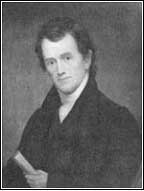
In
The
Life of Archibald Alexander, pages 332-333, we read:
“The
inauguration . . took place on the twelfth day of August, 1812. It was an
occasion of great solemnity and feeling. The older ministers, especially those
to whom the direction was entrusted, looked with parental yearnings on the
infant seminary, and none were more ready to hail with thankfulness and hope
the approach of new means for training the ministry, than those excellent men
who lamented the scantiness of their own early opportunities. But to none did
the service of the day bring greater solicitude than to him who was about to
put on armour for which he unaffectedly felt too weak. The first discourse was
a sermon by Dr. [Samuel] Miller, of New-York, on the Duty of the Church to take
measures for providing an Able and Faithful Ministry; from the words, “And the
things which thou hast heard of men, among many witnesses, the same commit thou
to faithful men, who shall be able to teach others also;” 2 Timothy, ii. 2. It
was an able investigation of the question, what is to be understood by an able
and faithful ministry, which was made to include piety, talents, learning and
diligence; and of the means which the Church is bound to employ for providing
such a ministry.
.
. .The Inaugural Discourse of the Professor was founded on the words, “Search
the Scriptures,” John v. 39; and was a learned argument in behalf of biblical
study. In one respect the whole performance was true to the habit and character
of the speaker; for it did not contain, from beginning to end, the faintest
allusion to his own personality. All depreciation of censure, and all promise
of fidelity, were equally absent. It was followed by a charge to the Professor
and Students of Divinity, by the Rev. Philip Milledoler, D.D. . . . It is for
the public to determine how far the work in which these good men then engaged,
with such earnestness and many prayers, has conduced to the progress of
religion and learning in the United States.
Alexander’s Library
It
was with an unfeigned reluctance that Dr. Alexander accepted the appointment.
No man could entertain a higher estimate of the functions which awaited him; no
man of eminence could think more humbly of himself. All his life long, he was
free to acknowledge, that his training, however laborious, had lacked much of
the rigor and method of the schools; and while he had pursued knowledge with
enthusiasm, and in many fields, he knew that it had been with the neglect of
certain forms which are supposed to give fitness for the academical chair.
Theology had indeed been the study of his life. Its difficult questions had
been the constant occupation of his profoundest meditations; and he had during
his residence in Philadelphia gathered about him the great masters of Latin
theology, whose works appeared in Holland, Switzerland, Germany, and France, in
the sixteenth and seventeenth centuries.
A
rare occasion for adding to his stock of Dutch theology was afforded by the
sale [in 1813] of a library belonging to a learned minister from Holland, the
Rev. Mr. Van Harlingen, of Somerset. . . These Reformed divines he regarded as
having pushed theological investigation to its greatest length, and compacted
its conclusions into the most symmetrical method. He was accustomed to say that
in his judgment Reformed theology reached its culminating point about the epoch
of the Synod of Dordrecht. To these great authors he turns with unabated zest
during the whole of a long and studious life. He once said to the writer, that
on a perplexed subject he preferred Latin to English reading; not only because
of the complete and ingenious nomenclature which had grown up in the dialectic
schools of the church, but because the little effort required for getting the
sense kept his attention concentrated. It was indeed almost amusing to observe
how he would hang over the massive quarto or folio, with all the awakened
interest of a novel-reader. In consequence of the fiery controversy which
characterized those times, and the scholastic acumen and philosophic adventure
and logical exactness which belonged to the age, he considered these scholars
as having anticipated most of the minor questions which have vexed the church
in later times.”
Words to Live By:
In his Introduction to Athanasius: On the Incarnation, C.S Lewis wrote these words on the value and place of reading older books.
“There is a strange idea abroad that in every subject the ancient books should be read only by the professionals, and that the amateur should content himself with the modern books. Thus I have found as a tutor in English Literature that if the average student wants to find out something about Platonism, the very last thing he thinks of doing is to take a translation of Plato off the library shelf and read the Symposium. He would rather read some dreary modern book ten times as long, all about “isms” and influences and only once in twelve pages telling him what Plato actually said. The error is rather an amiable one, for it springs from humility. The student is half afraid to meet one of the great philosophers face to face. He feels himself inadequate and thinks he will not understand him. But if he only knew, the great man, just because of his greatness, is much more intelligible than his modern commentator. The simplest student will be able to understand, if not all, yet a very great deal of what Plato said; but hardly anyone can understand some modern books on Platonism. It has always therefore been one of my main endeavours as a teacher to persuade the young that firsthand knowledge is not only more worth acquiring than secondhand knowledge, but is usually much easier and more delightful to acquire.
This mistaken preference for the modern books and this shyness of the old ones is nowhere more rampant than in theology. Wherever you find a little study circle of Christian laity you can be almost certain that they are studying not St. Luke or St. Paul or St. Augustine or Thomas Aquinas or Hooker or Butler, but M. Berdyaev or M. Maritain or M. Niebuhr or Miss Sayers or even myself.
Now this seems to me topsy-turvy. Naturally, since I myself am a writer, I do not wish the ordinary reader to read no modern books. But if he must read only the new or only the old, I would advise him to read the old. And I would give him this advice precisely because he is an amateur and therefore much less protected than the expert against the dangers of an exclusive contemporary diet. A new book is still on its trial and the amateur is not in a position to judge it. It has to be tested against the great body of Christian thought down the ages, and all its hidden implications (often unsuspected by the author himself) have to be brought to light. Often it cannot be fully understood without the knowledge of a good many other modern books. If you join at eleven o’clock a conversation which began at eight you will often not see the real bearing of what is said. Remarks which seem to you very ordinary will produce laughter or irritation and you will not see why—the reason, of course, being that the earlier stages of the conversation have given them a special point. In the same way sentences in a modern book which look quite ordinary may be directed at some other book; in this way you may be led to accept what you would have indignantly rejected if you knew its real significance. The only safety is to have a standard of plain, central Christianity (“mere Christianity” as Baxter called it) which puts the controversies of the moment in their proper perspective. Such a standard can be acquired only from the old books. It is a good rule, after reading a new book, never to allow yourself another new one till you have read an old one in between. If that is too much for you, you should at least read one old one to every three new ones.
Every age has its own outlook. It is specially good at seeing certain truths and specially liable to make certain mistakes. We all, therefore, need the books that will correct the characteristic mistakes of our own period. And that means the old books.”
In his Introduction to Athanasius: On the Incarnation, C.S Lewis wrote these words on the value and place of reading older books.
“There is a strange idea abroad that in every subject the ancient books should be read only by the professionals, and that the amateur should content himself with the modern books. Thus I have found as a tutor in English Literature that if the average student wants to find out something about Platonism, the very last thing he thinks of doing is to take a translation of Plato off the library shelf and read the Symposium. He would rather read some dreary modern book ten times as long, all about “isms” and influences and only once in twelve pages telling him what Plato actually said. The error is rather an amiable one, for it springs from humility. The student is half afraid to meet one of the great philosophers face to face. He feels himself inadequate and thinks he will not understand him. But if he only knew, the great man, just because of his greatness, is much more intelligible than his modern commentator. The simplest student will be able to understand, if not all, yet a very great deal of what Plato said; but hardly anyone can understand some modern books on Platonism. It has always therefore been one of my main endeavours as a teacher to persuade the young that firsthand knowledge is not only more worth acquiring than secondhand knowledge, but is usually much easier and more delightful to acquire.
This mistaken preference for the modern books and this shyness of the old ones is nowhere more rampant than in theology. Wherever you find a little study circle of Christian laity you can be almost certain that they are studying not St. Luke or St. Paul or St. Augustine or Thomas Aquinas or Hooker or Butler, but M. Berdyaev or M. Maritain or M. Niebuhr or Miss Sayers or even myself.
Now this seems to me topsy-turvy. Naturally, since I myself am a writer, I do not wish the ordinary reader to read no modern books. But if he must read only the new or only the old, I would advise him to read the old. And I would give him this advice precisely because he is an amateur and therefore much less protected than the expert against the dangers of an exclusive contemporary diet. A new book is still on its trial and the amateur is not in a position to judge it. It has to be tested against the great body of Christian thought down the ages, and all its hidden implications (often unsuspected by the author himself) have to be brought to light. Often it cannot be fully understood without the knowledge of a good many other modern books. If you join at eleven o’clock a conversation which began at eight you will often not see the real bearing of what is said. Remarks which seem to you very ordinary will produce laughter or irritation and you will not see why—the reason, of course, being that the earlier stages of the conversation have given them a special point. In the same way sentences in a modern book which look quite ordinary may be directed at some other book; in this way you may be led to accept what you would have indignantly rejected if you knew its real significance. The only safety is to have a standard of plain, central Christianity (“mere Christianity” as Baxter called it) which puts the controversies of the moment in their proper perspective. Such a standard can be acquired only from the old books. It is a good rule, after reading a new book, never to allow yourself another new one till you have read an old one in between. If that is too much for you, you should at least read one old one to every three new ones.
Every age has its own outlook. It is specially good at seeing certain truths and specially liable to make certain mistakes. We all, therefore, need the books that will correct the characteristic mistakes of our own period. And that means the old books.”
No comments:
Post a Comment